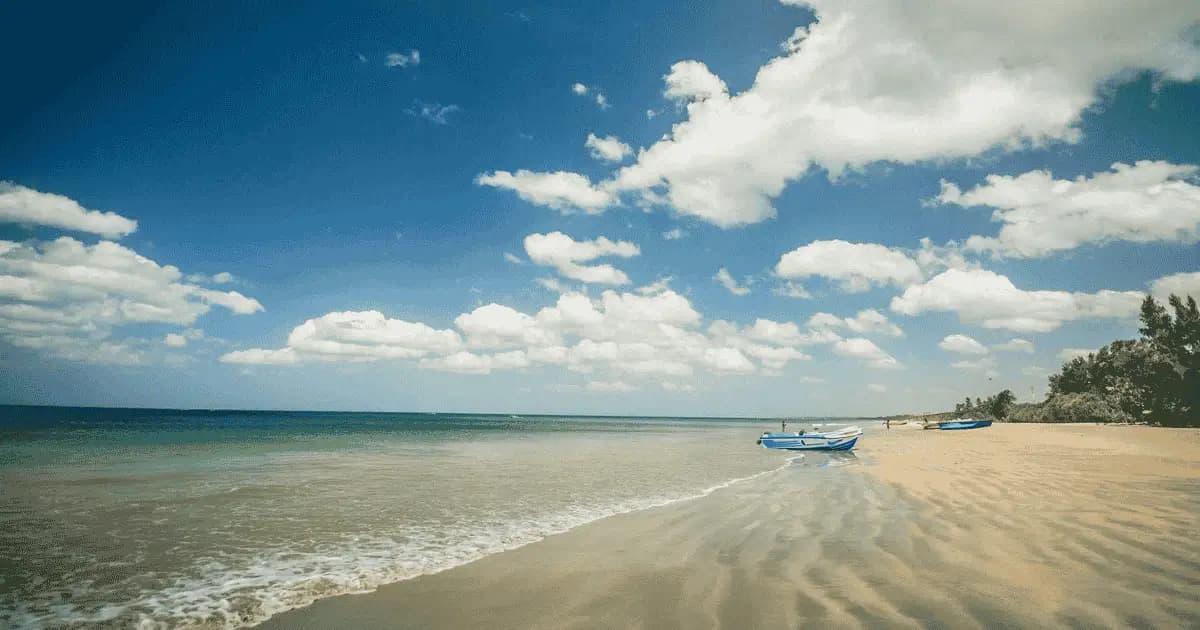
Arriving in Trincomalee feels like arriving on a completely different coastline. The air becomes hotter and heavier with salt from the Indian Ocean, fishing boats line the shore, and the ocean opens into endless shades of turquoise and deep blue stretching toward the horizon.
For many travelers exploring Sri Lanka by tuk tuk, this Trincomalee travel guide covers what most visitors call one of the most relaxing and unforgettable destinations on the island — a place where beach life finally slows down.
Compared to the crowded southern beaches, Trincomalee feels slower, quieter, and far more spacious. Long empty beaches replace busy tourism streets while palm trees lean above calm bays where local fishermen still head out before sunrise exactly as they have for generations.
The region combines sacred Hindu temples built dramatically above ocean cliffs, golden sand beaches, snorkeling reefs, whale watching, fishing villages, colonial history, seafood culture, and the peaceful atmosphere of Sri Lanka's east coast into one destination that feels both tropical and deeply cultural.
What Makes Trincomalee Different
The beaches here are wider, the ocean calmer during the east coast season, and the atmosphere far less crowded than places like Mirissa or Unawatuna. Many parts of the coastline still feel untouched.
Instead of rows of beach clubs and packed tourist cafés, you find quiet fishing villages, palm-lined beaches, small family-run guesthouses, seafood restaurants beside the ocean, and Hindu temples overlooking the sea from dramatic cliffs. The cultural atmosphere blends Tamil traditions, Muslim communities, fishing culture, colonial history, and Hindu spirituality into one coastal region unlike anywhere else on the island.
Another reason travelers love Trincomalee is the season itself. While Sri Lanka's southern coastline experiences rain during certain months, Trincomalee enjoys calm sunny weather between May and September — making it one of the best beach destinations in the country during the east coast dry season.
Driving to Trincomalee by Tuk Tuk
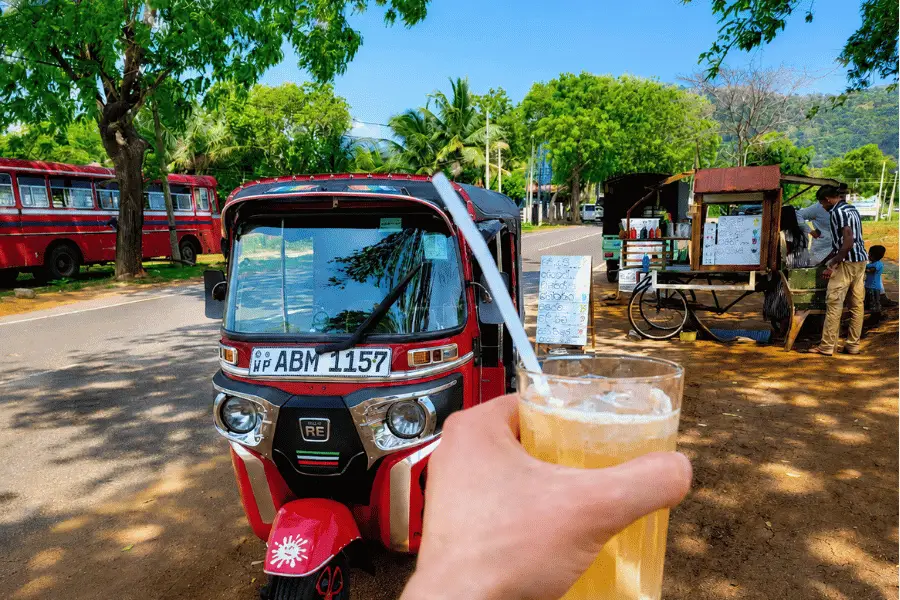
The roads pass through dry-zone forests, reservoirs, farming villages, rice fields, lagoons, and quiet countryside where traffic feels surprisingly light compared to the busier southern routes. Unlike the winding roads of the hill country, the eastern roads feel flatter, calmer, and ideal for slower tuk tuk travel.
During sunrise and sunset, the scenery becomes especially beautiful as golden light reflects across reservoirs and lagoons while fishermen slowly return toward the coastline. In certain areas near forests and reservoirs, you occasionally encounter wild elephants, peacocks, monkeys, and water buffalo beside the road — a reminder of how closely nature still exists alongside daily life in eastern Sri Lanka.
For many travelers, the journey toward Trincomalee already feels like part of the experience itself.
Nilaveli & Uppuveli — Golden Sand Beaches of the East Coast
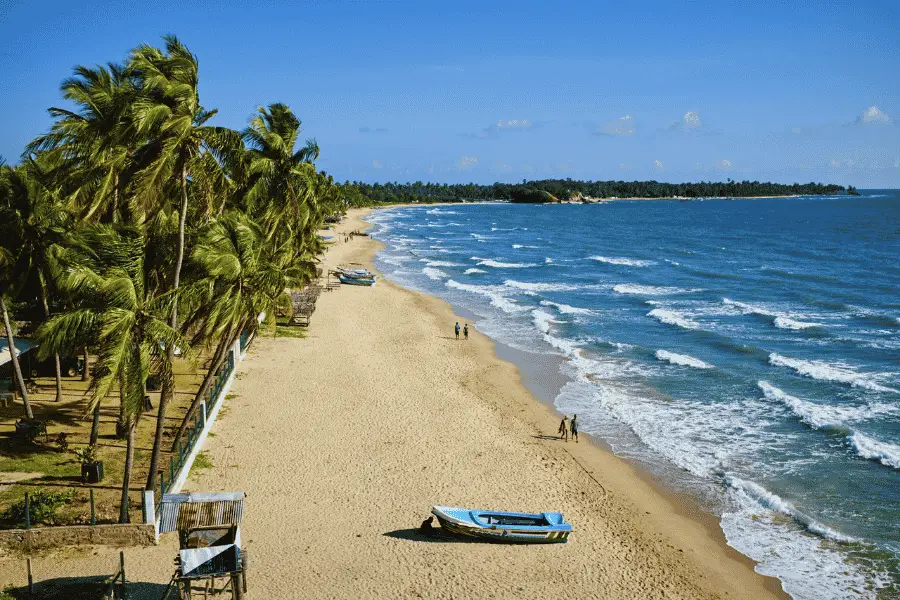
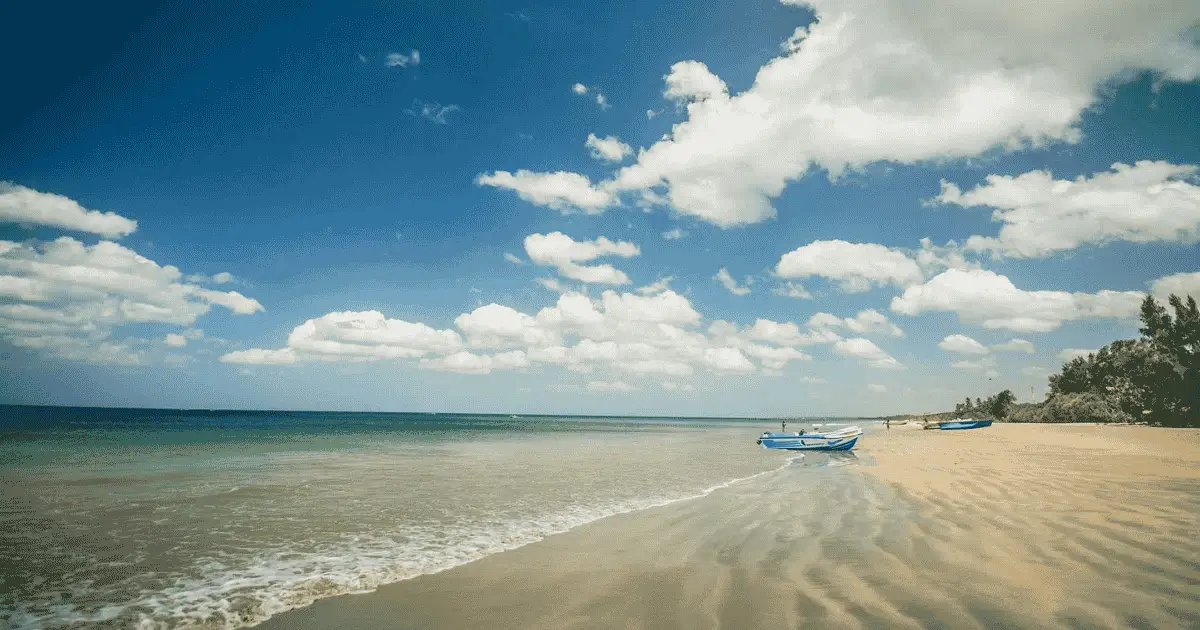
North of Trincomalee town lie Nilaveli and Uppuveli, often considered some of the most beautiful beaches anywhere in Sri Lanka. The coastline feels long, open, and peaceful, with soft golden sand stretching beside calm turquoise water during sunny mornings. Unlike many southern beaches, Nilaveli still feels spacious even during busy travel seasons.
Sunrise here feels especially unforgettable. The first light spreads slowly across the Indian Ocean while the beaches remain almost silent — the kind of tropical atmosphere many travelers imagine when dreaming about island travel.
Closer to town, Uppuveli offers a slightly more social atmosphere with:
- beach cafés and seafood restaurants
- backpacker guesthouses and small bars
- sunset drinks beneath swaying palm trees
- evening gatherings beside the ocean
Pigeon Island — Coral Reefs & Crystal-Clear Water
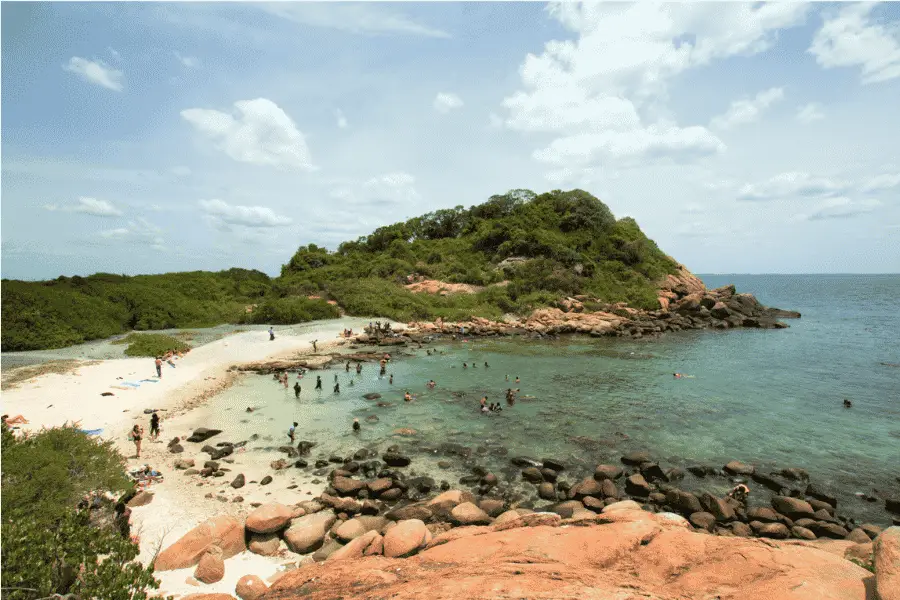
Just offshore from Nilaveli lies Pigeon Island National Park, one of Sri Lanka's best snorkeling and marine life destinations. Reached by a short boat ride across calm water, the island is surrounded by coral reefs filled with tropical fish, sea turtles, reef sharks, and crystal-clear water that often provides excellent visibility during the east coast season.
Snorkeling here feels almost like swimming inside a natural aquarium. Bright coral formations appear beneath the surface while schools of colorful fish move through shallow reefs surrounding the island. For many travelers visiting Sri Lanka's east coast, Pigeon Island becomes one of the highlights of the entire coastline.
Koneswaram Temple — Sacred Cliffs Above the Ocean
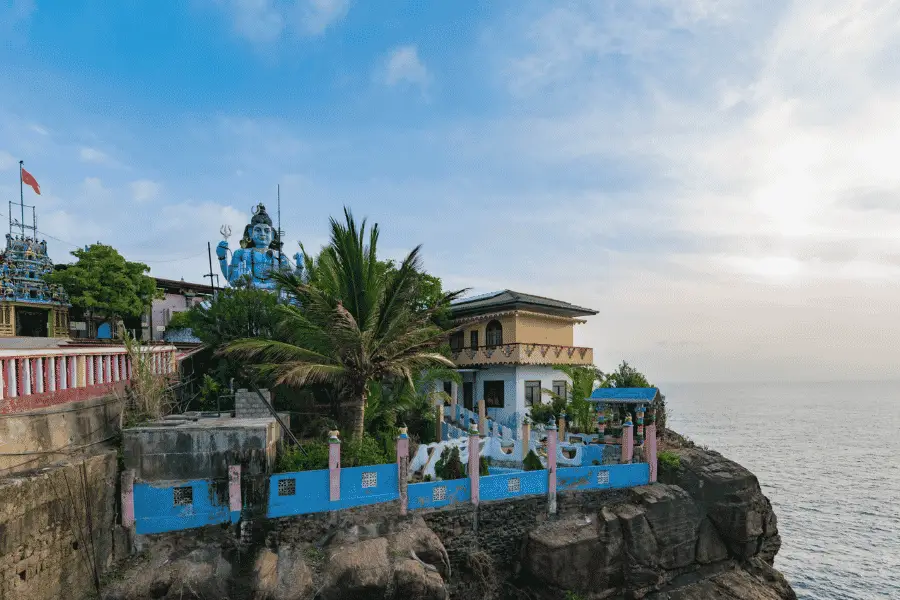
Perched dramatically above the Indian Ocean on Swami Rock stands Koneswaram Temple, one of the most beautiful and spiritually important Hindu temples in Sri Lanka. Colorful temple towers rise above enormous ocean cliffs while waves crash against the rocks far below and sea winds move constantly through the temple grounds.
The atmosphere becomes especially powerful during sunrise and sunset when the ocean stretches endlessly beneath the cliffs and temple bells echo through the air alongside the scent of incense and flowers brought by worshippers.
The temple carries centuries of history and was once considered one of the great Hindu temples of the Indian Ocean world before parts were destroyed during colonial invasions. Today, it remains one of the most iconic spiritual landmarks anywhere on Sri Lanka's east coast. Dress modestly and remove footwear before entering.
Fort Frederick — Colonial History Beside the Sea
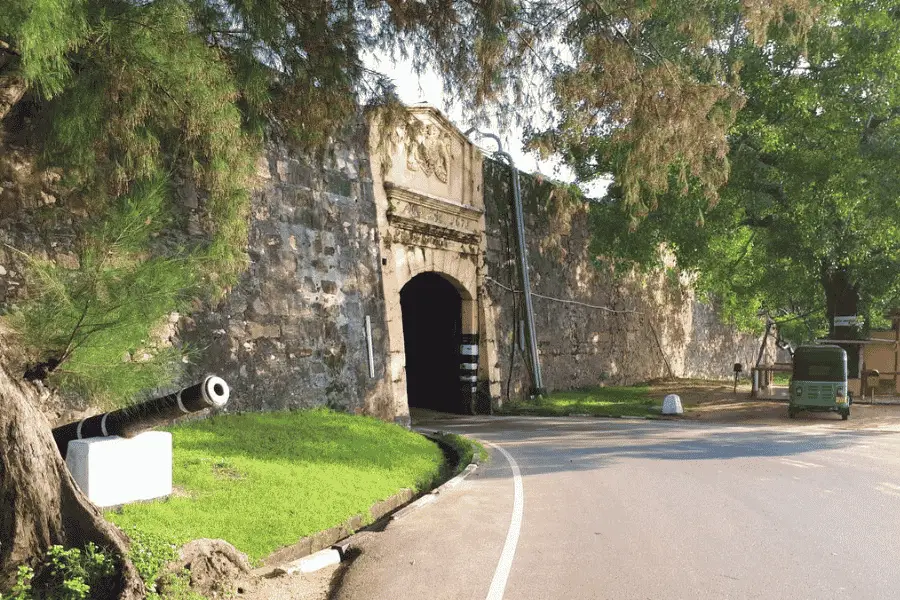
Just below Koneswaram Temple lies Fort Frederick, originally built by the Portuguese before later being occupied by the Dutch and British. Driving through the massive entrance walls feels almost surreal as the colonial fort opens into quiet roads lined with giant trees, roaming deer, ocean viewpoints, military buildings, and forested pathways leading toward the cliffs.
Compared to Sri Lanka's more crowded historical sites, Fort Frederick feels calm and spacious. The combination of colonial history, forests, wildlife, and ocean scenery gives the fort a completely different atmosphere compared to places like Galle Fort.
Marble Beach — Calm Waters & Hidden Coastal Beauty
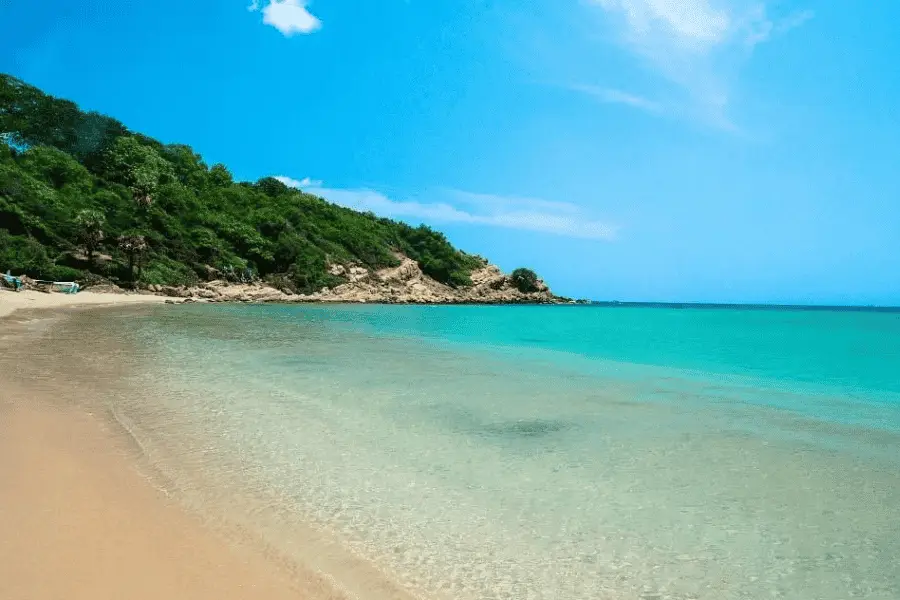
Among the quieter corners of the region lies Marble Beach, a peaceful stretch of coastline famous for its calm turquoise water and soft golden sand. Surrounded by forested coastline and sheltered bays, it often feels quieter than the more popular beaches around Nilaveli and Uppuveli.
The water here remains calm and shallow during the east coast season, making it ideal for swimming, relaxing, and enjoying the peaceful atmosphere beneath the tropical sun. Unlike crowded beach destinations elsewhere in Sri Lanka, Marble Beach still feels hidden and wonderfully untouched.
Kinniya Hot Springs — Ancient Wells & Warm Waters
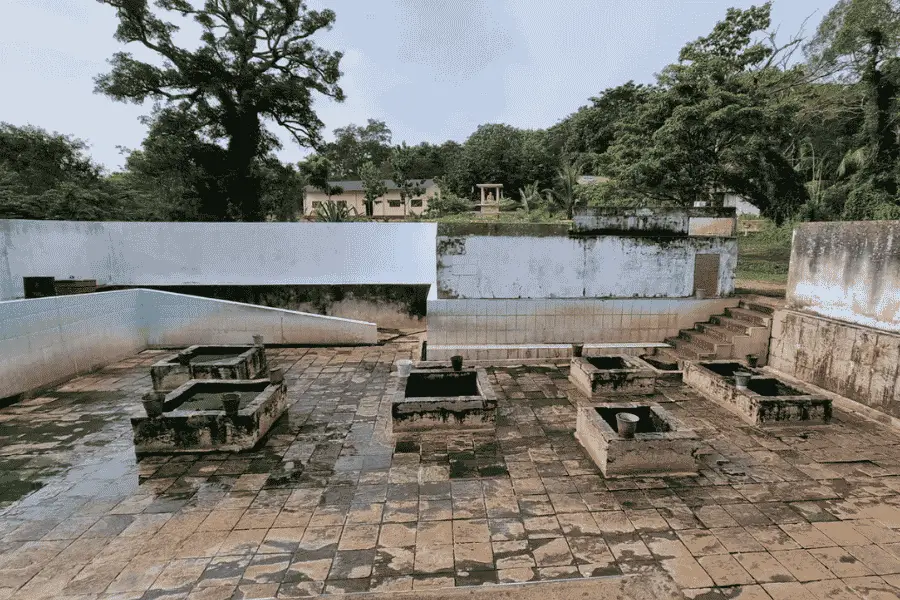
A short drive from Trincomalee lies Kinniya Hot Springs, one of eastern Sri Lanka's most unusual attractions. Unlike the beaches and ocean landscapes surrounding Trincomalee, the hot springs offer something completely different — a quiet collection of natural warm-water wells surrounded by local legends, history, and traditional beliefs.
The site consists of several square-shaped wells built closely together, each containing naturally warm mineral-rich water. The temperature varies slightly from one well to another despite all of them being located only a few feet apart. For generations, locals have believed the waters carry healing and therapeutic properties.
According to local legend, the hot springs were created when King Ravana struck the ground with his sword to provide warm water for his mother during her prayers — a story connected to the ancient Hindu epic, the Ramayana. Whether legend or folklore, it adds a strong spiritual atmosphere to the site that sits entirely apart from the coastline experience.
Whale Watching & Deep Sea Fishing
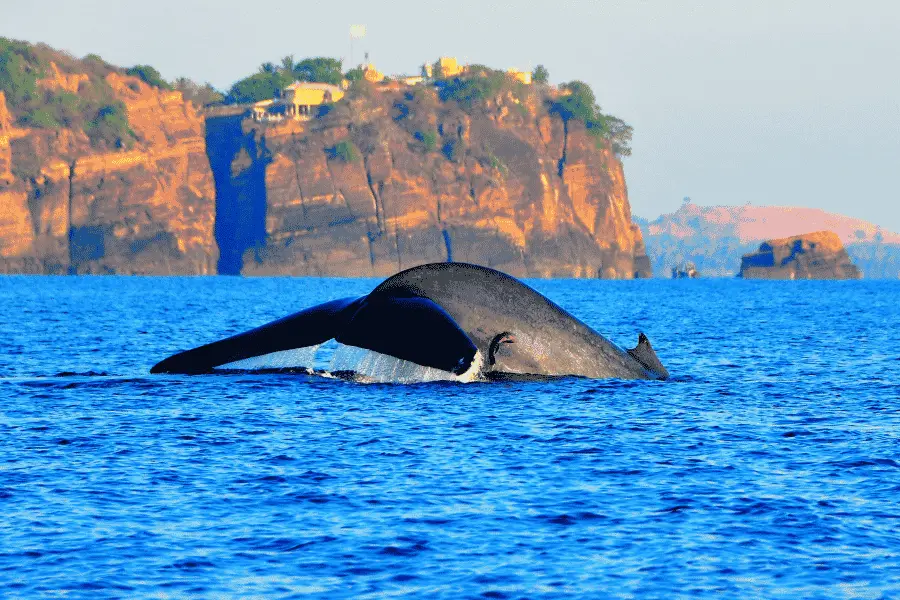
During the right season, Trincomalee becomes one of the best places in Sri Lanka for whale watching. The deep waters off the eastern coastline attract blue whales, sperm whales, spinner dolphins, and other marine life that move through the Indian Ocean near the coast. Boat tours usually leave early in the morning while the sea remains calm and the sunrise spreads across the horizon.
Compared to busier whale-watching tours in southern Sri Lanka, the overall atmosphere here often feels calmer and less commercialized. The surrounding coastline also supports snorkeling, diving, and deep sea fishing excursions where travelers search for:
- tuna
- barracuda
- trevally
- large game fish thriving in the offshore waters
Seafood, Tamil Flavors & Coastal Food Culture
Fishing remains central to daily life along the east coast, and many restaurants serve seafood caught fresh the same morning by local fishermen. Compared to southern Sri Lankan cuisine, eastern dishes carry stronger Tamil and Muslim culinary influences, creating deeper spice combinations and richer flavors.
The most common dishes include:
- fresh grilled fish and prawn curry
- crab curry and fried calamari
- string hoppers with seafood curry
- coconut sambol and Tamil-style seafood dishes
Many travelers eventually realize that the best meals come not from resorts, but from small family-run restaurants near the beach. Sunset seafood dinners beside the ocean become part of the Trincomalee experience itself.
Things To Do in Trincomalee
- Relax on golden sand beaches — Spend peaceful days along Nilaveli, Uppuveli, and Marble Beach surrounded by calm turquoise water and quiet tropical coastline.
- Visit Pigeon Island National Park — Snorkel among coral reefs, tropical fish, reef sharks, and sea turtles in one of Sri Lanka's best marine parks.
- Visit Koneswaram Temple — Explore the sacred Hindu temple dramatically perched above the Indian Ocean cliffs on Swami Rock.
- Explore Fort Frederick — Discover colonial history, roaming deer, forested pathways, and ocean viewpoints beside the sea.
- Visit Marble Beach — Enjoy one of Trincomalee's calmest and most beautiful beaches hidden beside forested coastline.
- Experience Kinniya Hot Springs — Visit the famous natural hot water wells connected to local legends and traditional beliefs.
- Go whale watching — During the right season, head into the Indian Ocean in search of blue whales, sperm whales, and spinner dolphins.
- Go deep sea fishing — Venture offshore in search of tuna, barracuda, trevally, and other large game fish.
- Enjoy seafood and Tamil cuisine — Taste grilled fish, crab curry, prawn dishes, and traditional eastern Sri Lankan flavors beside the ocean.
- Drive the east coast by tuk tuk — Explore beaches, lagoons, fishing villages, and quiet coastal roads at a slower pace.
Where To Head Next
One of the best things about Trincomalee is how naturally it connects to several completely different sides of Sri Lanka. Many travelers continue south along the eastern coastline toward Pasikuda and Batticaloa, and eventually Arugam Bay, where surf culture, lagoons, fishing villages, and quieter beaches continue shaping the atmosphere of the east coast.
Others head inland toward Sigiriya and Polonnaruwa, where ancient kingdoms, reservoirs, temples, and Sri Lanka's Cultural Triangle begin replacing the coastline. Travelers looking for cooler mountain scenery often continue toward Kandy and Sri Lanka's hill country, where tea plantations, waterfalls, forests, and winding mountain roads create an entirely different atmosphere from the tropical east coast.
Why Travelers Remember Trincomalee
For many tuk tuk travelers, Trincomalee becomes the place where island life finally slows down — not just in pace, but in the way time feels. The sacred cliffs at Koneswaram, the coral reefs at Pigeon Island, the golden silence of Nilaveli at sunrise, the legends surrounding Kinniya Hot Springs — those are the things that stay with people long after leaving.
Frequently Asked Questions — Trincomalee Travel Guide
How far is Trincomalee from Negombo?
Trincomalee is approximately 260–280 km from Negombo by road. By tuk tuk the drive takes around 6–7 hours depending on the route and stops. Most travelers break the journey overnight in Sigiriya or Polonnaruwa before continuing east toward the coast.
When is the best time to visit Trincomalee?
The best time to visit Trincomalee is between May and September when the east coast enjoys calm seas, sunny weather, and ideal beach and snorkeling conditions. The eastern dry season runs during the middle months of the year, which is the opposite of Sri Lanka's southern coast.
Can you snorkel at Pigeon Island?
Yes. Pigeon Island National Park is one of Sri Lanka's best snorkeling destinations. Coral reefs, tropical fish, reef sharks, and sea turtles are commonly seen in the clear water around the island. Boats depart from Nilaveli Beach and the crossing takes around 15 minutes.
When is whale watching season in Trincomalee?
Blue whales and sperm whales are most commonly spotted off Trincomalee between March and April, and again between July and September. Spinner dolphins can be seen year-round. Tours depart early morning from operators near Nilaveli and Uppuveli.
Is Koneswaram Temple open to visitors?
Yes. Koneswaram Temple on Swami Rock is open to visitors. It is an active Hindu place of worship, so dress modestly and remove footwear at the entrance. The clifftop setting above the Indian Ocean makes it one of the most visually striking temples in Sri Lanka.