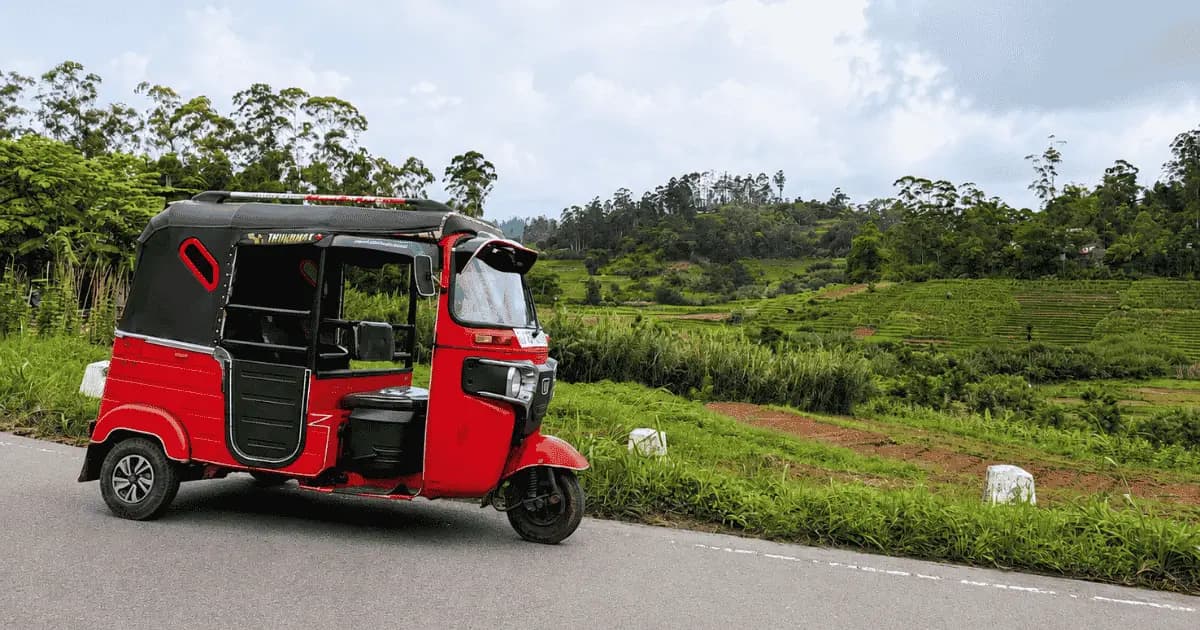
After the open roads and jungle landscapes of Sigiriya, the drive toward Kandy feels like entering a completely different side of Sri Lanka. The flat roads of the Cultural Triangle slowly disappear as the scenery becomes greener, hillier, and more crowded. Small roadside fruit stalls turn into busy local towns, forests become misty hills, and the roads begin winding gently through the central part of the island.
For many travelers, Kandy feels like the point where the journey shifts from ancient ruins and jungle landscapes into Sri Lanka's mountain culture and living traditions.
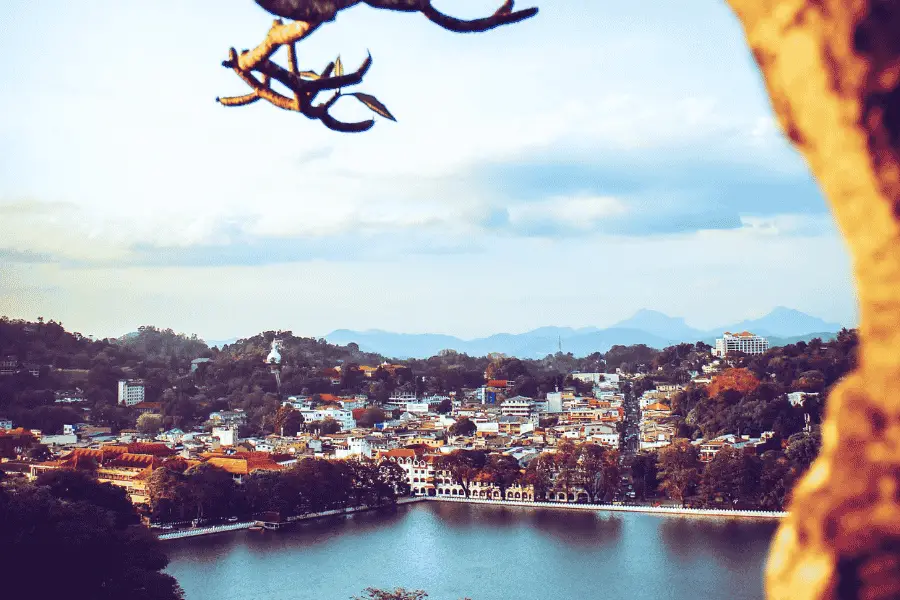
Surrounded by hills and centered around a scenic lake, Kandy is widely considered the cultural capital of Sri Lanka and one of the most historically important cities on the island. Unlike many destinations shaped mainly by tourism, Kandy still feels deeply connected to Sri Lanka's religion, traditions, music, ceremonies, and everyday local life.
The city is home to the Temple of the Tooth Relic, one of the most sacred Buddhist sites in the world, and remains one of the strongest places in Sri Lanka where traditional culture has been preserved and continues to exist naturally as part of daily life.
At the same time, Kandy also carries strong colonial influences that are still visible today through architecture, politics, railways, schools, churches, and the hill-country road systems built during British rule.
It's also the gateway to Sri Lanka's hill country, making it one of the most important stops for travelers continuing toward places like Nuwara Eliya, Ella, and the Pekoe Trail region.
What Makes Kandy Different
Kandy feels unlike anywhere else in Sri Lanka.
For many travelers, arriving here feels less like entering another city and more like stepping into the cultural heart of the island. The atmosphere changes completely compared to the coastal towns and rural villages visited earlier in the journey.
What makes Kandy especially unique is its role as the last royal kingdom of Sri Lanka. While much of the coastline came under Portuguese and Dutch control centuries ago, Kandy remained independent for a long time, protected by the surrounding mountains and forests.
Because of this, many of Sri Lanka's traditional customs, Buddhist practices, royal traditions, music, art, and cultural identity were preserved here long after other parts of the island had changed under colonial influence.
Walking through the city today, travelers notice layers of history everywhere. Ancient temples sit beside colonial-era buildings, busy local markets operate under old British architecture, and traditional Kandyan culture continues alongside modern city life.
The influence of the British period is still especially visible through:
- Colonial buildings
- Railway stations
- Old schools and churches
- Tea plantation culture
- Administrative buildings
- Mountain road systems
Many of the railway lines and roads leading into Sri Lanka's hill country were expanded during British rule to support the tea industry that still shapes much of the region today.
At the same time, Kandy never lost its strong Sri Lankan identity. Temple ceremonies continue daily, traditional drumming echoes across the city during religious events, locals carry lotus flowers to temples in the evenings, and Kandyan dancing remains an important part of the region's cultural traditions.
Even outside festival periods, there's a feeling in Kandy that culture here is still lived rather than simply displayed for tourists.
Recommended Stay: 1–3 Nights
Most travelers arrive in Kandy expecting only a short stop before continuing deeper into Sri Lanka's hill country. In reality, many end up staying longer.
Compared to the beaches and ancient cities visited earlier in the journey, Kandy feels slower, cooler, and far more cultural. Days here are often spent walking beside the lake, exploring temples and markets, drinking tea overlooking the hills, and watching the city slowly come alive during the evenings.
Kandy also creates the perfect transition into Sri Lanka's hill country. The surrounding roads gradually become greener, cooler, and more mountainous as tea plantations, forests, waterfalls, and winding hill roads begin replacing the dry lowland scenery.
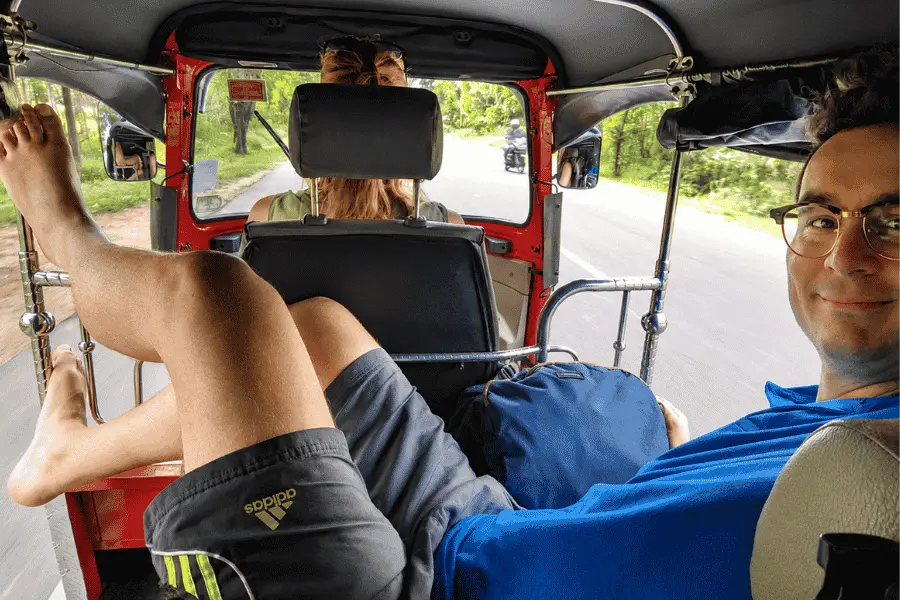
For many tuk tuk travelers, Kandy becomes the point where the journey shifts into an entirely different side of Sri Lanka.
Best Things To Do in Kandy
Kandy is one of those cities where the experience is not only about sightseeing, but also about atmosphere, culture, history, and slowing down into the rhythm of Sri Lanka's hill country.
Some of the best moments in Kandy are simple — hearing temple drums echo across the city in the evening, watching mist settle over the surrounding hills, walking beside the lake at sunset, or stopping for tea after a long tuk tuk drive through the mountains.
Visit the Temple of the Tooth
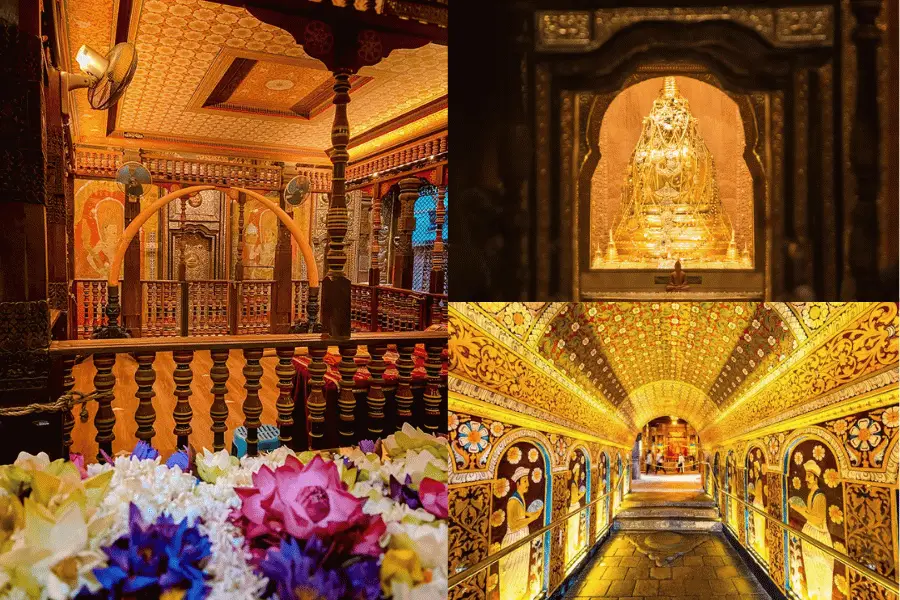
The Temple of the Tooth is the spiritual heart of Kandy and one of the most sacred Buddhist sites in Sri Lanka.
Located beside Kandy Lake, the temple is believed to house a sacred tooth relic of the Buddha and remains an active place of worship visited daily by both pilgrims and travelers from around the world.
Unlike many historical attractions that feel disconnected from everyday life, the temple still feels deeply alive and spiritual. Throughout the day, locals dressed in white arrive carrying lotus flowers and incense while traditional drumming echoes through the temple halls during prayer ceremonies.
The atmosphere becomes especially powerful during evening ceremonies when the temple fills with music, candlelight, and religious offerings.
Even travelers who are not especially interested in religion often leave impressed by the atmosphere, architecture, and cultural significance of the site.
Walk Around Kandy Lake
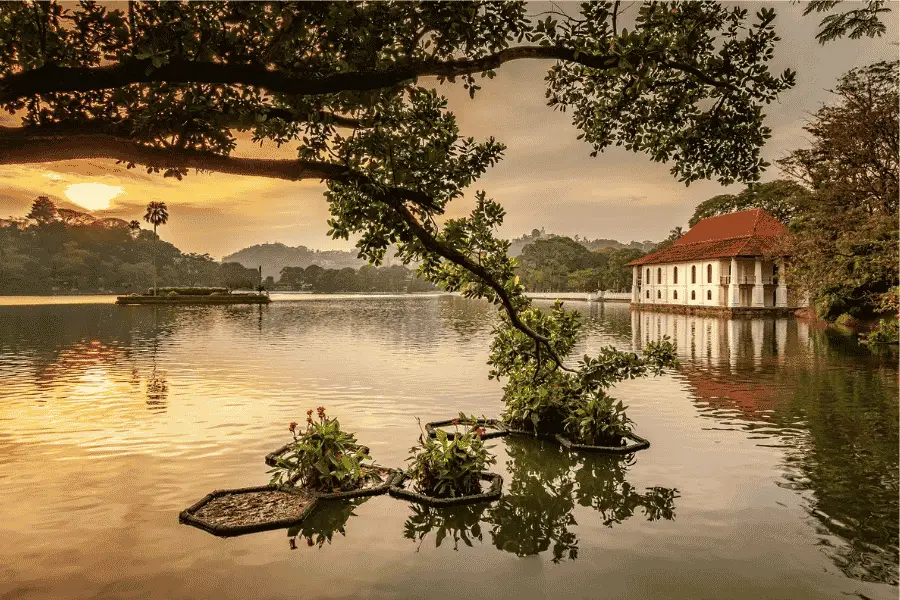
Walking around Kandy Lake during sunrise or sunset is one of the best ways to experience the city.
Built in the early 1800s beside the Temple of the Tooth, the lake creates a calm atmosphere in the middle of the busy city center. The pathway surrounding the water becomes especially lively during the evenings as locals gather to walk, relax, and spend time near the cooler air coming from the lake.
The surrounding hills, colonial buildings, temples, and trees reflected on the water give the city a completely different feeling compared to the hotter and flatter regions of Sri Lanka.
It's also one of the best places to slow down after a long tuk tuk drive and simply enjoy the atmosphere of Kandy.
Explore the Royal Botanical Gardens
The Royal Botanical Gardens in Peradeniya are one of the most peaceful and beautiful places to visit near Kandy.
Originally created during the Kandyan Kingdom and later expanded during British colonial rule, the gardens cover a huge area filled with giant tropical trees, shaded walking paths, orchid collections, palm avenues, bamboo forests, and beautifully maintained landscapes.
Unlike smaller city parks, the gardens feel almost endless. Travelers can easily spend several hours walking through different sections while escaping the busy streets and traffic of Kandy town.
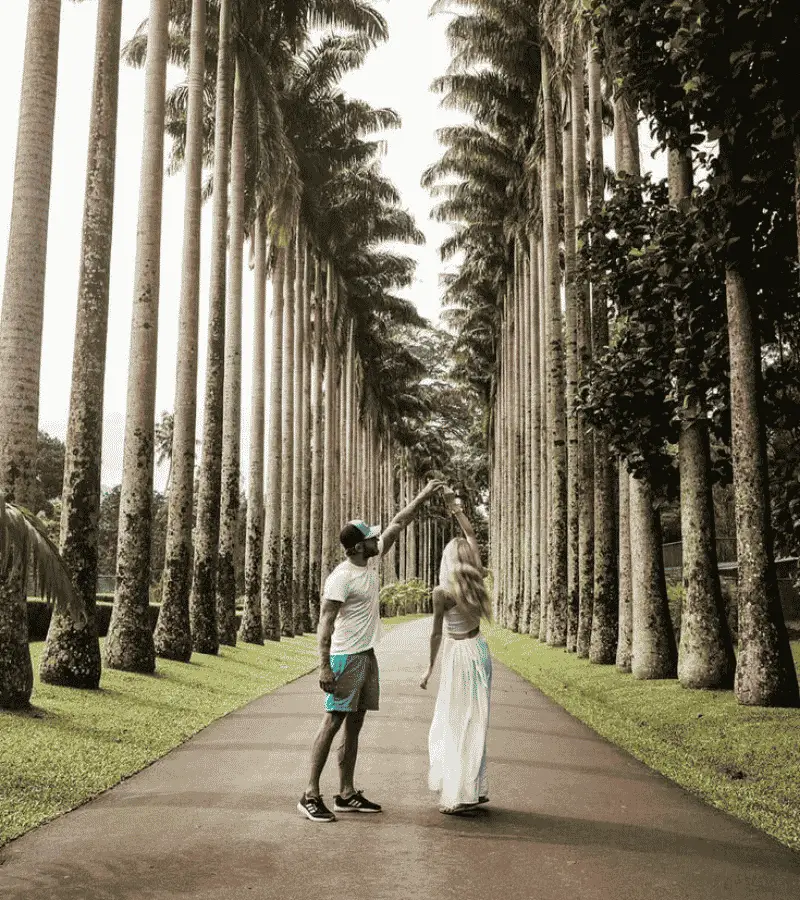
One of the most famous areas is the massive avenue of royal palm trees, which creates one of the most photographed walkways in Sri Lanka. The giant Java fig tree is another highlight, with enormous branches spreading across a huge section of the gardens creating natural shade underneath.
But one of the best parts of the gardens is simply the atmosphere itself. Compared to the crowded streets of Kandy, the botanical gardens feel calm, cool, and quiet. Couples picnic under the trees, students relax on the grass, monkeys move through the branches above, and travelers slowly wander through the pathways surrounded by tropical greenery.
For tuk tuk travelers, it's also a great place to take a slower day before continuing deeper into the hill country.
Watch a Traditional Kandyan Dance Performance
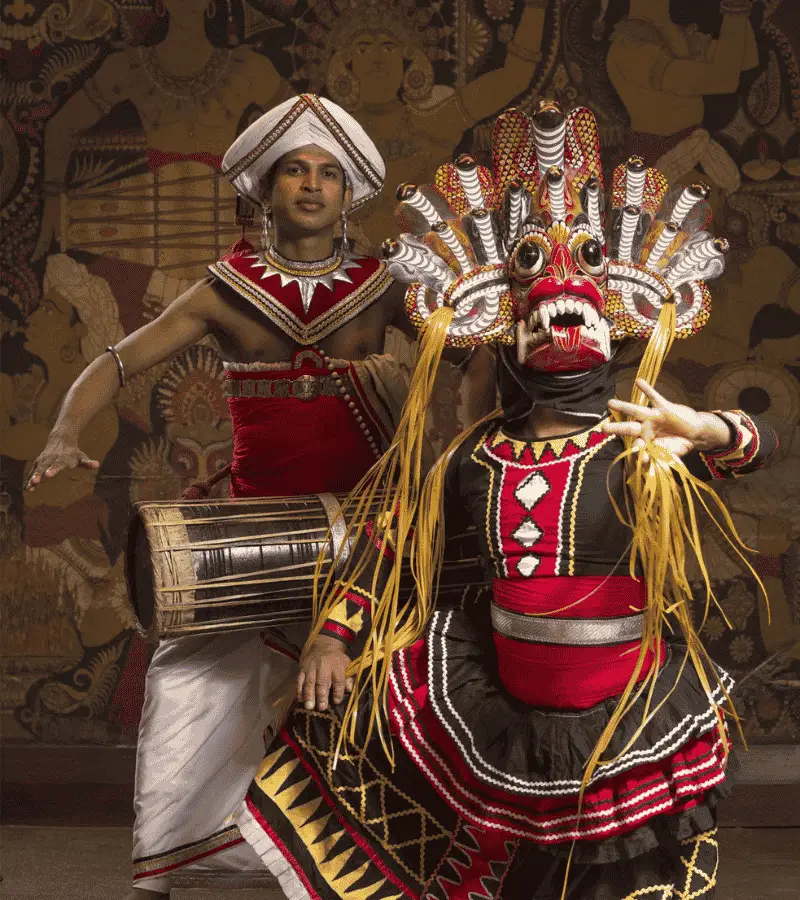
Kandyan dancing is one of Sri Lanka's oldest and most important traditional art forms, and Kandy remains the cultural center where many of these traditions are still preserved and performed today.
The performances are energetic, rhythmic, and deeply connected to Sri Lanka's ceremonial history. Traditional drumming echoes through the performance halls while dancers perform elaborate routines wearing detailed costumes inspired by the Kandyan Kingdom.
Many shows include:
- Traditional Kandyan drumming
- Fire dancing
- Acrobatics
- Ceremonial performances
- Cultural storytelling through dance
For travelers wanting to experience authentic Sri Lankan performing arts while visiting Kandy, one of the best places to watch a traditional cultural performance is Kandy Lake Club Cultural Dance Show. The fire-walking and fire-dancing finale is usually one of the biggest highlights for visitors.
Visit Bahirawakanda Viewpoint
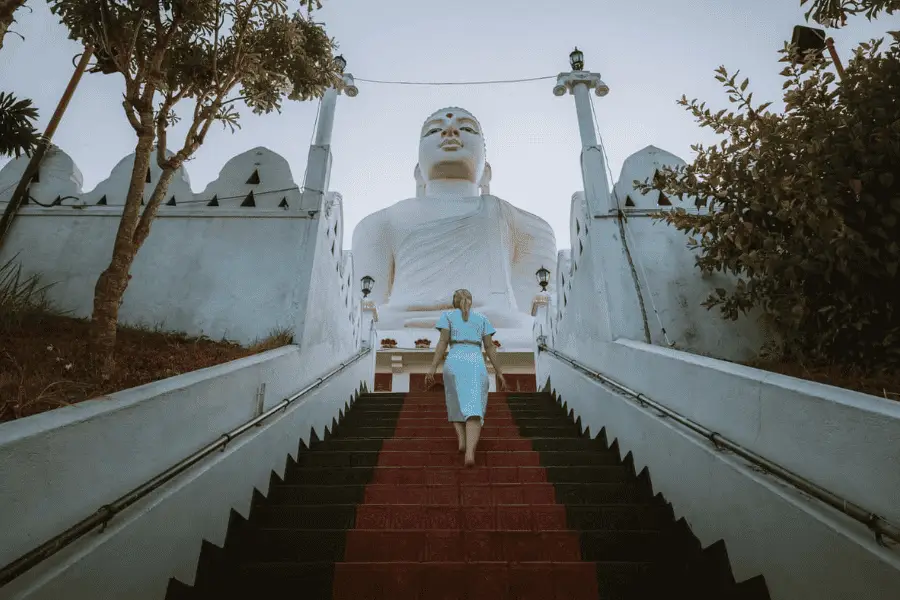
The Bahirawakanda Buddha Statue sits high above the city and offers one of the best panoramic views over Kandy Lake, the surrounding hills, and the crowded streets below.
The short tuk tuk drive uphill becomes especially beautiful during late afternoon when softer sunlight spreads across the mountains and the city slowly begins lighting up below. From the viewpoint, travelers can really see how Kandy sits within the surrounding hill-country landscape.
Explore Kandy Central Market & Street Life
One of the best ways to experience the real atmosphere of Kandy is by exploring the busy streets around the Kandy Central Market.
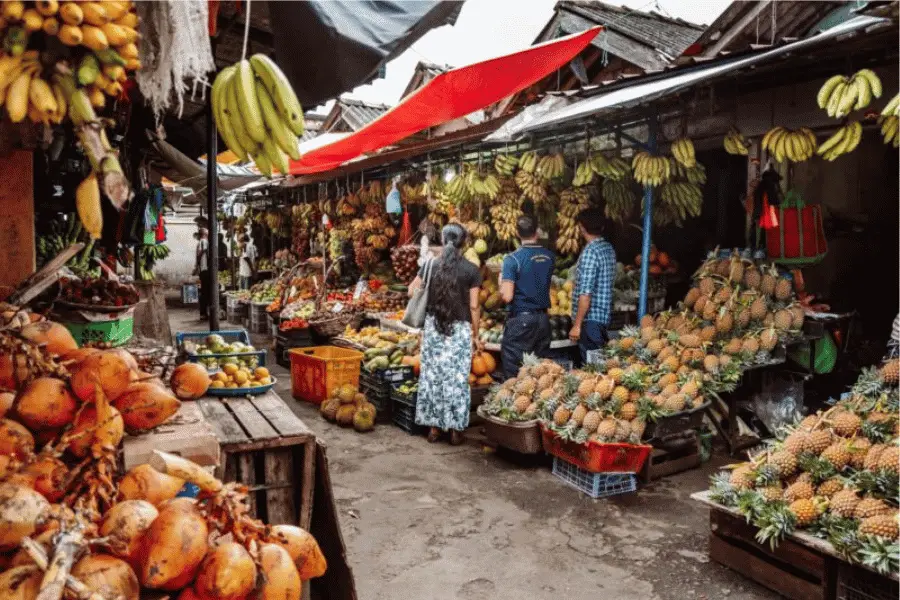
Located on Market Street in the center of the city, the market offers travelers a very authentic glimpse into everyday Sri Lankan life. Unlike tourist-focused shopping areas, Kandy Market feels energetic, crowded, colorful, and completely local.
The ground floor is full of fresh produce, spices, meat stalls, tropical fruits, and local vendors calling out prices while the smell of spices and street food fills the air. Travelers can find:
- Fresh tropical fruits
- Sri Lankan spices
- Raw vanilla pods
- Tea shops
- Local sweets
- Street food
- Everyday household items
The upper floor is popular among travelers looking for souvenirs, textiles, and handmade local products. Small shops sell:
- Batik artwork
- Wooden masks
- Leather goods
- Handicrafts
- Casual clothing
- Local fabrics and textiles
For travelers interested in photography, culture, or simply experiencing the everyday rhythm of Kandy, wandering through the market streets can easily become one of the most memorable parts of visiting the city.
A few helpful tips for visiting Kandy Market:
- Visit during the morning when the market is busiest and most vibrant
- Bargaining is common in the upper-floor tourist shops
- Carry cash for smaller vendors
- Some shops may close or operate shorter hours during Poya full-moon holidays
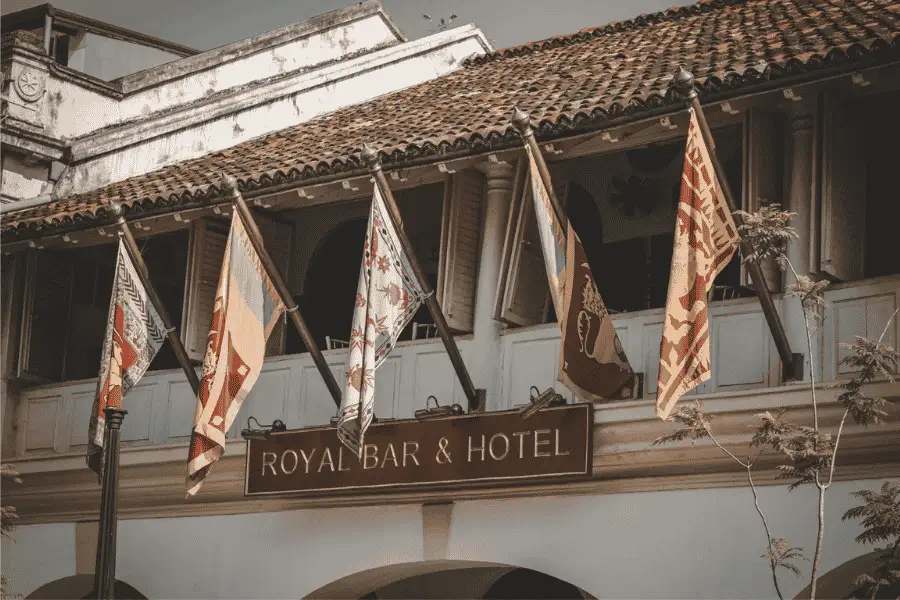
Stop at Royal Bar & Hotel Restaurant
For a cold beer, fine dining experience, or relaxed evening in the heart of the city, Royal Bar & Hotel Restaurant is one of the most iconic places in Kandy. Originally established in 1860, RBH is known as Kandy's oldest licensed tavern and has recently been beautifully renovated into a boutique hotel and fine dining restaurant while still preserving its historic atmosphere and colonial character.
Pinnawala Elephant Orphanage — Sri Lanka's Famous Elephant Sanctuary
One of the most popular wildlife stops on the journey toward Kandy is Pinnawala Elephant Orphanage, one of Sri Lanka's most well-known elephant care centers and sanctuaries.
Located beside the Maha Oya river between Kandy and Colombo, Pinnawala was originally established in 1975 as a sanctuary for orphaned and injured elephants that could not survive in the wild. Over the years, it has become one of the country's most visited wildlife attractions and an important conservation and breeding center for Asian elephants.
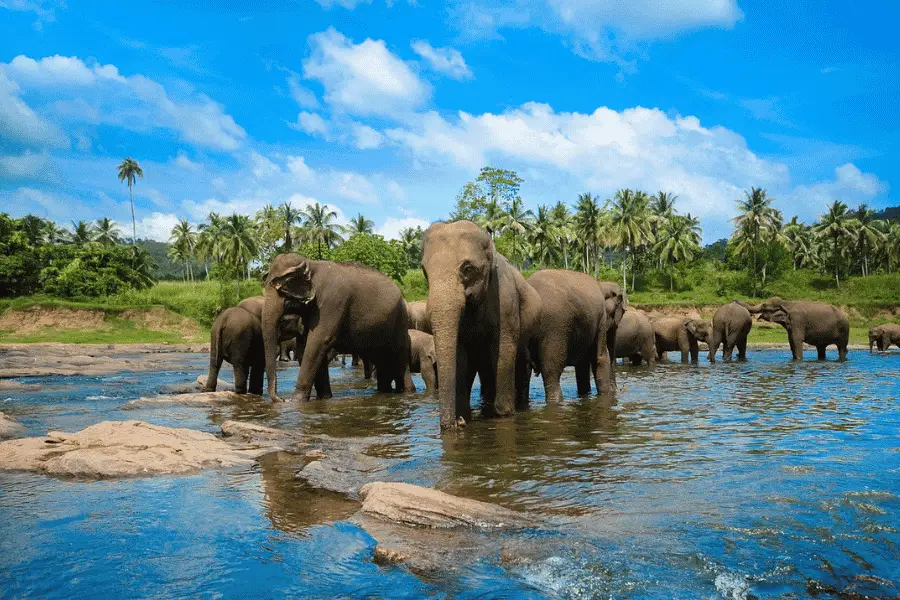
One of the most memorable experiences for travelers is watching the elephants walk through the town toward the river for their daily bathing sessions. Large groups of elephants move slowly through the streets accompanied by caretakers before entering the river, where visitors can observe them bathing, cooling off, and socializing in the water.
The river bathing sessions are usually considered the highlight of visiting Pinnawala and create one of the most photographed wildlife scenes in Sri Lanka.
Visitors can also observe:
- Young orphaned elephants
- Feeding sessions
- Elephant care routines
- Herd interactions
- River bathing activities
The surrounding area has developed into a popular roadside stop for travelers heading toward Kandy and Sri Lanka's hill country, with cafés and restaurants overlooking the river where elephants gather during bathing times.
For many tuk tuk travelers, Pinnawala becomes one of the first major wildlife experiences encountered during the journey into Sri Lanka's central highlands. The stop also creates a natural transition between Sri Lanka's lowland regions and the cooler hill-country roads leading toward Kandy, tea plantations, and the mountains beyond.
Driving a Tuk Tuk in Kandy
Driving in Kandy feels very different compared to driving around Sigiriya. The roads become:
- Narrower
- Busier
- More crowded
- More mountainous
Traffic around the city center can feel overwhelming at first, especially during rush hours when buses, tuk tuks, motorbikes, and pedestrians all move through the same streets at once. The best approach is simply to stay patient and drive slowly.
Most travelers prefer:
- Arriving earlier in the day
- Avoiding the city center during peak evening traffic
- Staying slightly outside the busiest streets
Once you leave the city itself, the surrounding hill-country roads quickly become scenic and enjoyable again.
The Drive Into Sri Lanka's Hill Country
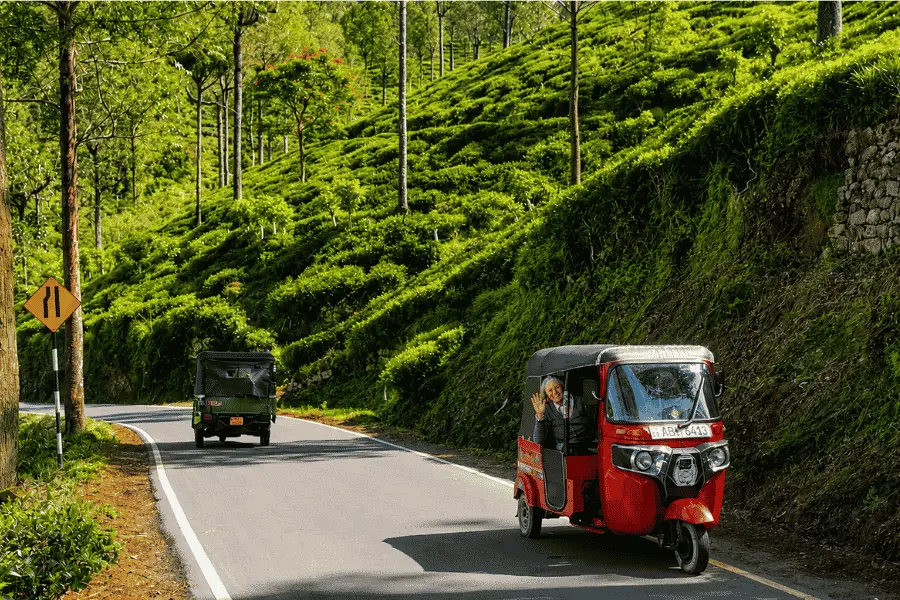
For many tuk tuk travelers, the drive leaving Kandy toward Nuwara Eliya or Ella becomes one of the most memorable parts of the entire Sri Lanka trip.
The roads slowly climb higher into the mountains, passing:
- Tea plantations
- Waterfalls
- Forests
- Misty hills
- Small tea villages
- Scenic viewpoints
The temperature becomes cooler, the air fresher, and the scenery dramatically different from the dry-zone landscapes around Sigiriya. This is where many travelers truly fall in love with Sri Lanka's hill country.
Food & Cafés in Kandy
Kandy has one of the best mixes of local restaurants and modern cafés in Sri Lanka. Travelers can find:
- Traditional rice and curry restaurants
- Local bakeries
- Rooftop cafés
- Coffee shops
- Vegetarian restaurants
- Street food stalls
The city is also one of the better places to try Sri Lankan sweets, fresh fruit juices, kottu roti, and local tea. Because Kandy has a large student population and active local community, the food scene feels more authentic and less tourist-focused compared to some coastal destinations.
Practical Tips for Travelers Visiting Kandy
A few things travelers quickly notice in Kandy:
- Roads are busier than Sigiriya
- Parking can be limited near the city center
- Evenings are cooler than the lowlands
- Rain showers are common in the afternoons
Helpful tips:
- Start drives early
- Keep cash for small shops and cafés
- Use offline Google Maps
- Carry a light jacket for evenings
- Stay slightly outside the center if you prefer quieter accommodation
Driving Beyond Kandy
Kandy is one of the main crossroads for tuk tuk travelers exploring Sri Lanka. From here, many travelers continue deeper into the hill country toward Nuwara Eliya and Ella, where the roads become more scenic, mountainous, and surrounded by tea plantations.
Others head north toward Anuradhapura or east toward the beaches of Trincomalee depending on the route they want to take around the island.
One of the advantages of traveling by tuk tuk is the ability to change plans along the way. Many travelers arrive in Kandy expecting a short stop and end up staying longer before continuing into the mountains.
Read the Nuwara Eliya Travel Guide
Stop at Ambuluwawa Tower on the Way to Nuwara Eliya
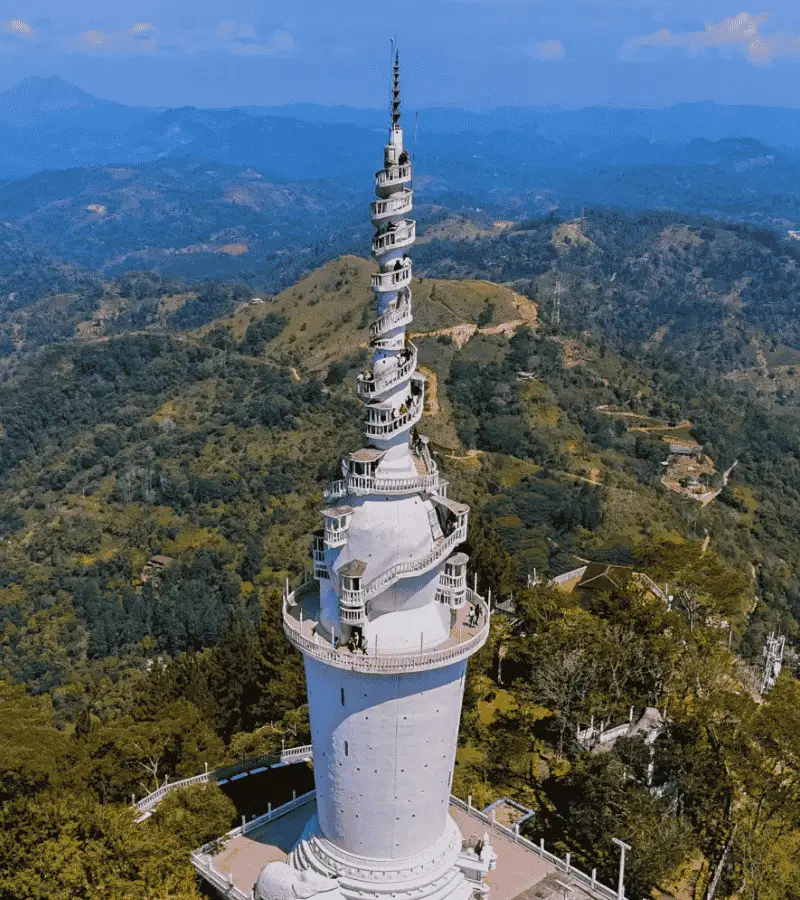
For many tuk tuk travelers leaving Kandy and heading deeper into the hill country, Ambuluwawa Tower has become one of the most popular scenic stops along the route toward Nuwara Eliya.
Located near Gampola, the tower sits high above the surrounding mountains and offers panoramic views across forests, tea plantations, valleys, and distant mountain ranges.
The drive itself already begins introducing travelers to Sri Lanka's hill-country scenery, with winding mountain roads, cooler temperatures, forests, and tea-covered hills gradually replacing the flatter roads around Kandy.
What makes Ambuluwawa especially famous is the narrow spiral staircase wrapping around the outside of the tower. As travelers climb higher, the staircase becomes increasingly narrow, creating both an exciting and unforgettable experience — especially for anyone comfortable with heights.
Because clouds and mist often move into the mountains later in the afternoon, the best time to visit Ambuluwawa is usually during the morning or early afternoon when visibility is much clearer.
For many travelers, Ambuluwawa becomes one of the first unforgettable viewpoints experienced during the journey into Sri Lanka's hill country.
Frequently Asked Questions — Kandy & Pinnawala
How far is Kandy from Negombo?
Kandy is approximately 115 km from Negombo. By tuk tuk the drive takes around 3–4 hours depending on road conditions and stops along the way.
How long should I spend in Kandy?
Most travelers spend 1–3 nights in Kandy. One day covers the main sites — Temple of the Tooth, Kandy Lake, and a local market. Two or three nights allow time for the Royal Botanical Gardens, a Kandyan dance performance, nearby viewpoints, and a more relaxed pace before heading into the hill country.
What is the Temple of the Tooth Relic in Kandy?
The Temple of the Tooth (Sri Dalada Maligawa) is a sacred Buddhist temple in central Kandy believed to house a tooth relic of the Buddha. It is one of the most important pilgrimage sites in the Buddhist world and remains an active place of worship. Prayer ceremonies are held several times daily accompanied by traditional drumming. Shoulders and knees must be covered, and shoes must be removed before entering.
Is Pinnawala Elephant Orphanage worth visiting?
For most travelers, yes. Pinnawala was established in 1975 and is one of Sri Lanka's best-known elephant sanctuaries. The main highlight is watching large groups of elephants walk through the town and bathe in the Maha Oya river. It sits conveniently between Colombo and Kandy, making it a natural stop on the journey toward the hill country.
What is the drive from Kandy to Nuwara Eliya like by tuk tuk?
The drive from Kandy to Nuwara Eliya is one of the most scenic stretches of road in Sri Lanka. The route climbs steadily through tea plantations, forests, misty hills, and mountain villages. Roads become narrower and more winding as you gain altitude, and temperatures drop noticeably. The journey takes around 2.5–3.5 hours and is one of the highlights of any tuk tuk trip through the hill country.