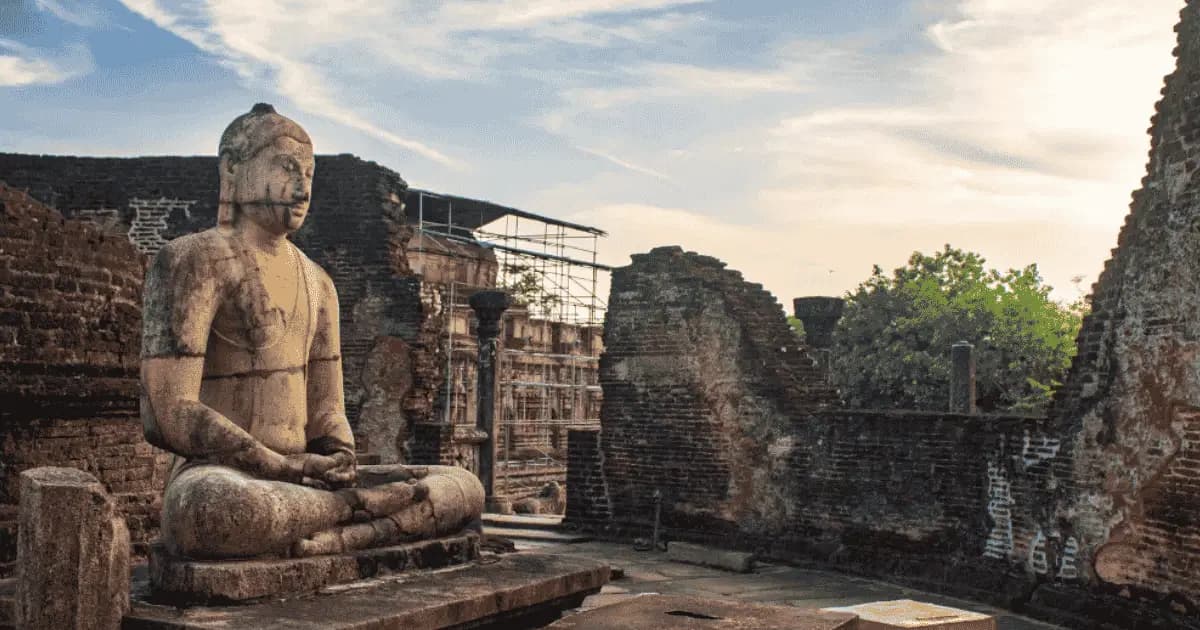
Arriving in Polonnaruwa feels completely different from visiting most other parts of Sri Lanka. The roads become flatter and quieter. Giant reservoirs begin stretching toward the horizon while monkeys move across ancient stone walls and centuries-old temples slowly emerge from forests that once reclaimed the entire kingdom.
Unlike the colonial atmosphere of Colombo or the tropical coastline of the south, Polonnaruwa feels deeply connected to Sri Lanka's medieval past. This was once one of the island's greatest kingdoms — a city of massive irrigation systems, royal palaces, Buddhist monasteries, and monumental stone architecture that helped shape Sri Lankan civilization nearly a thousand years ago.
Today, the ruins remain spread across open landscapes of reservoirs, trees, and dry-zone countryside, making Polonnaruwa one of the most atmospheric places in Sri Lanka to explore by tuk tuk or bicycle.
Compared to the Sacred City of Anuradhapura — another UNESCO World Heritage ancient capital — Polonnaruwa feels more compact, visually dramatic, and easier to navigate, with some of the finest stone carvings anywhere in South Asia.
Sri Lanka's Medieval Capital & UNESCO Heritage Kingdom
Polonnaruwa rose to prominence after the decline of Anuradhapura following repeated South Indian invasions during the late ancient period. During the 11th and 12th centuries, rulers such as King Vijayabahu I and King Parakramabahu I transformed the city into the capital of Sri Lanka and one of the most advanced urban centers in Asia at the time.
The city became famous not only for religion and politics, but also for engineering. Massive reservoirs, irrigation canals, monasteries, and royal compounds allowed the dry plains surrounding Polonnaruwa to support agriculture on an enormous scale. The region's entire civilization depended on controlling water.
King Parakramabahu I became especially famous for his extraordinary irrigation vision. One of his most quoted statements declared: "Not even a single drop of rainwater should flow into the ocean without being used for the benefit of the people."
Even today, many of the reservoirs and canals built during the medieval kingdom still function centuries later. Because of its extraordinary archaeological and historical significance, the Ancient City of Polonnaruwa is officially recognized as a UNESCO World Heritage Site.
Parakrama Samudra — The Sea Built by a King
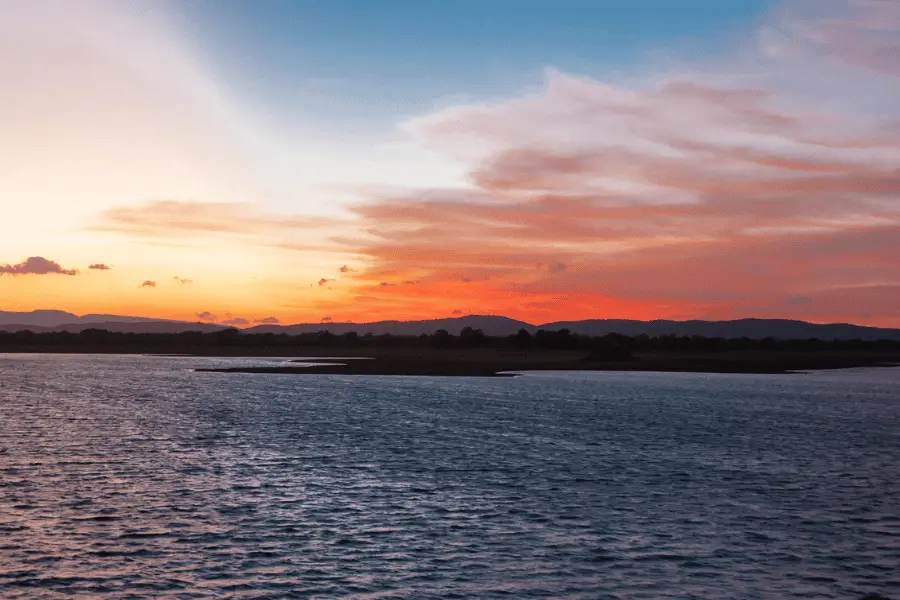
One of the first things travelers notice approaching Polonnaruwa is the enormous reservoir stretching across the landscape beside the ancient city. Known as Parakrama Samudra, this vast man-made reservoir was built during the reign of King Parakramabahu I and remains one of the greatest engineering achievements in Sri Lankan history.
The scale feels astonishing even today. The waters transformed the dry plains into fertile agricultural land capable of supporting a powerful medieval kingdom. Even now, farmers throughout the region continue relying on irrigation systems connected to these ancient reservoirs.
During sunrise and sunset, fishermen drift quietly across the water while flocks of birds gather above the shoreline and the evening sky reflects across the enormous lake beside the ruins of the old kingdom. The connection between water and civilization becomes impossible to ignore here.
The Royal Palace of King Parakramabahu
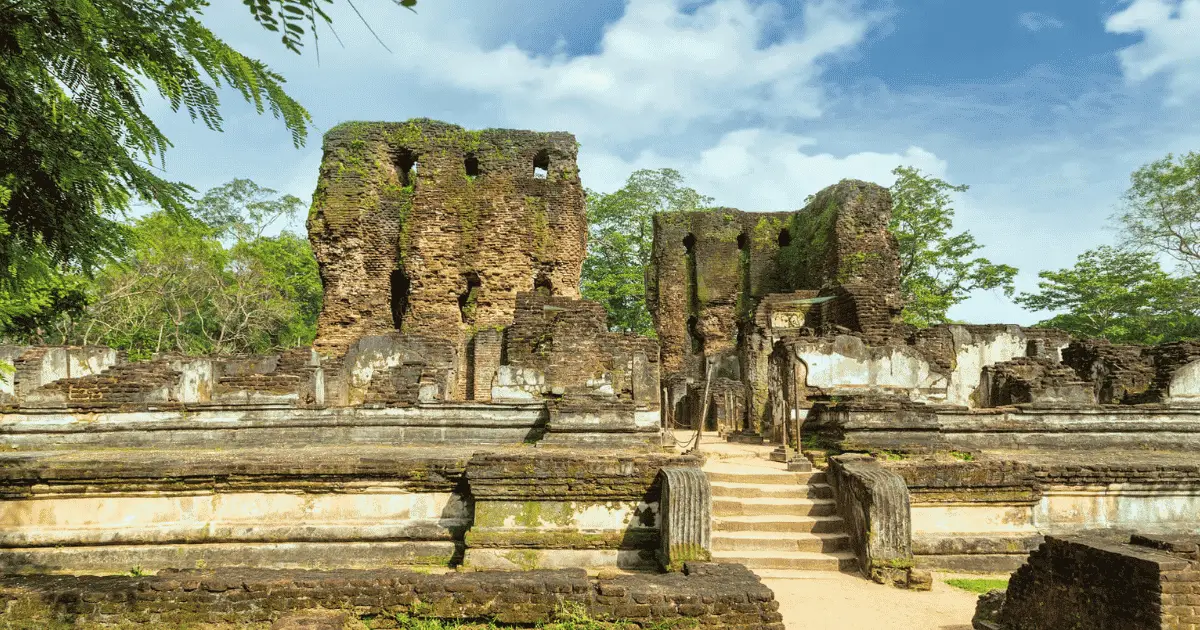
At the heart of ancient Polonnaruwa stand the remains of the Royal Palace of King Parakramabahu. Although much of the structure survives only as thick brick walls and foundations, the palace was once among the grandest buildings in medieval Sri Lanka. Historical accounts suggest it originally contained multiple floors, audience halls, royal chambers, and hundreds of rooms.
The massive surviving walls still hint at the ambition and scale of the kingdom during its peak. Nearby audience halls reveal intricate stone carvings of lions, elephants, and decorative architectural details that continue showcasing the craftsmanship of medieval Sri Lankan builders centuries later.
Gal Vihara — Sri Lanka's Masterpiece of Stone Carving
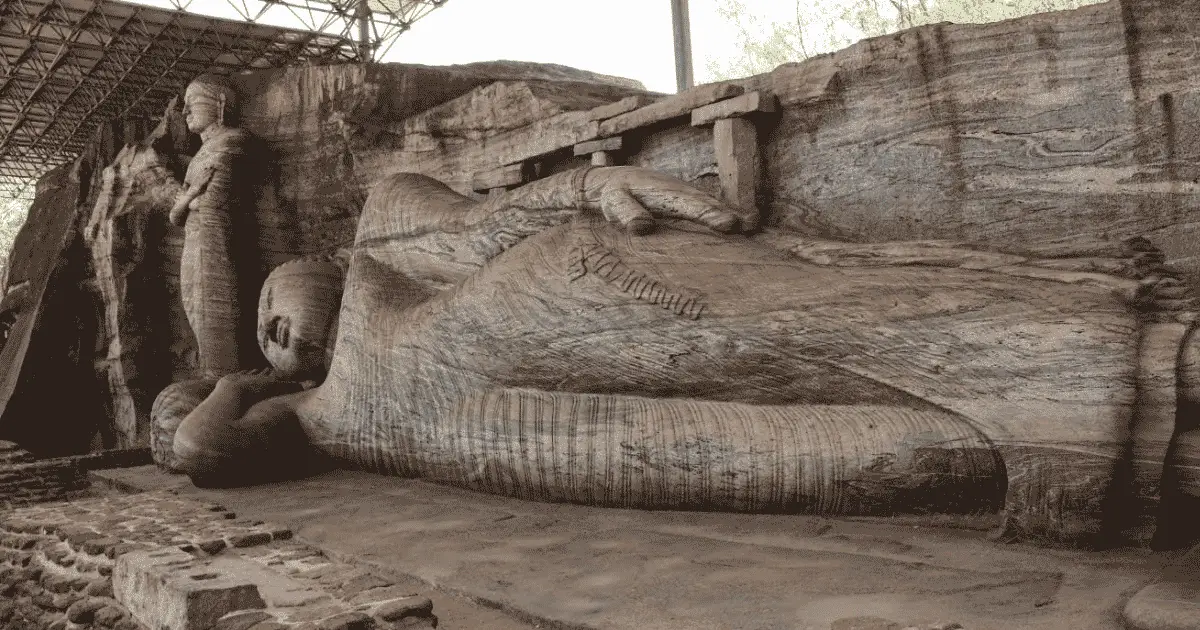
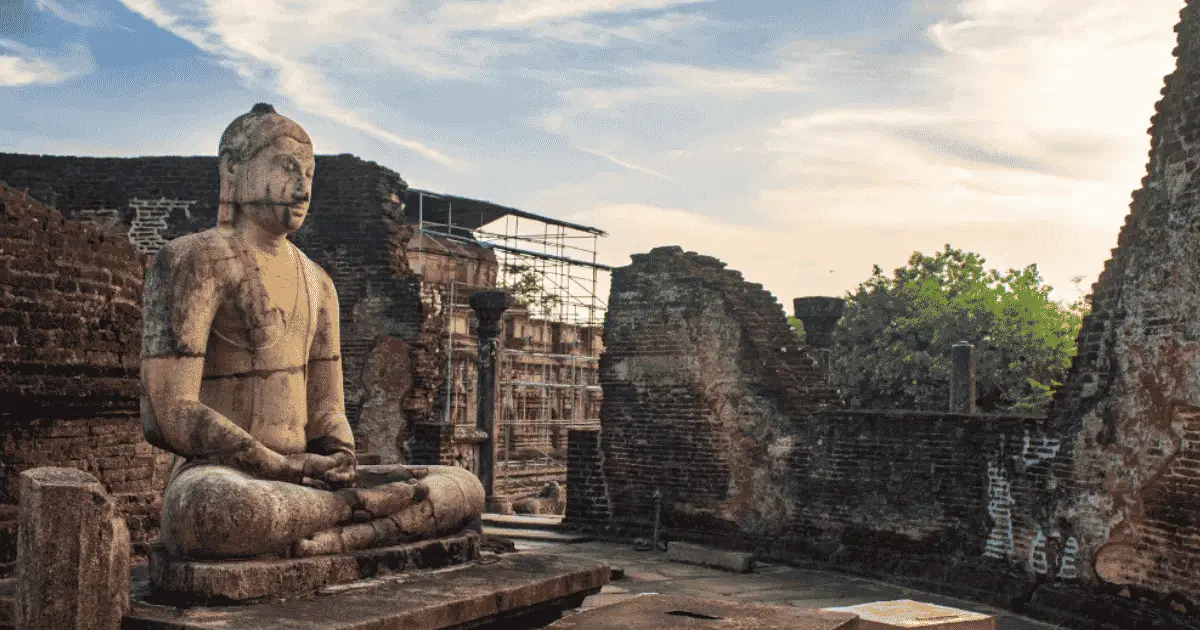
Without question, one of the most extraordinary sites in Polonnaruwa is Gal Vihara. Carved directly into a granite rock face during the 12th century, the statues here are widely considered among the finest examples of Buddhist stone sculpture in Asia.
The site contains:
- A seated Buddha in meditation
- A smaller cave shrine figure
- A standing Buddha statue
- A massive reclining Buddha entering Parinirvana
What makes Gal Vihara especially powerful is not simply the scale of the sculptures, but the emotion and calm preserved within the stone itself. Even after centuries exposed to heat, rain, and time, the carvings remain astonishingly detailed.
Early mornings at Gal Vihara feel especially atmospheric. The rising sunlight slowly illuminates the granite while birds move through the surrounding trees and the ancient stone begins warming beneath the dry-zone air. For many travelers, this becomes the defining experience of Polonnaruwa.
Vatadage — The Circular Temple of Polonnaruwa
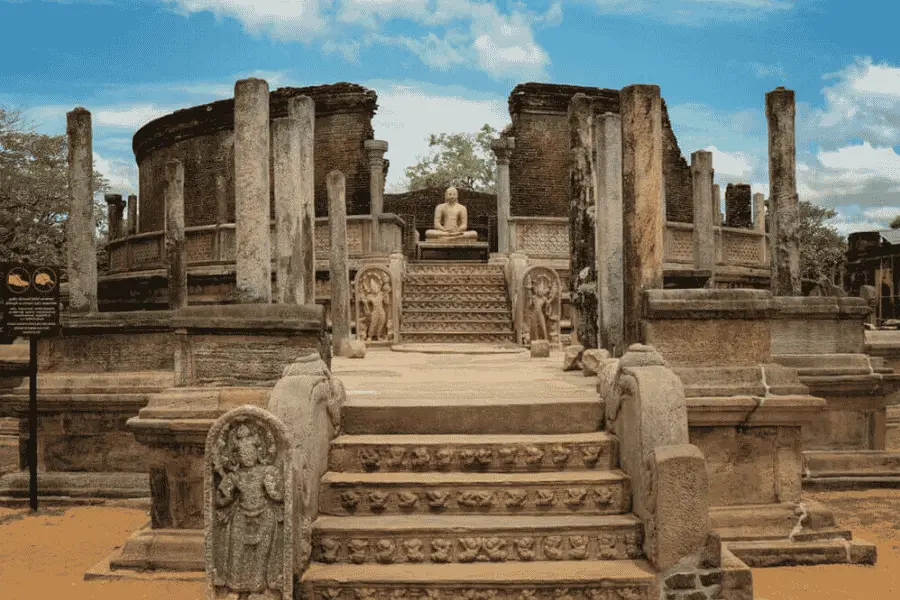
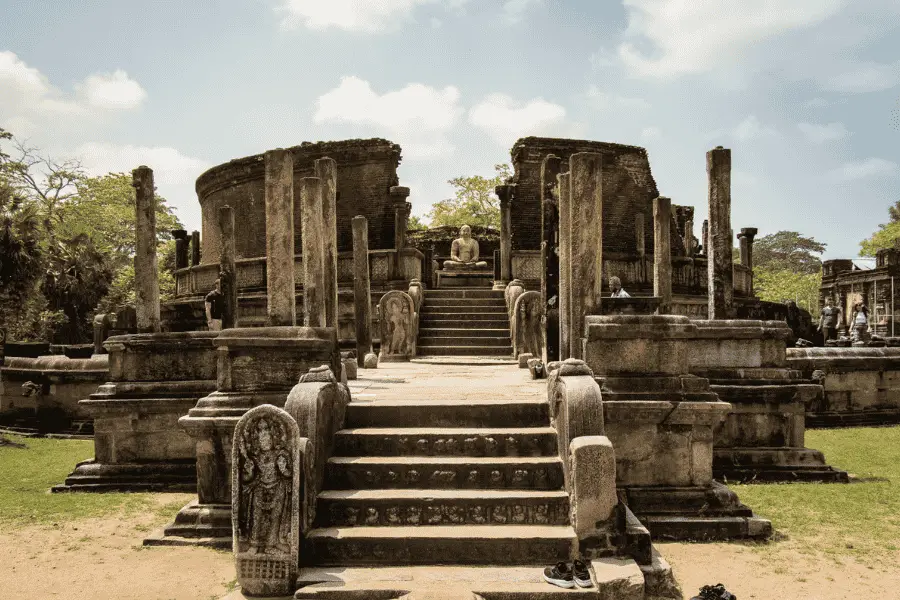
Another architectural landmark is the Vatadage, one of the most photographed structures in the ancient city. Built to protect sacred Buddhist relics, the circular stone temple remains one of the finest surviving examples of ancient Sri Lankan architectural design.
Stone staircases, moonstones, guardstones, and seated Buddha statues remain beautifully preserved despite centuries of history. The symmetry of the structure creates an atmosphere that feels elegant and deeply spiritual without needing monumental scale.
Nearby, the Sacred Quadrangle contains additional shrines, image houses, monasteries, and ruins that once formed the religious heart of the medieval kingdom.
Exploring Polonnaruwa by Tuk Tuk or Bicycle
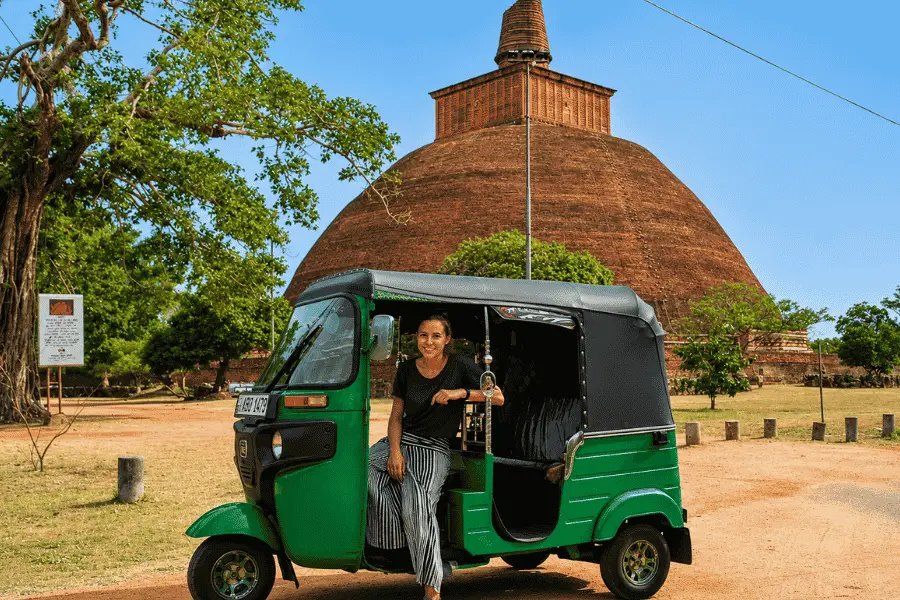
One of the reasons Polonnaruwa feels so enjoyable compared to many archaeological cities is how easy it is to explore. Wide tree-lined roads connect the major ruins while forests, reservoirs, and open landscapes create a calm atmosphere between sites.
Many travelers choose bicycles to slowly move between temples and ruins beneath the shade of the trees. Others prefer tuk tuk travel through the archaeological zone, especially during the hotter months. For more on planning a route through Sri Lanka's Cultural Triangle, see the complete guide to renting a tuk tuk in Sri Lanka.
Unlike crowded modern cities, Polonnaruwa often feels remarkably quiet except for birds, rustling leaves, temple bells, and monkeys climbing across ancient walls.
Wildlife Around the Ancient Kingdom
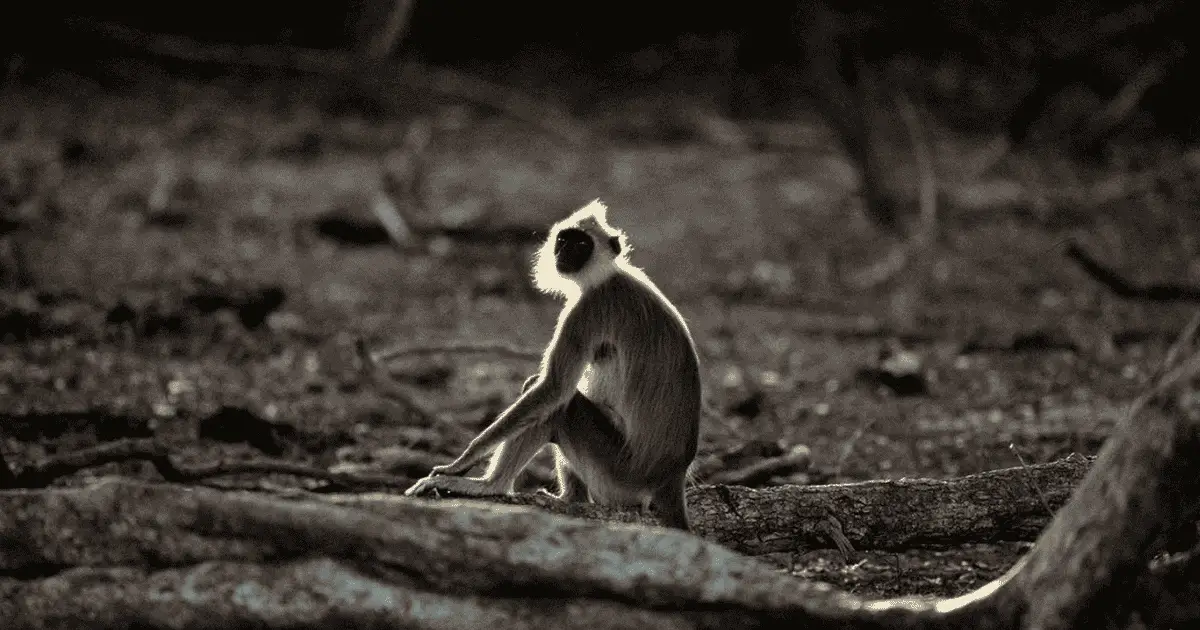
One of the most distinctive aspects of Polonnaruwa is how closely ancient history and wildlife still exist together. As travelers move between temples and monasteries, it is common to encounter:
- Monkeys climbing across ruins
- Peacocks wandering beside stupas
- Water monitors crossing roads
- Large flocks of birds near reservoirs
But the wildlife most associated with the region is the Sri Lankan elephant. The forests and reservoirs surrounding Polonnaruwa support one of the island's largest elephant populations, and sightings are extremely common along quieter roads and rural areas.
Nearby wildlife areas — Minneriya National Park, Kaudulla National Park, and Hurulu Forest Reserve — form part of a major elephant corridor connected to the wider Polonnaruwa region. During the dry season, these parks become internationally known for The Gathering, one of Asia's largest wild elephant congregations, where hundreds of elephants migrate toward shrinking reservoirs searching for water and fresh grass.
Village Life, Ancient Water Tanks & Dry-Zone Culture
Beyond the ruins themselves, the region surrounding Polonnaruwa remains deeply connected to agriculture and village life in ways that have changed little over centuries. This is Sri Lanka's dry zone — a landscape where farming has always depended on irrigation reservoirs known locally as "wewa." Many of these water tanks were originally built by ancient kings and still support farming communities today.
Rice fields dominate the countryside while irrigation canals flow beside rural roads beneath the heat of the afternoon sun. Driving through the villages surrounding Polonnaruwa, travelers constantly pass water buffalo resting in muddy paddies, roadside fruit stalls, coconut and mango trees shading village homes, and farmers cycling beside irrigation canals.
Local food throughout the area often includes rice and curry, freshwater fish curry, coconut sambol, village-style vegetable dishes, and buffalo curd with treacle. The food feels simple, local, and connected to Sri Lanka's farming culture rather than tourism.
Things To Experience in Polonnaruwa
- Watch sunrise beside Parakrama Samudra
- Explore the Ancient City of Polonnaruwa by bicycle
- Visit Gal Vihara during the early morning light
- Photograph moonstones and stone carvings at the Vatadage
- Watch monkeys and peacocks moving through ancient ruins
- Drive rural roads beside irrigation canals and rice fields
- Visit elephant corridors near Minneriya National Park
- Eat village-style rice and curry beside the reservoirs
- Explore quiet countryside roads by tuk tuk at sunset
Important Driving Notes
- Tuk tuks are not permitted on Sri Lankan expressways
- Midday temperatures become extremely hot during dry season — plan ruins visits for early morning or late afternoon
- Wildlife crossings are common near reservoirs and forests
- Carry water and sun protection while exploring ruins
- Elephant sightings are possible on rural roads near the national parks
Driving Beyond Polonnaruwa
From Polonnaruwa, many travelers continue west toward Sigiriya and Dambulla through the heart of Sri Lanka's UNESCO-listed Cultural Triangle. Others continue east toward Batticaloa and the quieter beaches of the eastern coastline, where reservoirs and dry forests slowly transition into lagoons and the Indian Ocean.
Travelers heading south often move toward elephant corridors and safari landscapes further inland. For those heading north, the roads continue toward Anuradhapura and the ancient Buddhist heartland of the island.
Why Travelers Remember Polonnaruwa
Polonnaruwa combines monumental history, sacred Buddhist heritage, medieval engineering, ancient reservoirs, wildlife, and rural dry-zone life into one landscape where the ancient kingdom still feels alive beneath the sun. For many tuk tuk travelers, it becomes one of the most unforgettable places in Sri Lanka — not because it is busy or dramatic, but because the ruins, the water, the forests, and the silence all feel deeply connected.
Frequently Asked Questions — Polonnaruwa Travel Guide
How far is Polonnaruwa from Negombo?
Polonnaruwa is approximately 200 km from Negombo. By tuk tuk the drive takes around 5–6 hours depending on the route and stops. Most travelers break the journey near Dambulla or spend a night along the way.
What are the must-see sites in Polonnaruwa?
The essential sites are Gal Vihara (the giant rock-carved Buddha statues), the Vatadage circular relic shrine, the Royal Palace ruins, the Sacred Quadrangle, Rankoth Vehera stupa, and the banks of Parakrama Samudra reservoir. An early morning visit to Gal Vihara is widely considered the most rewarding experience in Polonnaruwa.
Is it better to explore Polonnaruwa by bicycle or tuk tuk?
Both work well. Bicycles are popular because the main ruins are spread across flat, tree-lined roads that make cycling comfortable and atmospheric. Tuk tuks are better during hot months, for covering longer distances, or for visiting areas beyond the core archaeological zone such as elephant corridors and rural villages.
How long does it take to explore Polonnaruwa?
One full day covers the main sites comfortably if you start early. Two days allows a slower pace, time beside Parakrama Samudra, rural drives, and a possible morning visit to nearby Minneriya National Park for elephant sightings.
What wildlife can you see near Polonnaruwa?
Polonnaruwa is part of a wider elephant corridor. Monkeys, peacocks, and water monitors are regularly encountered within the ruins themselves. Minneriya and Kaudulla national parks nearby are famous for The Gathering — one of Asia's largest wild elephant congregations, where hundreds of elephants meet around shrinking reservoirs during the dry season.