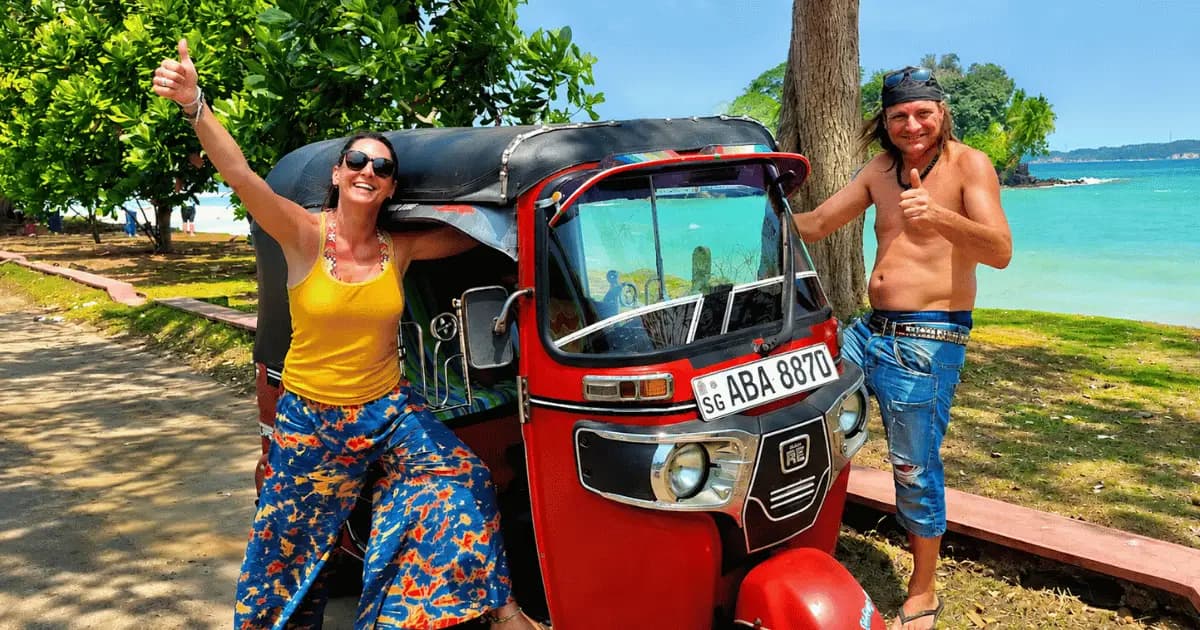
Somewhere after leaving the quieter coastline around Tangalle, the atmosphere along Sri Lanka's southern coast begins changing completely.
The roads become livelier, surfboards start appearing strapped onto tuk tuks, smoothie cafés spill onto the sidewalks, and beach towns slowly begin blending into one another beside the Indian Ocean.
This stretch of coastline — moving through Mirissa, Weligama, and Ahangama — has become the heart of Sri Lanka's modern surf and beach culture. But despite the growing popularity, the south coast still feels deeply tropical. Palm trees lean above the beaches, fishermen still leave before sunrise, train tracks run beside the ocean, and every evening the coastline glows gold while travelers gather beside the sea for sunset. The smell of grilled seafood and sea salt drifts through the beach roads while surfboards dry outside cafés beneath the palms.
For many travelers, this becomes one of the most social, scenic, and energetic stretches of the entire Sri Lankan journey. Many arrive for only a few days and quietly end up staying far longer than they originally planned.
Sri Lanka's Modern Surf Coast
Unlike the colonial atmosphere of Galle or the quieter fishing villages further east, the coastline around Mirissa, Weligama, and Ahangama feels youthful, creative, and deeply connected to the ocean itself.
Surf culture shapes daily life here. Before sunrise, surfers begin walking toward the sea carrying boards beneath the palms while cafés slowly open beside the beaches and fishermen return with the morning catch. By afternoon, tropical heat settles over the coastline while travelers move between surf breaks, cafés, beach bars, and hidden bays.
Despite international tourism, the south coast still remains tied closely to local fishing culture, railway towns, coconut plantations, and everyday coastal Sri Lankan life. Train tracks continue running dramatically beside the ocean while roadside fruit stalls, local rice-and-curry restaurants, and fishing harbors still exist naturally between the boutique cafés and surf villas. That contrast gives the region much of its identity.
Mirissa — Whale Watching, Palm Cliffs & Beach Nights
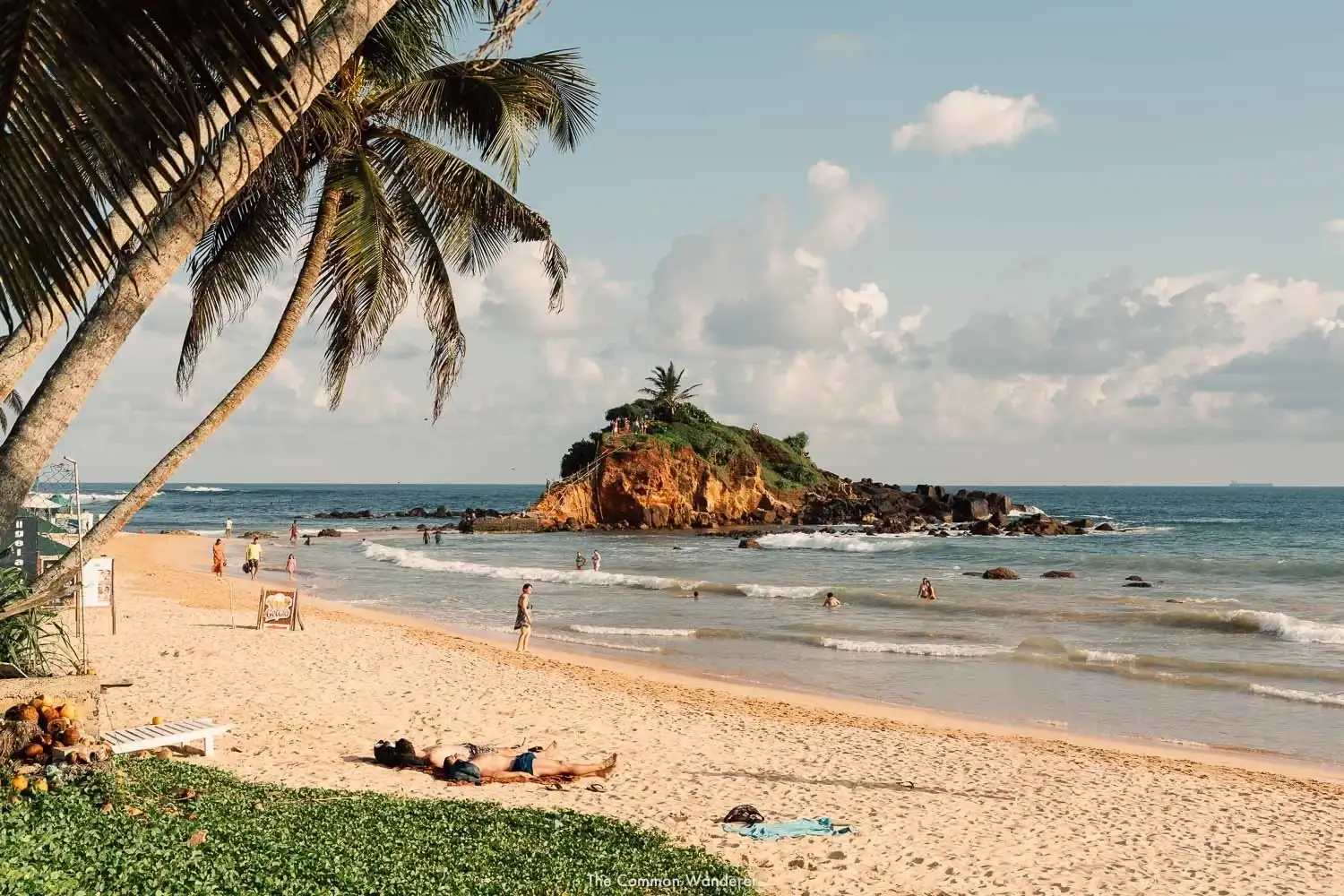
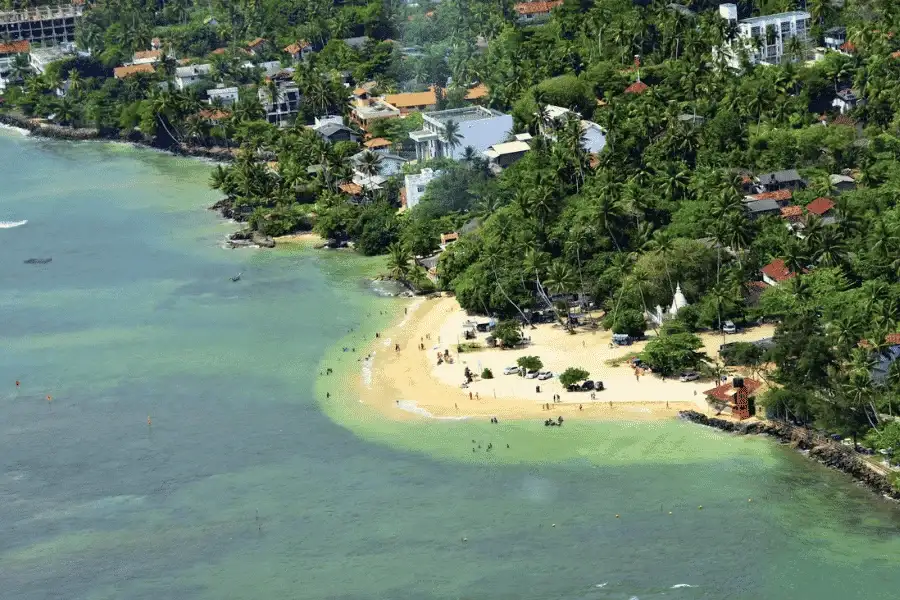
Mirissa feels like the version of Sri Lanka many travelers first imagine before arriving on the island. The beach curves beneath rows of leaning palms while seafood restaurants spill directly onto the sand and fishing boats drift offshore beneath the early morning light.
But Mirissa is more than simply a beach town. It somehow balances tropical calm with social energy at the same time.
Before sunrise, the harbor slowly comes alive as whale-watching boats head toward the deep southern waters of the Indian Ocean. Sri Lanka's southern coastline is considered one of the best places in the world to spot blue whales during migration season, especially between November and April when calmer seas improve visibility. Out at sea, travelers may encounter blue whales, sperm whales, dolphins, sea turtles, and occasional pilot whales — sometimes surfacing unexpectedly beside the boats. Responsible operators follow international whale-watching guidelines to reduce stress on marine life.
For many travelers, these moments become among the most unforgettable wildlife experiences anywhere in Sri Lanka.
Coconut Tree Hill
One of Mirissa's most iconic viewpoints is Coconut Tree Hill, where tall coconut palms rise dramatically above the cliffs overlooking the ocean. Although it became internationally famous through photography and social media, the atmosphere during sunrise and sunset still feels genuinely memorable as golden light spreads across the coastline.
Secret Beach
Hidden behind palms and rocky coastline, Secret Beach offers a slower and quieter atmosphere compared to Mirissa's main beach. Travelers often spend entire afternoons swimming, drinking king coconut beneath the palms, and escaping the busier parts of the coastline.
Parrot Rock
Parrot Rock gives one of the best viewpoints across Mirissa Bay, especially during sunset when the sky slowly changes color above the Indian Ocean. As darkness settles over the beach, Mirissa transforms into one of the south coast's liveliest beach towns. Lanterns glow beneath the palms while seafood grills fill the air with smoke and spices, music drifts through the beach bars, and travelers gather beside the ocean beneath warm tropical nights.
Things To Experience in Mirissa
- Go whale watching in Sri Lanka's deep southern waters during early morning departures
- Visit Coconut Tree Hill during sunrise when the coastline is still quiet
- Relax beside the calmer waters of Secret Beach with fresh king coconut
- Watch sunset from Parrot Rock as fishing boats return toward shore
- Choose fresh tuna, prawns, and calamari directly from beachside seafood displays before dinner
- Experience beach nightlife and live music beneath the palms
- Stay inside tropical beach villas and oceanfront guesthouses hidden along the coastline
Weligama — Surf Culture & Coastal Life
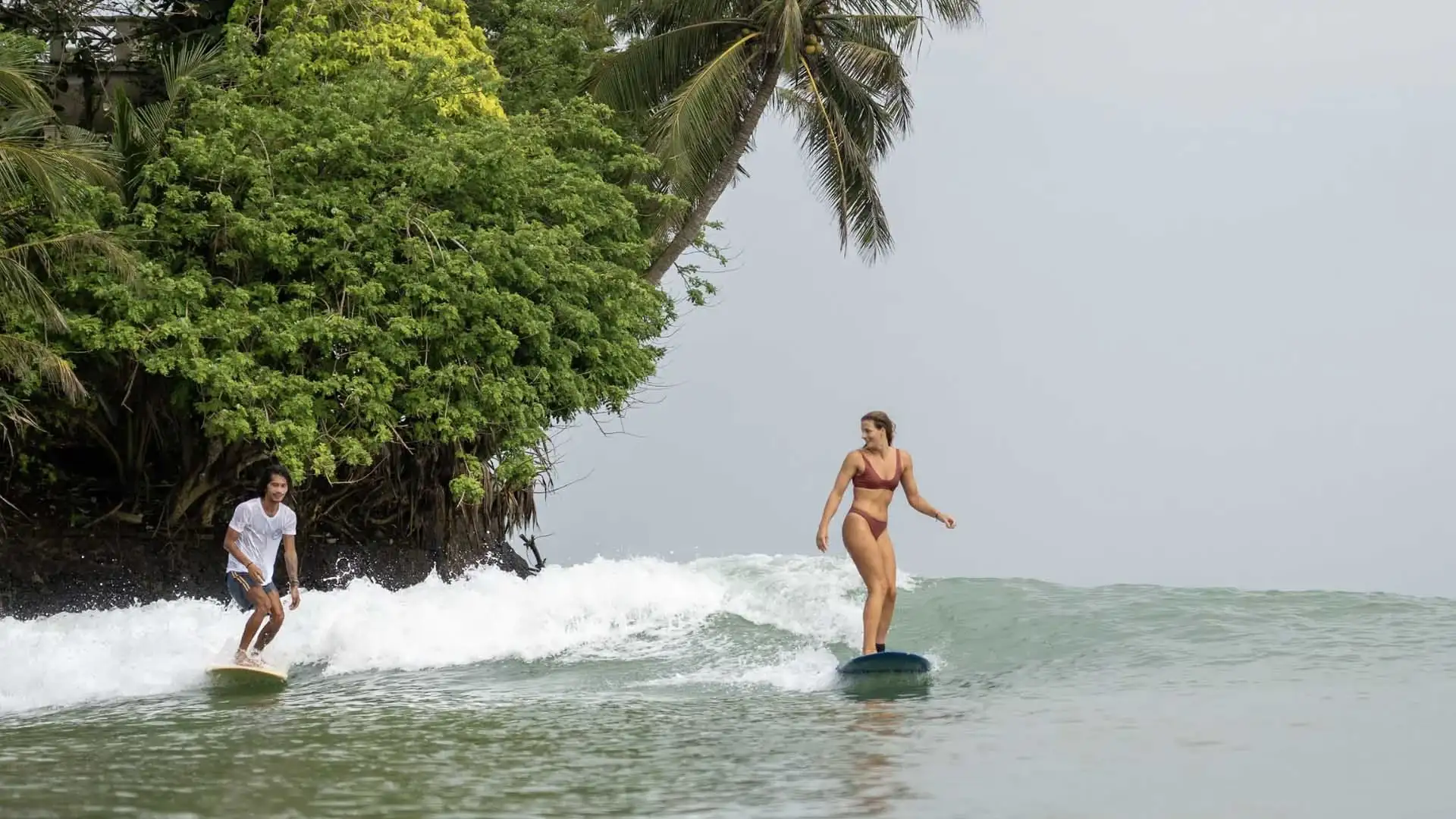
Only a short drive from Mirissa, Weligama introduces an entirely different atmosphere again. Unlike Mirissa's tropical beach energy, Weligama revolves around surfing and everyday coastal life.
The enormous horseshoe-shaped bay creates some of the safest and most beginner-friendly surf conditions anywhere in Sri Lanka, making the town one of the island's biggest surf-learning destinations. Surf season is generally strongest between November and April, when offshore winds and calmer conditions create cleaner waves along the southern coastline. From early morning, surfers carrying boards begin walking toward the ocean while instructors gather along the beach preparing lessons beneath the rising sun.
Even travelers who never planned to surf often end up taking lessons simply because the atmosphere around the bay feels welcoming and relaxed. The name "Weligama" roughly translates to "sandy village," which perfectly matches the long beach stretching around the bay itself.
Traditional Fishing Culture
Despite the growing surf scene, Weligama still remains deeply connected to Sri Lanka's fishing culture. Colorful fishing boats line parts of the shoreline while fishermen continue bringing fresh catches into the harbor exactly as they have for generations.
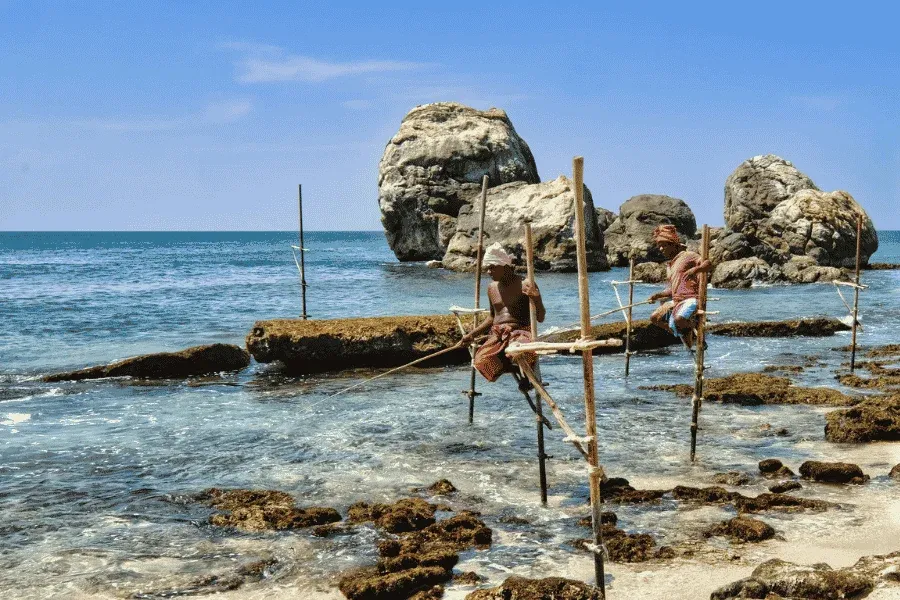
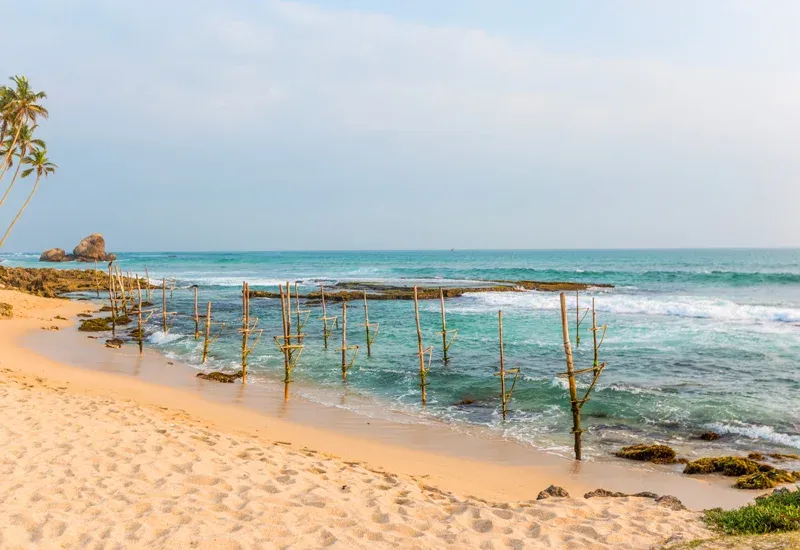
Along quieter sections of the coastline, fishermen repair nets beneath the shade while salt dries across painted wooden boats pulled onto the sand. The surrounding coastline also remains one of the best places to occasionally witness Sri Lanka's famous stilt fishermen balancing above the ocean on narrow wooden poles — a traditional fishing method that has existed for generations, although slowly declining as modern techniques replaced older practices.
Taprobane Island
One of the most unusual landmarks near Weligama is Taprobane Island, a tiny private island sitting just offshore with its colonial-era mansion surrounded entirely by the sea. For decades, the island attracted writers, artists, and travelers seeking privacy beside the southern coastline.
Things To Experience in Weligama
- Take sunrise surf lessons in the calmer waters of Weligama Bay
- Watch surfers practicing longboard rides across beginner-friendly waves
- Photograph traditional stilt fishermen along the southern coastline
- Watch local fishing boats return during sunset beside the harbor
- Visit viewpoints facing Taprobane Island
- Explore reef breaks around Midigama and nearby surf towns
- Stay inside surf hostels, tropical villas, and beachfront cafés beside the bay
Ahangama — Sri Lanka's Creative Coastal Escape
Further west, the coastline slowly becomes quieter again as the roads enter Ahangama. Compared to the social energy of Mirissa and the surf-focused atmosphere of Weligama, Ahangama feels calmer, more creative, and intentionally slower.
Boutique villas, jungle cafés, coworking spaces, yoga studios, hidden gardens, and small beach cafés sit quietly between palm trees and the ocean. Surf culture still exists strongly here — especially around nearby Kabalana and Midigama — but Ahangama feels more connected to slow coastal living than nightlife itself.
The architecture throughout Ahangama has become one of the most stylish coastal scenes in Sri Lanka, blending tropical modern design with open-air living and local materials. Many travelers now rent tropical villas, jungle guesthouses, and long-stay surf houses hidden among palm trees and quiet side roads near the beach. The region has become especially popular among digital nomads, surfers, photographers, and slow travelers spending weeks or months beside the ocean.
Yet local life still remains everywhere. Fishermen continue leaving before sunrise while trains pass beside the ocean and roadside fruit stalls sit beneath giant coconut palms beside the coastal roads.
Koggala Lake
One of the most peaceful escapes near Ahangama is Koggala Lake, where boat rides move slowly through mangroves, cinnamon islands, and quiet waterways hidden behind the coastline. Scattered across the lake are tiny islands, including small monastery islands and cinnamon-growing communities connected to Sri Lanka's historic spice trade.
Nearby lies the Martin Wickramasinghe Folk Museum, built around the ancestral home of Martin Wickramasinghe, one of Sri Lanka's most influential writers. The museum preserves traditional southern Sri Lankan folk culture, crafts, tools, and village life that shaped much of his writing.
Compared to Mirissa's beach energy, sunsets around Ahangama often feel quieter and more atmospheric.
Things To Experience in Ahangama
- Surf the reef breaks around Kabalana and Midigama during seasonal swells
- Explore mangroves and cinnamon islands on Koggala Lake by boat
- Visit the Martin Wickramasinghe Folk Museum to understand southern Sri Lankan village culture
- Discover hidden cafés, yoga studios, and boutique coastal spaces
- Photograph coastal trains moving beside the ocean
- Stay inside tropical villas, coworking stays, and jungle guesthouses hidden among the palms
- Spend slow afternoons watching surfers from roadside cafés
Surf Culture Along Sri Lanka's South Coast
Surfing shapes the rhythm of daily life throughout Mirissa, Weligama, and Ahangama. Early mornings begin with surfers carrying boards toward the ocean while cafés slowly open beside the beach.
For beginners, Weligama offers some of the easiest surf conditions in Sri Lanka, while experienced surfers often move toward reef breaks around Midigama, Ahangama, and Kabalana. Surf schools, rental shops, beach cafés, hostels, and instructors appear almost everywhere along the coastline, creating a social atmosphere that attracts travelers from around the world.
Even travelers who arrive without interest in surfing often become part of the coastal surf lifestyle simply by spending time beside the ocean here.
Café Culture, Seafood & Slow Coastal Living
One of the biggest reasons travelers fall in love with Sri Lanka's south coast is the lifestyle itself. The region has developed one of the island's most diverse café and restaurant scenes, blending Sri Lankan coastal food with international surf-town culture.
Seafood BBQs sit beside smoothie cafés, specialty coffee shops, tropical brunch spots, vegan restaurants, beach bars, and small family-run rice-and-curry restaurants. Fresh seafood remains central to coastal life — grilled prawns, calamari, tuna, lagoon crab, spicy fish curry, and coconut sambol appear everywhere from beach grills to small roadside cafés.
But the culture here revolves less around rushing between attractions and more around lingering. People spend hours watching surfers, drinking coffee beside the ocean, reading beneath palms, listening to waves, talking beside beach cafés, and waiting for sunset without needing plans. That slower rhythm becomes one of the most addictive parts of southern Sri Lanka.
Driving Sri Lanka's South Coast
This coastline is ideal for road trips. The roads remain scenic, relatively easy to navigate, and constantly connected to the ocean itself. Travelers stop almost anywhere — hidden beaches, surf breaks, seafood cafés, railway crossings, coconut stalls, beach bars, jungle cafés, and sunset viewpoints.
The short distances between Mirissa, Weligama, and Ahangama make this one of the easiest and most enjoyable coastal drives in Sri Lanka. Sometimes the best moments happen between destinations rather than inside them — pulling over beside an empty beach, hearing train horns echo beside the shoreline, or discovering a hidden café at the end of a palm-lined coastal road.
Important Driving Notes
- Tuk tuks are not permitted on Sri Lankan expressways
- Coastal roads can become busy during surfing season and sunset hours
- Plan extra travel time during weekends and holidays
- Watch carefully for pedestrians and surf traffic near beach towns
Where To Head Next
From Mirissa, Weligama, and Ahangama, the south coast connects naturally in several directions:
- West toward Galle — colonial fort walls, cafés, and historic streets create a completely different atmosphere along the southern coast
- Inland toward the hill country — tropical beaches slowly transition into waterfalls, tea plantations, forests, and mountain roads around Ella
- East toward quieter coastlines — Tangalle and the less-developed southern beaches offer a calmer alternative for travelers escaping the surf-town energy
For many travelers, however, Mirissa, Weligama, and Ahangama become the places where Sri Lanka feels most youthful, tropical, social, and alive all at once — where surf culture, ocean roads, seafood dinners, sunsets, and slow coastal living all blend together beside the Indian Ocean.
Frequently Asked Questions — Mirissa, Weligama & Ahangama
What is the best time to visit Mirissa, Weligama, and Ahangama?
The best months are November through April when offshore winds create cleaner surf conditions along the southern coastline, whale-watching season peaks in Mirissa, and calmer seas improve ocean visibility. Between May and October the southwest monsoon affects the south coast and surf conditions become less predictable.
How far is Mirissa from Negombo by tuk tuk?
Mirissa is approximately 160 km south of Negombo. By tuk tuk the drive takes around 4–5 hours depending on route and stops. Most travelers break the journey at Galle or along the coastal highway before reaching the surf coast.
Where is the best place to learn surfing in Sri Lanka?
Weligama is considered one of the best places to learn surfing in Sri Lanka. The wide horseshoe-shaped bay creates beginner-friendly waves and surf schools operate along the beach. For more experienced surfers, reef breaks at Midigama, Ahangama, and Kabalana offer stronger conditions during peak surf season.
Can you drive from Mirissa to Weligama to Ahangama by tuk tuk?
Yes. The distances between Mirissa, Weligama, and Ahangama are short — usually 10–20 minutes by tuk tuk between each town. The coastal road connects them directly and the drive is scenic. Most travelers explore all three towns over 2–3 days. For information on renting a tuk tuk in Sri Lanka, see our full guide.
When is whale watching season in Mirissa?
Blue whale watching season in Mirissa runs primarily from November through April when calmer ocean conditions improve visibility in Sri Lanka's deep southern waters. Peak months are generally December through March. Most whale-watching tours depart from Mirissa harbor before sunrise.