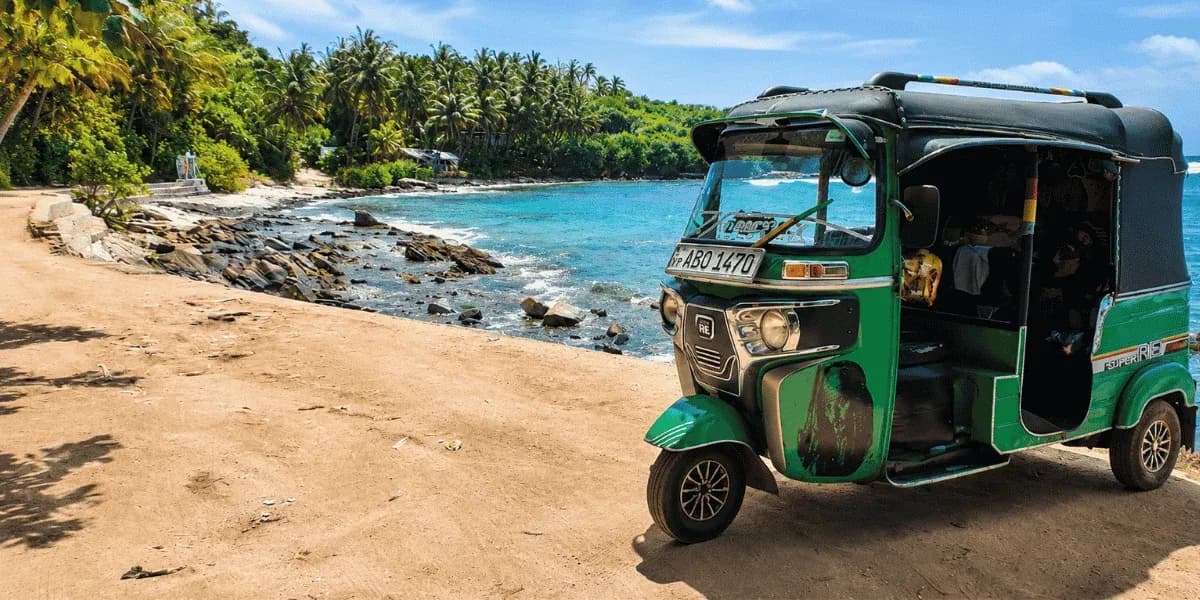
Sri Lanka's deep south feels completely different from the rest of the island. The mountains slowly disappear behind you, the air becomes warmer, the roads stretch endlessly beside the Indian Ocean, and the landscapes begin shifting into dry forests, fishing villages, hidden beaches, surf bays, lagoons, and open southern skies.
The journey through Hambantota, Tangalle, and Hiriketiya reveals one of Sri Lanka's most diverse coastal routes — a region where safari landscapes meet tropical beaches, sea turtles nest beside quiet coastlines, and hidden surf bays sit only hours away from elephant country and ancient temples.
Unlike the busier southern coast further west, this part of Sri Lanka still feels spacious and slightly untamed. Some beaches remain nearly empty outside peak season. Fishing boats still dominate village harbors. Giant waves crash against rocky cliffs while coconut palms lean above roads that seem to follow the Indian Ocean endlessly southward.
For many travelers, this becomes one of Sri Lanka's most unforgettable coastal journeys — not because of one single attraction, but because every town feels completely different from the last.
Hambantota — Sri Lanka's Wild Southern Frontier
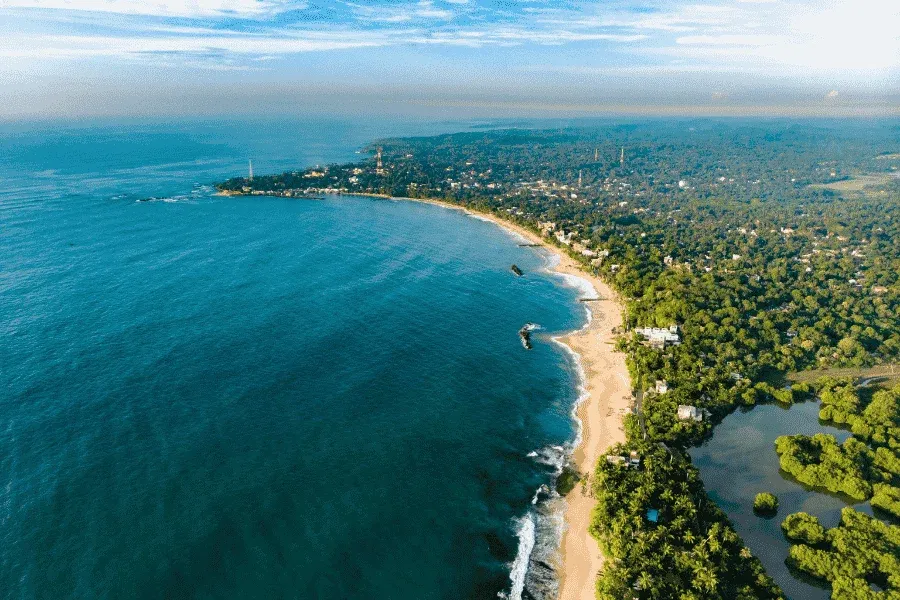
Hambantota feels far removed from Sri Lanka's tropical surf towns. The landscapes here belong more to the island's dry zone — wide open plains, salt pans, lagoons, scrub forests, wildlife corridors, and enormous southern skies stretching toward the coastline.
Historically, Hambantota was closely connected to maritime trade and salt production. Even today, the giant salt pans remain one of the region's most recognizable sights, creating surreal white landscapes reflecting the southern heat beneath the sun.
But what makes Hambantota especially fascinating is how closely wildlife and coastline exist together. Driving through the region often feels cinematic. One moment travelers pass dry grasslands filled with peacocks beside the road, and the next the landscape suddenly opens toward fishing harbors and quiet beaches facing the Indian Ocean.
Bundala — Lagoons, Flamingos & Southern Wetlands
Bundala National Park offers one of the most unique wildlife experiences in southern Sri Lanka. Unlike safari parks dominated by jeep traffic, Bundala feels quieter and more connected to birdlife and coastal ecosystems. Flamingos gather seasonally beside the lagoons while pelicans, painted storks, crocodiles, elephants, monkeys, and countless migratory birds thrive throughout the park's wetlands and dry forests.
The mixture of lagoons, salt flats, wildlife, and ocean landscapes gives Bundala an atmosphere completely different from Sri Lanka's more famous safari parks. Early mornings here feel peaceful and almost dreamlike as mist rises slowly above the wetlands while birds move across the golden southern light.
Things To Experience Around Hambantota
- Explore Bundala National Park for wetlands, lagoons, flamingos, crocodiles, elephants, and migratory birdlife across one of Sri Lanka's most unique ecosystems
- Visit the Hambantota salt pans and discover enormous reflective salt fields deeply connected to the region's trading history
- Drive through open plains, wildlife corridors, lagoons, and coastal dry-zone wilderness
- Photograph flamingos, pelicans, salt flats, and dramatic southern skies
- Discover hidden southern beaches far away from Sri Lanka's busier beach towns
Tangalle — Sri Lanka's Slower Southern Coast
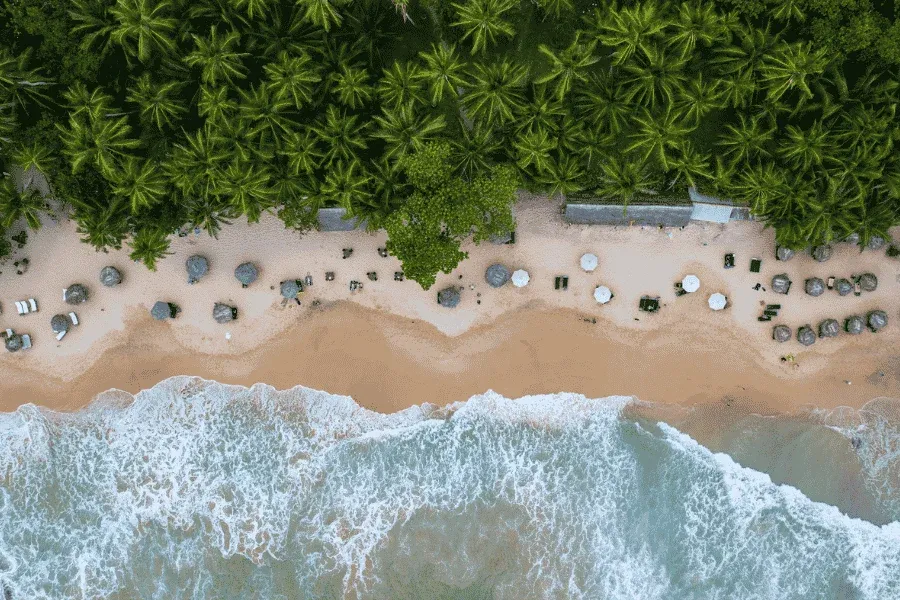
After the dry wilderness surrounding Hambantota and nearby safari regions, arriving in Tangalle feels like stepping into an entirely different rhythm. The safari roads slowly disappear behind you, palm trees begin leaning above the coastline again, and suddenly everything feels slower, softer, and quieter.
Tangalle has always carried a different atmosphere compared to Sri Lanka's busier beach towns. Long before Mirissa became internationally famous, travelers searching for quieter beaches and slower coastal living were already finding their way here. Even today, Tangalle still holds onto much of that older southern Sri Lankan beach atmosphere.
The coastline feels wild in places. Giant waves crash against dramatic rocky shores while hidden beaches appear between leaning coconut palms and long empty stretches of sand. Unlike the social surf culture further west, Tangalle feels more connected to quiet mornings, seafood dinners beside the ocean, boutique beach stays, sea breezes, long coastal walks, and slow tropical living.
Driving into Tangalle becomes part of the experience itself. The roads pass coconut estates, rice paddies, roadside fruit stalls, fishing villages, and ocean viewpoints where the Indian Ocean constantly appears beside the journey. Many travelers end up stopping repeatedly — for king coconuts beside the road, hidden beaches discovered accidentally, roadside seafood cafés, and sunset viewpoints overlooking the sea.
Goyambokka, Silent Beach & Mawella — Tangalle's Hidden Beaches
The beaches surrounding Tangalle remain some of the most peaceful anywhere on Sri Lanka's southern coastline. Goyambokka Beach feels calm and tropical beneath leaning palms while waves roll gently onto golden sand. Nearby, Silent Beach lives up to its name with quieter stretches of coastline hidden between rocky sections and coconut trees. Mawella Beach offers a longer curved bay where fishing boats, calmer waters, and village life create a softer atmosphere compared to the more dramatic beaches nearby.
Early mornings along these coastlines feel unforgettable. Fishermen prepare boats while dogs sleep beneath palm trees and waves echo across almost empty beaches beneath golden sunrise light.
Things To Experience Around Tangalle
- Relax at Goyambokka Beach with calm tropical scenery beneath leaning coconut palms
- Discover Silent Beach and escape the crowds at one of Tangalle's quieter hidden coastlines
- Explore Mawella Beach for fishing villages, calmer bays, and slower southern coastal life
- Enjoy seafood dinners beside the ocean with grilled fish, prawns, curries, and fresh seafood beneath candlelit palms
- Take long coastal walks along quiet beaches, sea breeze, and dramatic southern ocean landscapes
- Visit hidden cliff and ocean viewpoints overlooking the Indian Ocean
Turtle Watching at Rekawa
One of the most emotional wildlife experiences in southern Sri Lanka happens after dark around the beaches of Rekawa near Tangalle. Giant sea turtles slowly emerge from the ocean and crawl across the sand to lay eggs beneath the darkness — a ritual that has taken place along these shores for centuries.
When experienced responsibly with conservation guides, turtle watching becomes one of the most unforgettable moments many travelers experience in Sri Lanka. The silence of the beach, the sound of the waves, and the sight of enormous turtles moving slowly beneath the night sky create something deeply memorable.
Things To Experience at Rekawa
- Go turtle watching with conservation guides to witness sea turtles nesting along Sri Lanka's southern beaches during nighttime experiences
- Learn about the efforts protecting endangered sea turtles along the southern coastline
- Experience peaceful nighttime coastal atmosphere beneath the sound of the Indian Ocean
Mulkirigala — Ancient Rock Temple Above the Forests
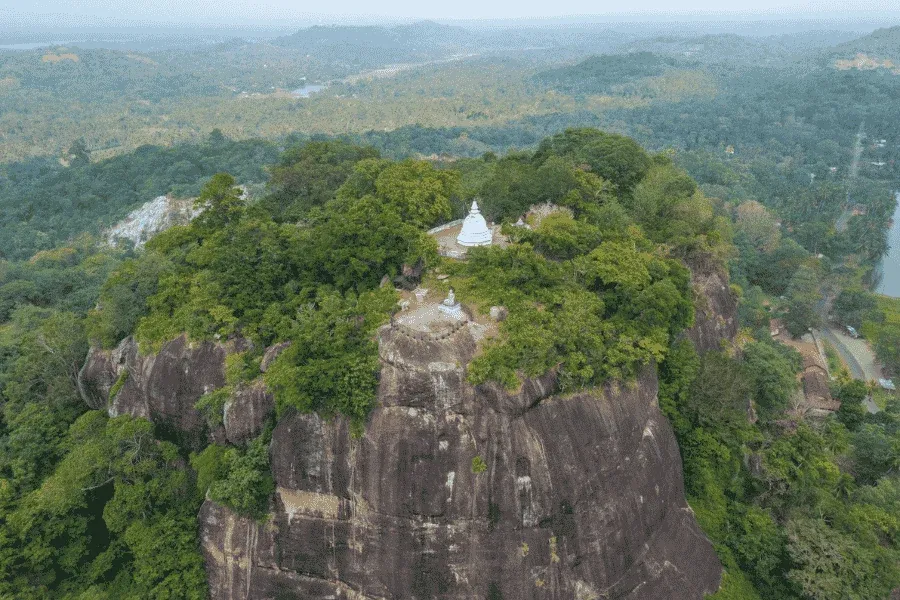
Hidden slightly inland from the coast, Mulkirigala Raja Maha Vihara rises dramatically above the surrounding forests like a forgotten monastery carved into the rocks. Often compared to a smaller and quieter version of Sigiriya, the ancient temple contains cave shrines, reclining Buddha statues, murals, stone stairways, and meditation spaces hidden among enormous rock formations.
The climb itself feels peaceful and atmospheric. Monkeys move through the trees while warm wind flows across the rocks overlooking Sri Lanka's southern landscapes below. The panoramic views from the upper sections stretch across forests, villages, and distant southern coastline beneath endless skies.
Things To Experience at Mulkirigala
- Explore ancient cave temples with Buddhist shrines, murals, meditation spaces, and reclining Buddha statues hidden among the rocks
- Climb through forested temple paths along peaceful stone stairways surrounded by monkeys and tropical forest scenery
- Enjoy panoramic southern views looking across forests, villages, and coastline from the upper rock viewpoints
- Experience one of southern Sri Lanka's most underrated and spiritually atmospheric ancient temple complexes
Hummanaya Blow Hole — Southern Ocean Power
Near Kudawella, close to Tangalle and Hiriketiya, lies Hummanaya Blow Hole — one of the largest natural blow holes in the world. As waves crash beneath the rocky cliffs, seawater explodes upward through the narrow rock opening, sometimes reaching dramatic heights depending on ocean conditions. The surrounding coastline feels rugged and wild, with giant waves continuously crashing against the southern cliffs beneath enormous open skies.
Things To Experience at Hummanaya
- Watch the blow hole erupt as powerful ocean waves force seawater high into the air through the rocky cliffs
- Explore rugged southern coastline with dramatic ocean scenery and rocky viewpoints overlooking the Indian Ocean
- Photograph one of Sri Lanka's most unique natural coastal formations
Hiriketiya — Sri Lanka's Hidden Surf Bay
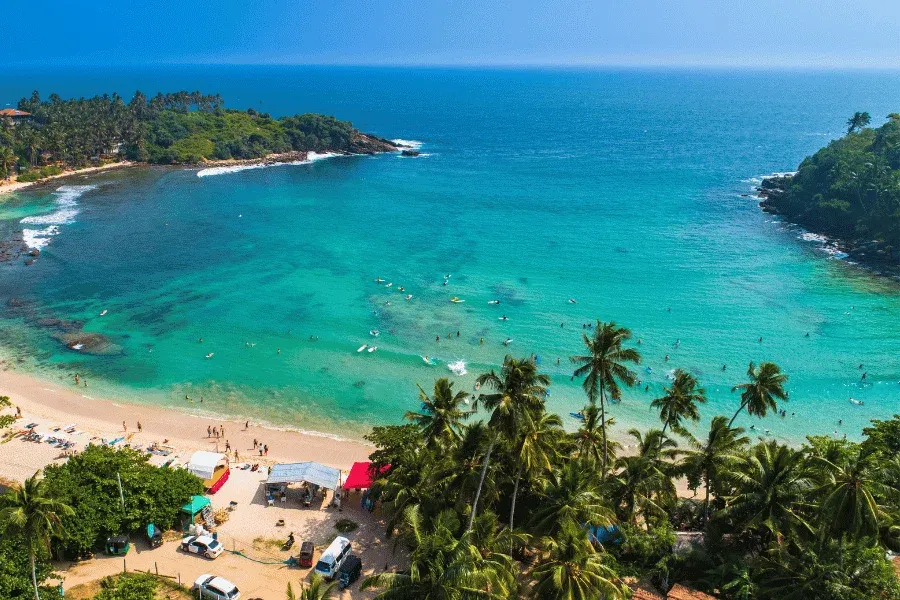
Further west, the coastline curves suddenly into one of Sri Lanka's most beautiful hidden bays. Hiriketiya feels completely different from Tangalle despite being only a short drive away. The road into the bay almost feels secretive. Narrow jungle roads pass beneath coconut palms before suddenly opening toward turquoise water, surfboards, cafés, and a perfect horseshoe-shaped bay surrounded by tropical greenery.
What was once a quiet fishing village has slowly transformed into one of Sri Lanka's most loved surf escapes, yet somehow still manages to feel intimate rather than overdeveloped. There are no massive resort strips or towering hotels here. Instead, hidden cafés disappear into tropical gardens, boutique villas sit quietly beneath the palms, and almost everything revolves around the beach itself.
Surfing & Slow Tropical Living in Hiriketiya
Surf culture shapes daily life throughout Hiriketiya. From sunrise onward, surfboards begin appearing everywhere — strapped onto tuk tuks, leaning beside cafés, carried barefoot toward the ocean. The protected shape of the bay creates ideal surf conditions for both beginners and experienced surfers depending on the season.
For beginners, the inside section of the bay often provides gentler waves perfect for learning, while experienced surfers move toward faster reef breaks further outside. Unlike larger surf towns where the atmosphere can sometimes feel commercial, Hiriketiya's surf culture still feels relaxed, friendly, and deeply social. Many travelers arrive planning a single surf lesson and quietly end up staying for an entire week.
Things To Experience in Hiriketiya
- Take surf lessons and learn surfing within one of Sri Lanka's most beautiful tropical bays
- Relax at hidden beach cafés with smoothie bars, brunch spots, and tropical coffee shops beneath the palms
- Enjoy oceanfront yoga and wellness retreats through slower coastal living and beachside relaxation
- Watch sunset beside the bay during warm tropical evenings while surfers catch the final waves beneath orange skies
- Spend long days swimming and relaxing in calmer waters during quieter ocean conditions inside the protected bay
- Experience Hiriketiya's social surf atmosphere and meet travelers, surfers, digital nomads, and beach lovers from around the world
Explore Nearby Dickwella
Just outside Hiriketiya lies Dickwella, where travelers can experience a more traditional southern coastal atmosphere filled with bakeries, fishing boats, temples, markets, and local village life. Nearby beaches and fishing harbors reveal quieter corners of the coastline where the southern ocean still feels deeply connected to everyday life.
One of the region's most recognizable landmarks is Wewurukannala Vihara, famous for its enormous seated Buddha statue towering above the surrounding town. The temple complex also contains murals, shrines, and panoramic views across Sri Lanka's southern coastline.
Things To Experience Around Dickwella
- Visit Wewurukannala Vihara and explore one of southern Sri Lanka's most recognizable Buddhist temples
- Discover traditional southern coastal life through fishing villages, bakeries, local markets, and quieter beach atmosphere
- Explore hidden beaches and harbors in peaceful corners of Sri Lanka's southern coastline beyond the surf bays
Roads Through Sri Lanka's Deep South
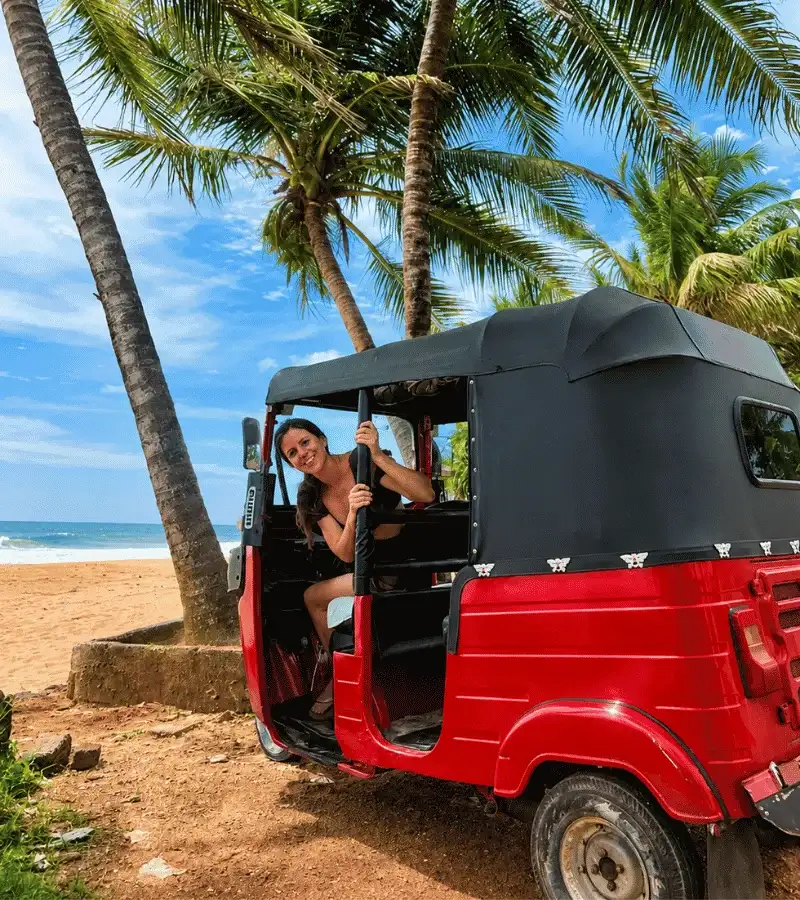
One of the most unforgettable parts of traveling this region is simply the journey itself. The roads between Hambantota, Tangalle, and Hiriketiya constantly change atmosphere — dry-zone wilderness, safari landscapes, fishing villages, hidden beaches, surf bays, coconut plantations, lagoons, rocky coastlines, and endless ocean sunsets.
Every section of the drive feels visually different from the last. Sometimes the most memorable moments happen between destinations rather than inside them — stopping beside an empty beach, eating roadside seafood while watching the ocean, or driving beside the coastline during sunset while warm southern winds move through the palms.
Important Safari Notes
- Tuk tuks are not permitted inside national parks such as Bundala National Park
- Travelers must switch to licensed 4x4 safari jeeps or compatible safari vehicles for safari experiences
- Avoid direct contact with wild animals and always follow wildlife safety guidelines
- Do not feed, approach, or disturb wildlife during safari drives
Important Driving Notes
- Tuk tuks are not permitted on Sri Lankan expressways or highways
- Travelers must use scenic A-roads and local coastal routes
- Plan extra travel time when driving between destinations
- Coastal roads may become busy during sunset hours and holiday periods
Where To Head Next
From Hiriketiya and Tangalle, many travelers continue west toward Mirissa, Weligama, and Ahangama along Sri Lanka's famous surf coastline, while others return inland toward Ella, Yala National Park, and Sri Lanka's central highlands. Some continue exploring the quieter southern coastline itself, discovering hidden beaches and fishing villages far away from the island's busier tourist routes.
For many travelers, however, the journey through Hambantota, Tangalle, and Hiriketiya becomes one of Sri Lanka's most unforgettable experiences — a region where wildlife, hidden beaches, surf culture, ancient temples, fishing villages, and slow tropical living all exist together beside the Indian Ocean.
Frequently Asked Questions — Hambantota, Tangalle & Hiriketiya
What is near Hambantota in Sri Lanka?
Near Hambantota, key attractions include Bundala National Park (flamingos and wading birds in coastal lagoons), Udawalawe National Park (elephant herds), and the southern coastline stretching toward Tangalle and Rekawa Beach. Hambantota itself has a large harbor and dry-zone landscape.
When can you see turtles at Rekawa Beach?
Green turtles nest at Rekawa Beach throughout the year, with peak nesting season from March to August. Night visits are organized through the Rekawa Turtle Conservation Project. Visits start after dark and are guided by local conservationists.
What is Hiriketiya known for?
Hiriketiya is a small horseshoe-shaped bay near Dickwella on Sri Lanka's deep south coast. It is popular for its beginner-friendly surf break, slow-travel atmosphere, beach cafés, yoga, and quiet stretches of sand. The bay is sheltered and the surrounding community is small and unhurried.
Is Tangalle worth visiting in Sri Lanka?
Yes. Tangalle is one of the quieter towns on Sri Lanka's south coast. The beaches stretch wide and the atmosphere is slower than Mirissa or Unawatuna. Silent Beach and Rekawa are within a short distance, and Mulkirigala rock temple is a short drive inland.
What is Mulkirigala in Sri Lanka?
Mulkirigala is an ancient rock temple about 16 km north of Tangalle. The site rises above the surrounding forest and contains cave temples with reclining Buddha statues, colonial-era wall paintings, and panoramic views across the southern plains. It is one of the most significant religious sites on the south coast.