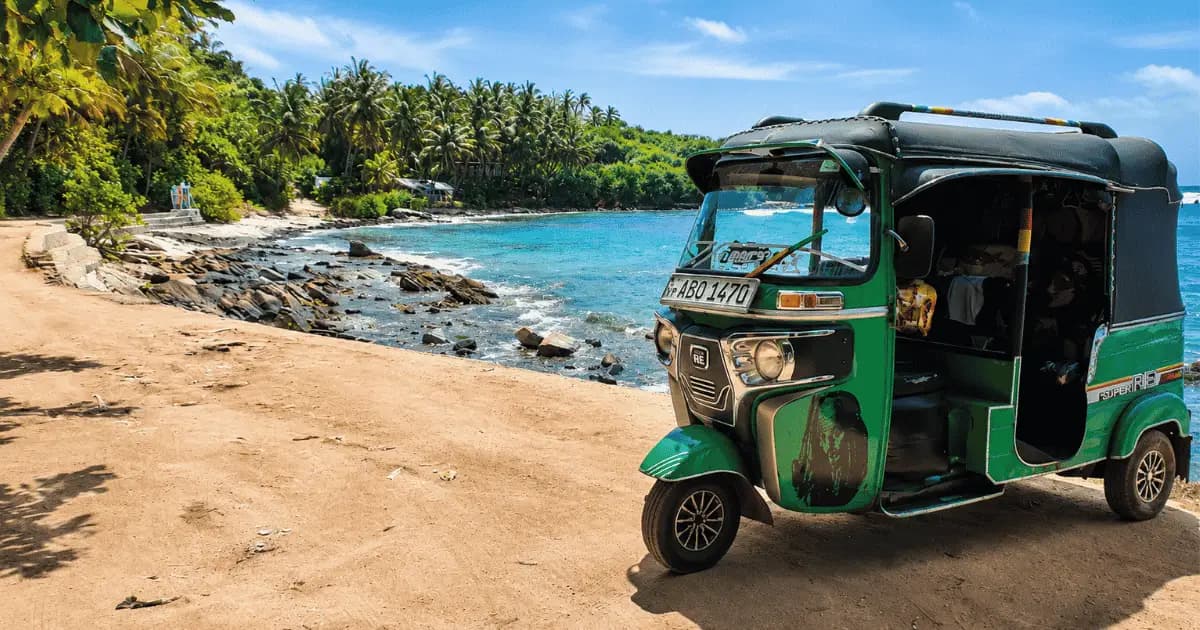
Leaving the dry wilderness around Yala National Park and driving west toward Tangalle feels like slowly exhaling after an adventure. The dusty safari roads disappear behind you, the ocean air begins returning through the palm trees, and suddenly the journey changes pace completely.
The coastline becomes quieter here. Fishing boats rest beside empty beaches, giant waves roll endlessly against rocky shores, and the roads curve slowly through coconut plantations and sleepy coastal villages where life still moves at its own rhythm.
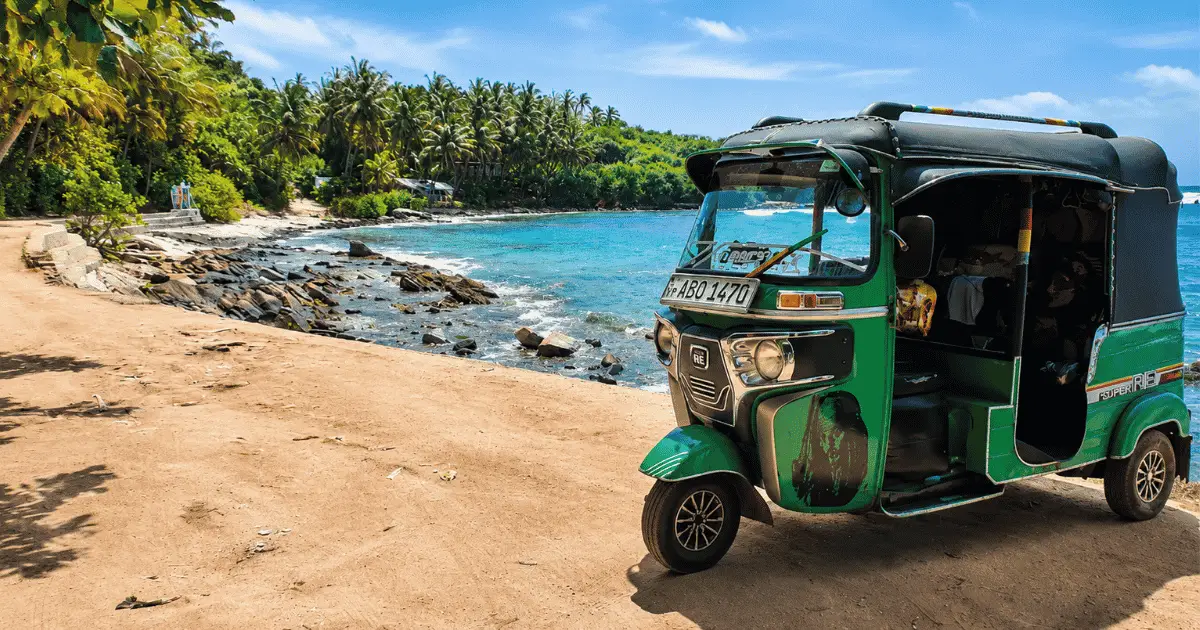
For many travelers driving around Sri Lanka by tuk tuk, Tangalle becomes one of the first places where the journey truly slows down. Not because there is nothing to do — but because the atmosphere naturally makes people stop rushing. Many travelers arrive planning to stay for two nights and quietly end up extending for nearly a week.
Recommended Stay: 2–3 Nights
Tangalle is best experienced slowly. Mornings disappear into long breakfasts near the ocean, afternoons turn into beach walks and café hopping, and sunsets become something travelers begin planning their days around.
For travelers coming from:
- Yala
- Ella
- Arugam Bay
- long inland drives
Tangalle becomes the perfect reset point before continuing further along Sri Lanka's southern coastline.
What Makes Tangalle Different
Long before Mirissa and Sri Lanka's southern surf towns became globally popular, Tangalle was already one of the island's classic coastal escapes. For decades, independent travelers searching for quieter beaches and a slower atmosphere found themselves drawn here. Even today, Tangalle still holds onto much of that older Sri Lankan beach feeling.
Unlike the more crowded beach towns further west, Tangalle never feels dominated by tourism. The coastline remains wild in many places. Large waves crash against dramatic rocks, hidden coves appear between leaning coconut palms, and entire beaches can still feel almost empty outside peak season.
The beaches here are not built around parties or packed surf bars. Instead, Tangalle feels more connected to:
- nature
- quiet mornings
- long coastal drives
- boutique beach stays
- sea breezes
- ocean sunsets
- slow travel
There is also something visually dramatic about this part of the coastline. The southern ocean feels more powerful here. The sea changes constantly throughout the day — calm and glowing blue during mornings, then rougher and darker by evening as waves explode against the rocks beneath the palms. It is one of the few places on Sri Lanka's south coast where travelers still feel slightly removed from the faster tourist world.
Driving Into Tangalle by Tuk Tuk
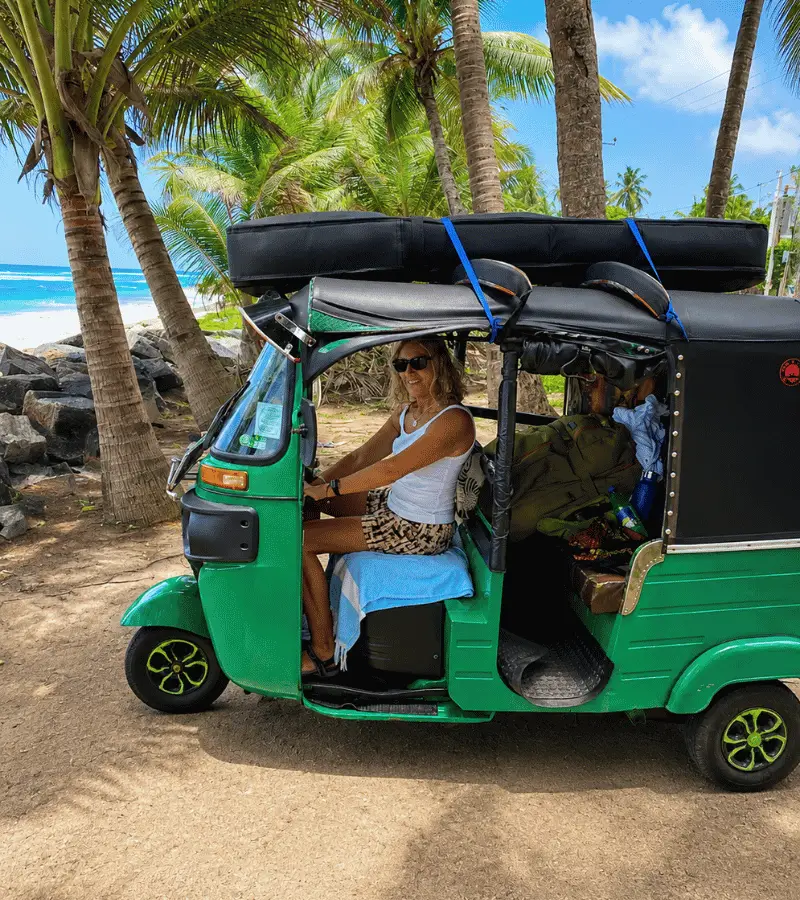
The drive into Tangalle becomes part of the experience itself. The roads wind through:
- coconut estates
- roadside fruit stalls
- fishing villages
- rice paddies
- quiet stretches of coastline
Glimpses of the Indian Ocean appear constantly beside the road.
Compared to Sri Lanka's hill country routes, driving here feels incredibly relaxed. There are no steep climbs, misty mountain bends, or crowded buses squeezing through narrow roads. Instead, the journey feels warm, tropical, and slow.
Many travelers end up stopping repeatedly along the way: for king coconuts beside the road, hidden beaches they randomly discover, tiny local cafés facing the sea, and roadside seafood restaurants filled with the smell of grilled fish and curry.
By sunset, the southern coastline around Tangalle begins glowing orange while fishermen slowly pull boats back toward the shore. Driving a tuk tuk here during golden hour becomes one of those travel memories people remember long after leaving Sri Lanka.
The Beaches Around Tangalle
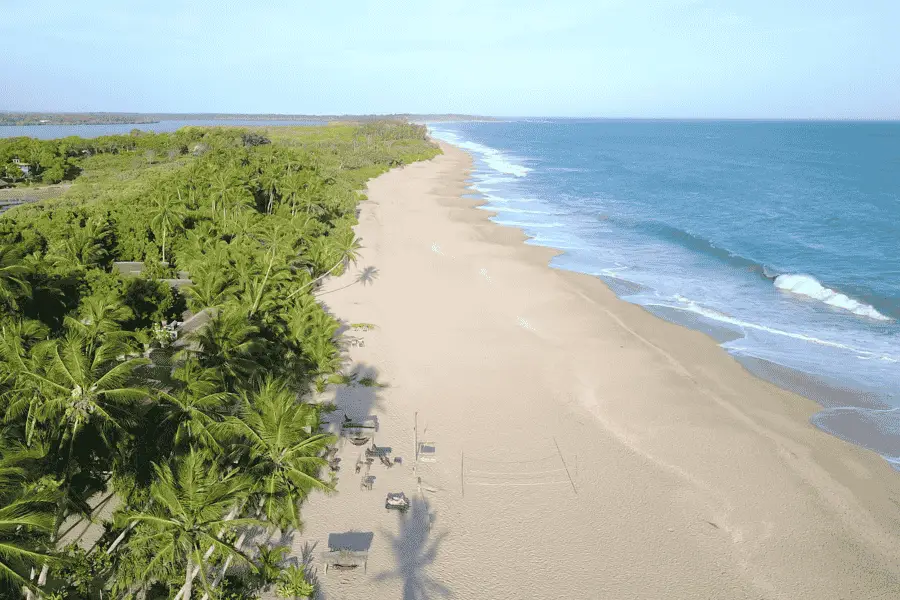
The beaches are the reason many travelers fall in love with Tangalle. But unlike Mirissa or Unawatuna, Tangalle's beaches feel quieter, more spread out, and far more connected to the natural coastline. Some beaches are hidden between rocks and palm trees while others stretch endlessly with almost nobody around.
Silent Beach, Goyambokka Beach, and Mawella Beach have become favorites among travelers looking for quieter corners of Sri Lanka's southern coast. Early mornings here feel almost surreal — the beaches are usually empty except for fishermen preparing boats, dogs sleeping beneath palms, and the sound of waves crashing against the shore.
Some beaches are perfect for swimming during calmer conditions, while others are better simply for walking, reading, or watching the ocean because the currents can become strong. Unlike busier southern beaches, Tangalle encourages travelers to slow down rather than constantly move between attractions.
Rekawa & the Sea Turtles
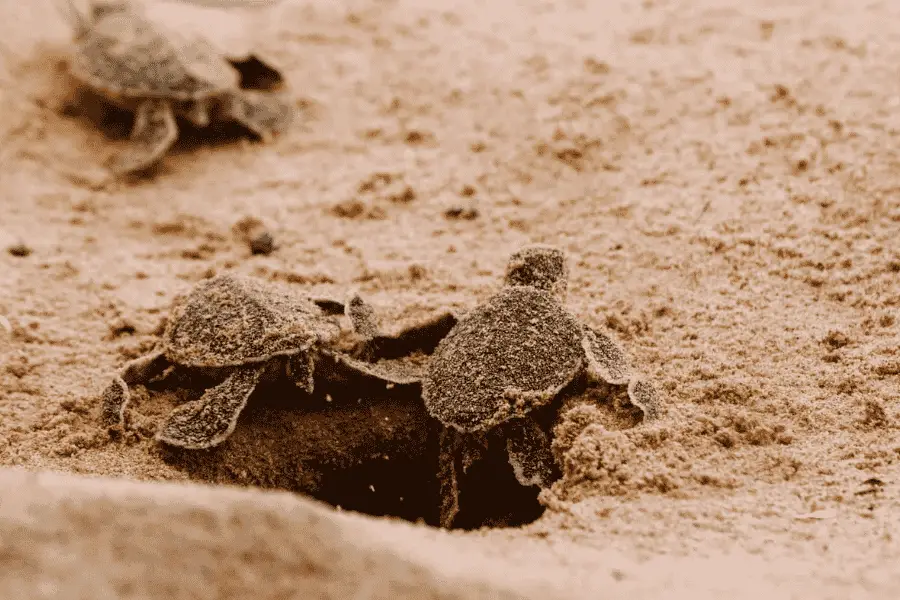
One of the most unforgettable experiences near Tangalle happens after dark. The beaches near Rekawa are among the most important sea turtle nesting areas in Sri Lanka. Late at night, under almost complete darkness, giant sea turtles slowly emerge from the ocean and crawl onto the beach to lay eggs in the sand — a ritual that has happened here for centuries.
When experienced responsibly with local conservation guides, it becomes a powerful reminder of how connected this coastline still is to wildlife and nature. Unlike commercialized wildlife attractions, the atmosphere around Rekawa feels quiet, respectful, and deeply natural.
Visitors are encouraged to avoid flash photography and loud behavior so the turtles remain undisturbed. For many travelers, watching a giant turtle return silently into the ocean under the stars becomes one of the most emotional wildlife experiences in Sri Lanka.
Mulkirigala Rock Temple — The Forgotten Southern Monastery
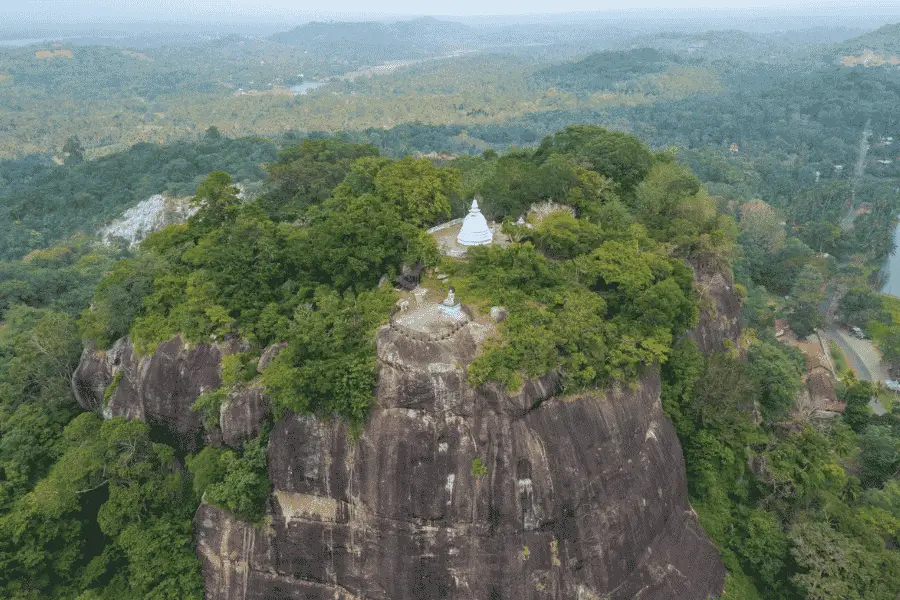
A short drive inland from Tangalle, the coastline suddenly gives way to forest and massive rock formations rising above the trees. Hidden among them is Mulkirigala Raja Maha Vihara, one of southern Sri Lanka's most underrated historical sites.
Often compared to a smaller version of Sigiriya, Mulkirigala was an ancient forest monastery where monks once meditated in caves carved directly into the rock. The temple's history stretches back more than 2,000 years.
Stone stairways climb through different cave shrines filled with ancient Buddhist murals, reclining Buddha statues, meditation spaces, and panoramic viewpoints overlooking the southern forests. Monkeys move through the trees, wind passes through the rocks, and the higher you climb, the quieter the world below begins to feel.
Unlike some of Sri Lanka's larger tourist sites, Mulkirigala still feels undiscovered by many international travelers. That atmosphere is part of what makes it special.
Slow Café Life & Ocean Evenings
Tangalle is not a nightlife destination. The evenings here revolve around:
- seafood dinners beside the ocean
- candlelit cafés
- conversations under palm trees
- quiet music
- sunsets over the coastline
Many travelers spend entire afternoons doing very little: reading books in hammocks, drinking fresh juice, listening to waves, or simply watching storms move across the Indian Ocean. That slower pace becomes addictive.
Beach cafés and boutique stays around Tangalle often feel beautifully integrated into nature rather than built around crowds and loud tourism. Compared to Sri Lanka's more energetic beach towns, Tangalle feels mature, peaceful, and deeply relaxing.
Fishing Villages & Coastal Life
Even though tourism exists around Tangalle, fishing still shapes daily life along much of the coastline. During early mornings, travelers often see fishermen repairing nets, colorful boats pulled onto the sand, fish markets beginning to open, and families working along the shore.
The connection between the people and the ocean feels very real here. That authenticity gives Tangalle much of its character.
Food in Tangalle
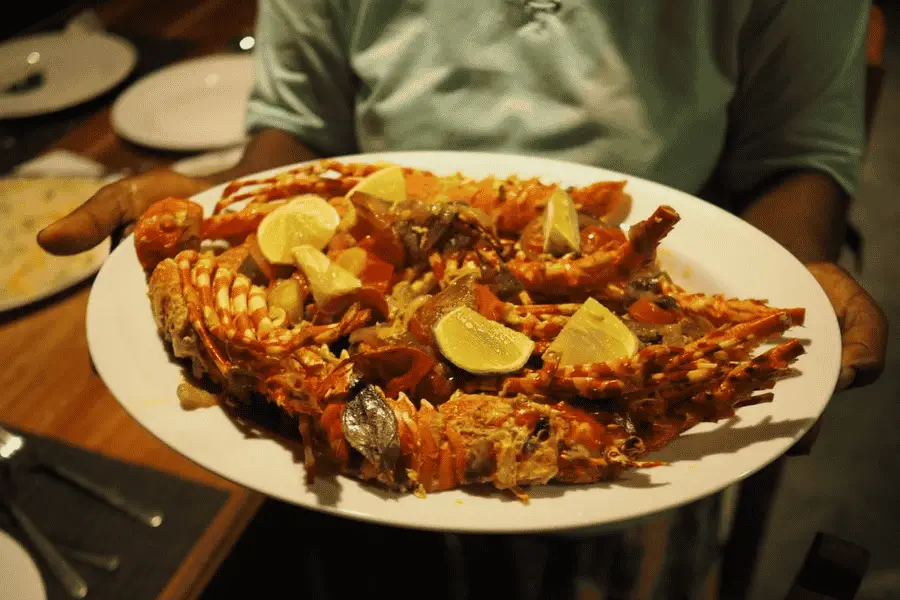
Seafood dominates the food culture around Tangalle. Fresh tuna, prawns, crab, lobster, and grilled fish appear everywhere along the coastline, often prepared using traditional southern Sri Lankan spices and coconut-based curries.
Small beach restaurants fill the air with the smell of:
- grilled seafood
- garlic butter prawns
- curry leaves
- coconut sambol
- wood-fired cooking
Sunset dinners become a major part of the Tangalle experience. Many restaurants place tables directly beside the beach where travelers eat under palms while listening to waves, in complete darkness except for candlelight and distant fishing boats offshore.
Staying in Tangalle
Tangalle has some of the most beautiful boutique stays on Sri Lanka's southern coast. Many accommodations are designed around ocean views, tropical gardens, hidden beaches, quiet privacy, and open-air living.
Travelers can find everything from:
- eco lodges
- beach villas
- jungle cabanas
- luxury boutique hotels
- family-run guesthouses
Compared to busier southern towns, accommodation here often feels far more peaceful and integrated into nature.
Driving Beyond Tangalle
After Tangalle, the southern coastline slowly becomes busier as travelers continue west toward Mirissa, Weligama, and Galle. Tangalle often becomes the final quiet coastal escape before entering Sri Lanka's more social and tourist-heavy beach circuit.
For many tuk tuk travelers, it also becomes one of the destinations they remember most — not because of one specific attraction, but because of how peaceful life felt while they were there.
Why Travelers Remember Tangalle
For many tuk tuk travelers, Tangalle becomes the place where the journey genuinely slows down — not just in pace, but in the way time feels. The famous beaches are only part of what makes this destination special. The morning fishing boats, the turtle-nesting coastline at Rekawa, the ancient monastery hidden in the rocks at Mulkirigala, and the simple act of sitting beside the southern ocean with nowhere urgent to be — those are the things that stay with people long after leaving.
Frequently Asked Questions — Tangalle Travel Guide
How far is Tangalle from Negombo?
Tangalle is approximately 220–240 km from Negombo. By tuk tuk the drive takes around 5–6 hours depending on the route and stops. Most travelers break the journey by stopping in Galle or Mirissa along the way.
Is Tangalle good for swimming?
Some beaches around Tangalle are suitable for swimming during calmer sea conditions, but others have strong currents that make swimming dangerous. Always check conditions locally before entering the water. Mawella Beach and Goyambokka Beach are generally calmer than the main town beach, particularly between November and April.
When is the best time to visit Tangalle?
The best time to visit Tangalle is between November and April when the southern coast receives less rainfall, seas are calmer, and beach conditions are at their best. The Rekawa turtle nesting season runs from April through September, with peak activity between May and August.
How do I see sea turtles near Tangalle?
The Rekawa Turtle Conservation Project is approximately 12 km east of Tangalle. Guided evening visits run when turtles come ashore to nest, typically after dark. Local guesthouses can arrange transport or directions. Visits follow strict rules around photography and noise to avoid disturbing the turtles.
Is Mulkirigala worth visiting from Tangalle?
Yes. Mulkirigala Raja Maha Vihara is an ancient Buddhist rock monastery about 16 km north of Tangalle. Cave shrines, ancient murals, reclining Buddha statues, and panoramic views over the southern forests make the short climb worthwhile. It remains far less visited than other cultural sites in Sri Lanka, which gives it a peaceful and genuine atmosphere.