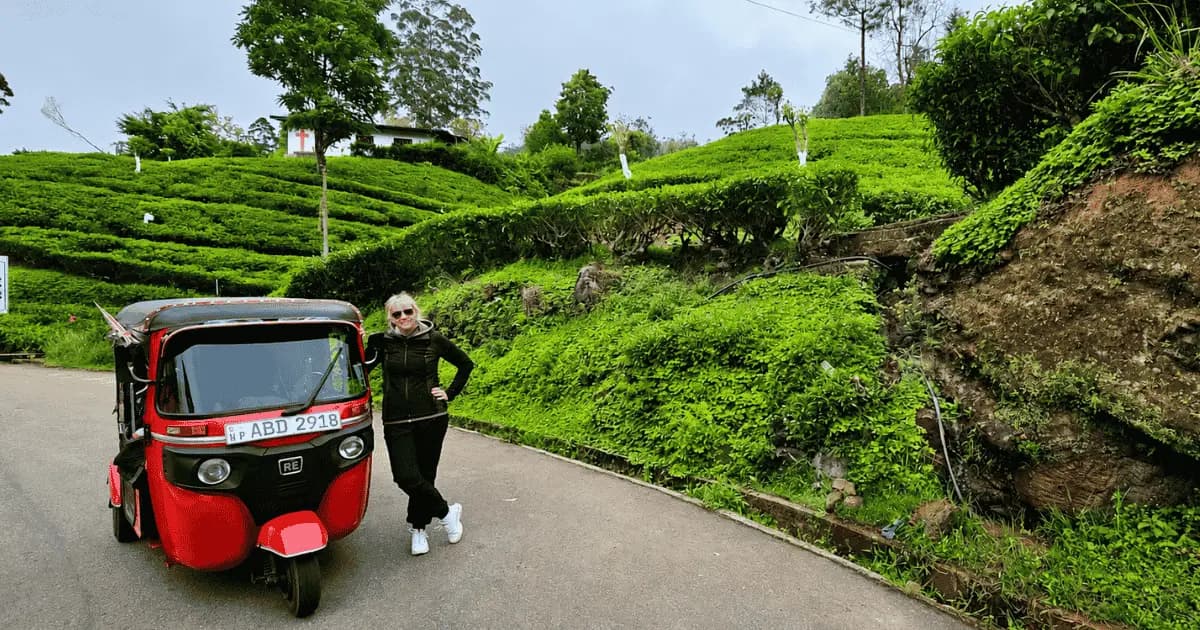
After leaving the cultural energy and crowded streets of Kandy, the road toward Nuwara Eliya begins transforming almost everything around you.
The warm tropical air slowly cools as the roads climb higher into the mountains. Dense forests replace busy towns, waterfalls appear beside the roadside, and endless green tea plantations begin covering the hills in every direction.
For travelers exploring Sri Lanka by tuk tuk, this route often becomes one of the most memorable journeys on the island. The roads twist through mountain valleys, cloud forests, tea estates, railway crossings, hidden villages, and mist-covered hillsides where tea workers move quietly through the plantations during the colder early mornings.
Along the way, many travelers stop at Ambuluwawa Tower near Gampola, famous for its narrow spiral staircase and panoramic mountain views stretching across forests, valleys, tea plantations, and distant peaks.
Then suddenly, surrounded by colonial-era hotels, red-roofed cottages, English gardens, golf courses, and rolling tea-covered hills, you arrive in Nuwara Eliya — Sri Lanka's famous "Little England."
Deeper within the mountains lies Mandaram Nuwara, a quieter and more untouched side of the hill country filled with hidden waterfalls, misty valleys, forests, and peaceful mountain roads far away from the crowds.
Unlike the tropical coastline or the dry plains surrounding the Cultural Triangle, this region feels cold, green, foggy, and almost unexpectedly European in certain places.
Nuwara Eliya — Sri Lanka's "Little England"
Nuwara Eliya has one of the most unique atmospheres anywhere in Sri Lanka.
Known as the coldest major town on the island, the region feels completely different from the tropical lowlands. Mornings are often covered in mist while evenings can become surprisingly cold after sunset.
During British colonial rule, Nuwara Eliya became a retreat for tea plantation owners and colonial officials escaping the heat of Colombo. Over time, the town transformed into a hill-country destination inspired heavily by England itself.
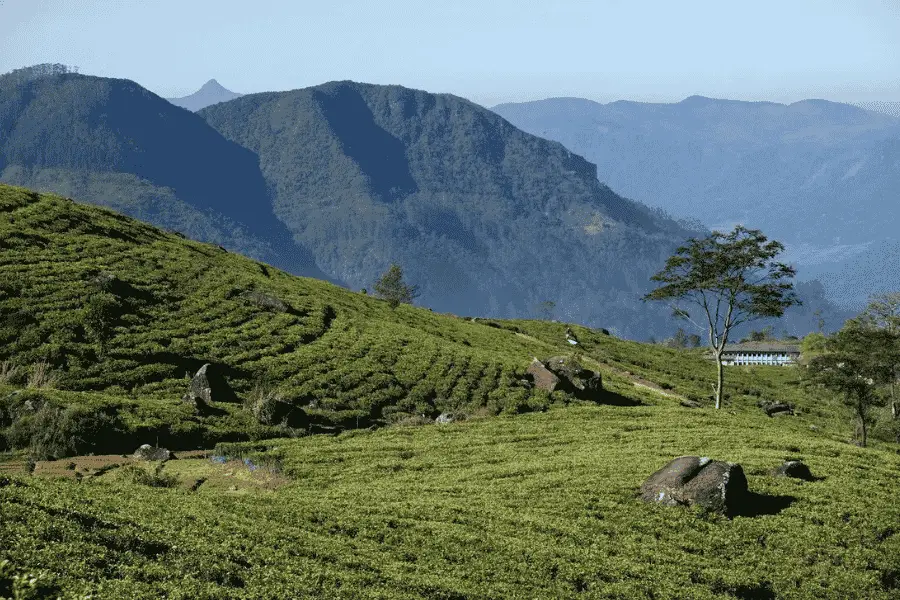
Even today, travelers notice Tudor-style houses, colonial hotels, tea estate bungalows, English gardens, racecourse grounds, and golf courses spread naturally among the mountains and tea-covered hills. The region also sits at the heart of Sri Lanka's tea country, with plantations covering the surrounding mountains in every direction.
Tea Plantations & Ceylon Tea
One of the defining experiences in Nuwara Eliya is visiting the tea estates surrounding the town. Bright green tea bushes stretch across steep hillsides while pickers move through the plantations beneath drifting morning mist carrying baskets across their backs.
Many tea factories allow travelers to walk through plantations, watch tea-processing machines, learn how Ceylon tea is produced, taste fresh high-grown tea, and explore colonial-era factory buildings. For many travelers, sitting at a tea factory café overlooking fog-covered hills while drinking fresh Ceylon tea becomes one of the defining memories of Sri Lanka's hill country.
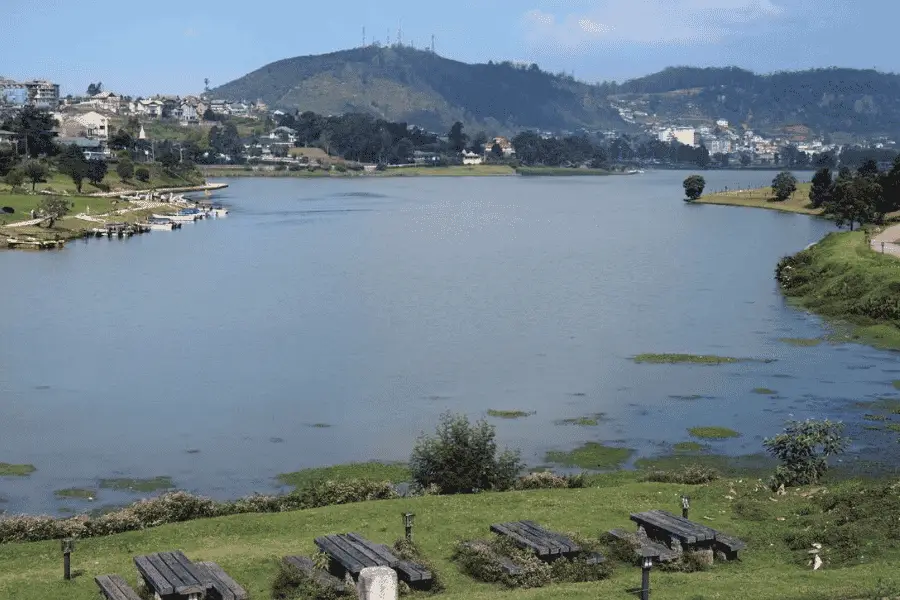
Gregory Lake
Originally built during the British colonial period, Gregory Lake remains one of the most relaxing places in Nuwara Eliya. Surrounded by pine trees, mountain air, and cooler temperatures, the lake feels entirely different from the tropical lowlands.
Travelers spend time walking beside the lake, cycling around the shoreline, paddle boating, trying local street food, horseback riding, and relaxing during sunset. During weekends and holidays, the atmosphere becomes lively with local families, music, food stalls, and evening gatherings beside the water.
Waterfalls Through the Hill Country
Driving through Sri Lanka's hill country often feels like moving between waterfalls hidden among tea plantations, forests, valleys, and mist-covered cliffs.
Ramboda Falls
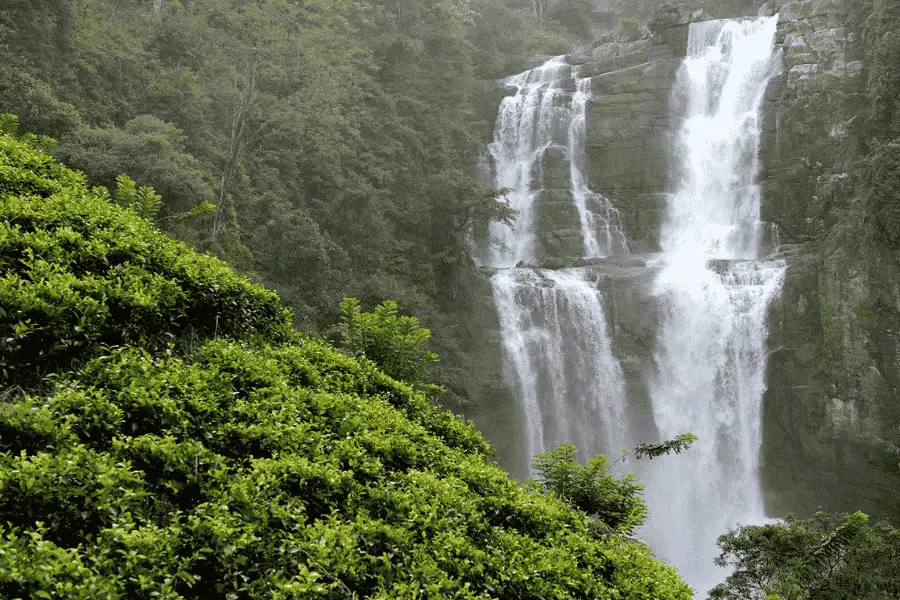
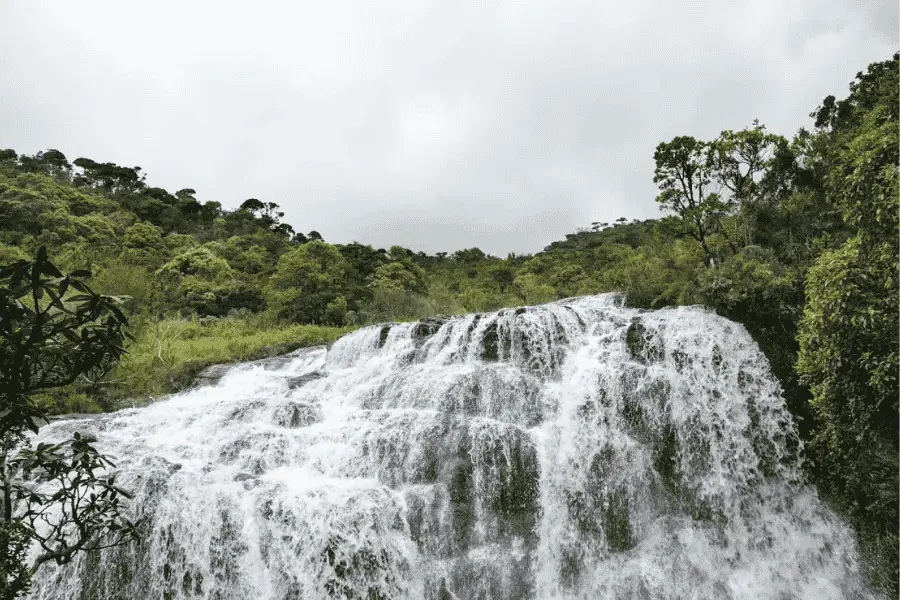
Located along the Kandy–Nuwara Eliya road, Ramboda Falls is among the tallest waterfalls in Sri Lanka. The waterfall crashes through steep mountain valleys surrounded by tea plantations and colder mountain air, becoming especially dramatic after rain.
Lover's Leap Falls
Hidden near Pedro Tea Estate, Lover's Leap Falls carries one of the region's best-known legends. According to local stories, a prince and his lover leapt from the cliffs following a tragic romance, giving the waterfall its dramatic name. The surrounding forests and tea plantations create a quieter atmosphere compared to the larger roadside waterfalls.
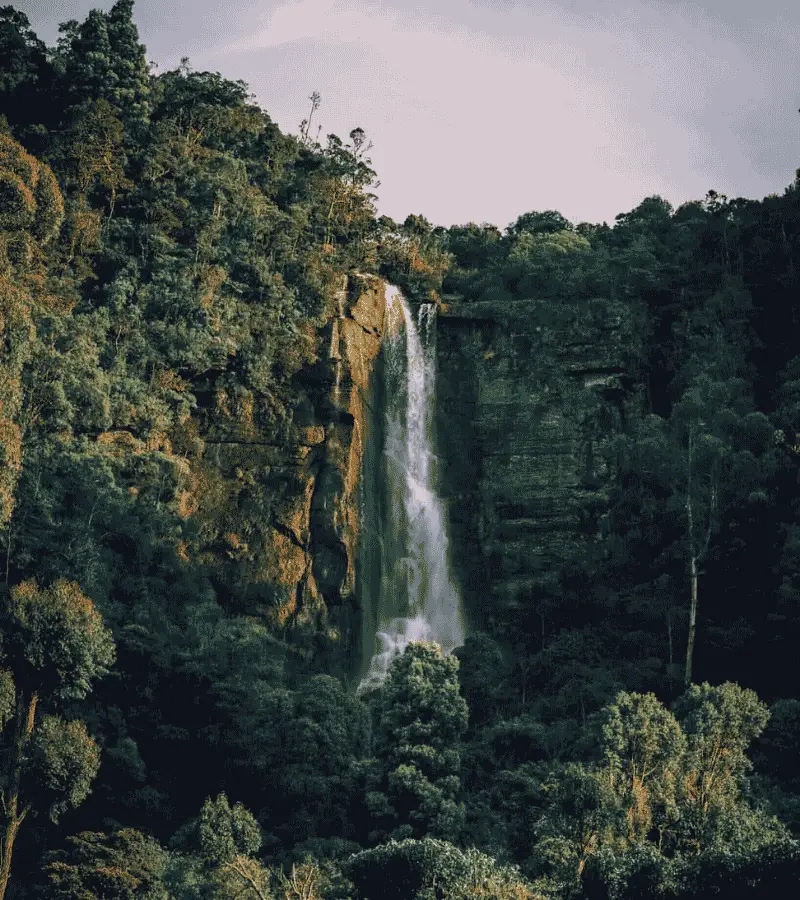
Devon Falls
Often called the "Veil of the Valley," Devon Falls becomes especially atmospheric during misty weather when the water appears to flow directly through the clouds beneath the surrounding hills.
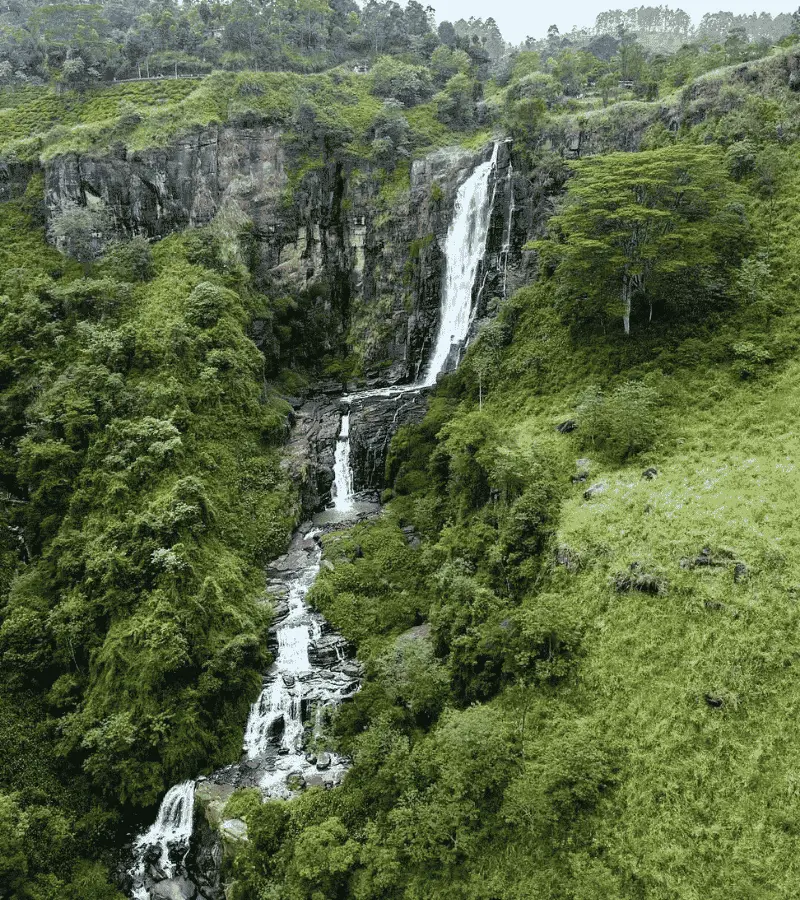
St. Clair's Falls
Known as the "Little Niagara of Sri Lanka," St. Clair's Falls spreads across multiple cascades surrounded by rolling tea-covered mountains. Early mornings here often feel especially atmospheric as mist drifts slowly across the valleys.
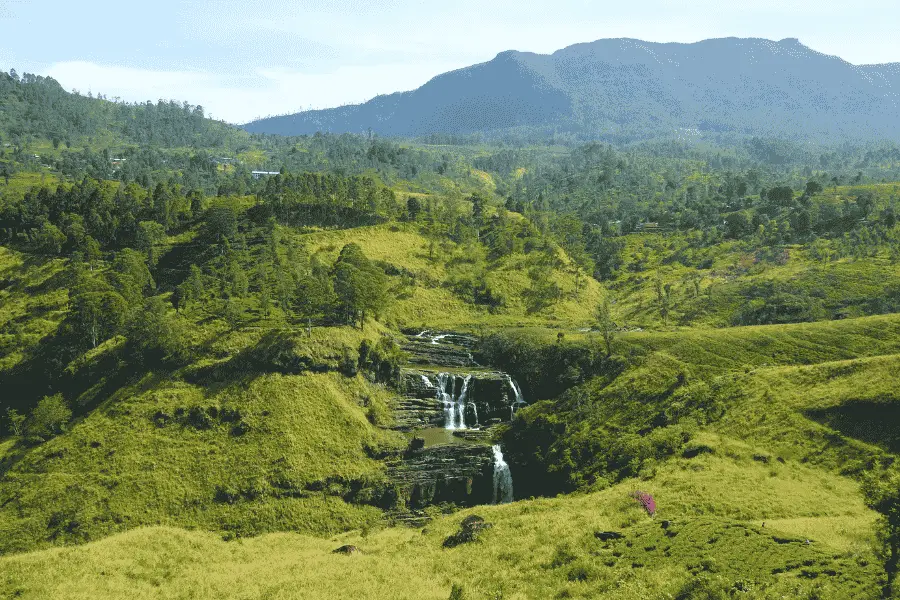
Horton Plains & World's End
Located around 30 kilometres from Nuwara Eliya, Horton Plains National Park offers one of the most unique landscapes in Sri Lanka. Covered by cloud forests, open grasslands, waterfalls, rivers, and dramatic viewpoints, the national park feels completely different from the rest of the island.
At over 2,000 metres above sea level, Horton Plains is one of Sri Lanka's coldest regions. The park forms part of the UNESCO-listed Central Highlands of Sri Lanka, internationally recognized for its cloud forests, biodiversity, and fragile highland ecosystem.
World's End
The most famous viewpoint inside Horton Plains is World's End. The land suddenly drops nearly 900 metres into the valleys below, creating one of Sri Lanka's most dramatic mountain escarpments. On clear mornings, visibility stretches across forests, tea plantations, distant lowlands, and sometimes even toward the southern coastline. Because clouds often arrive later in the morning, early visits are strongly recommended.
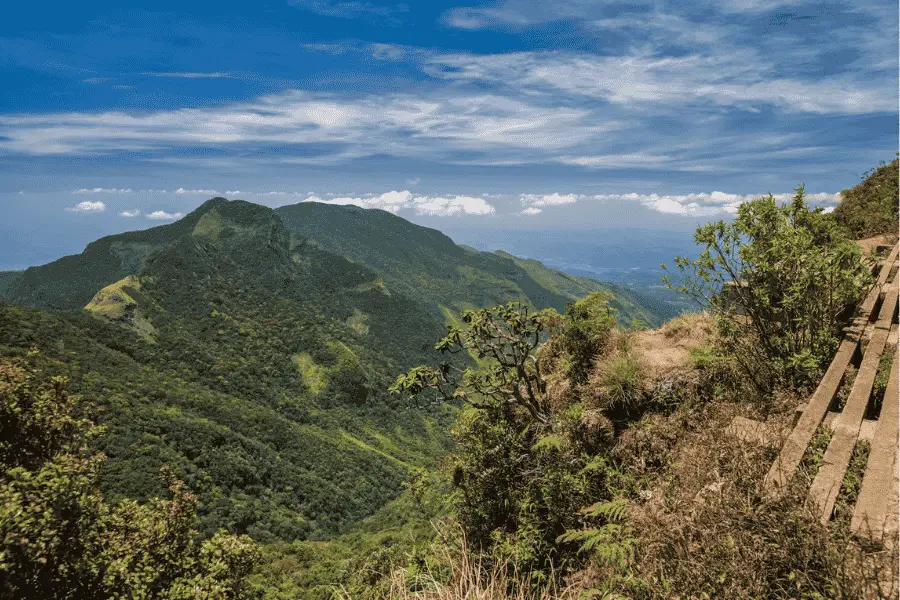
Baker's Falls & Wildlife
Hidden within thick cloud forest along the hiking trail, Baker's Falls flows through moss-covered rocks and dense mountain vegetation. Wildlife around Horton Plains includes sambar deer, purple-faced langurs, giant squirrels, mountain birds, and endemic reptiles and amphibians found nowhere else on the island.
Mandaram Nuwara
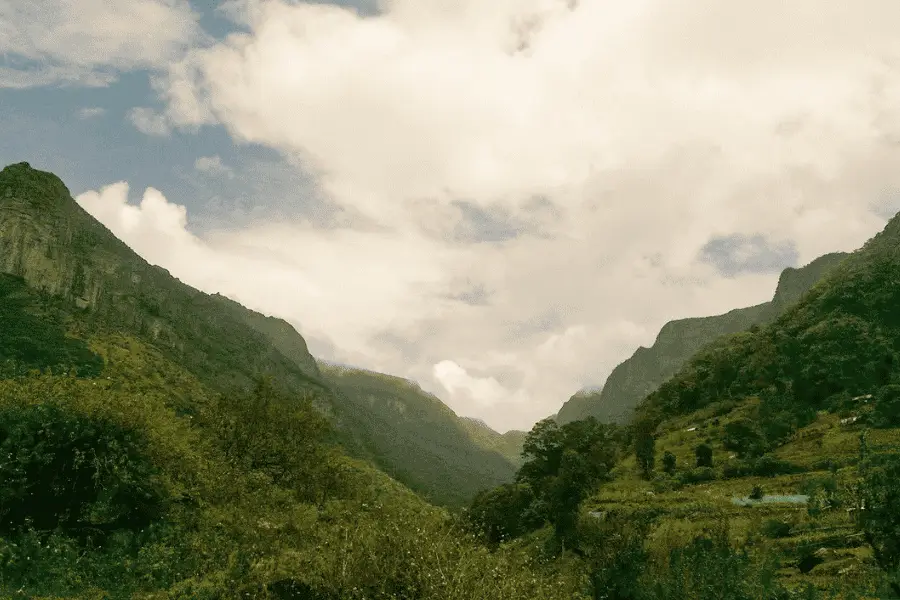
Tucked deep within Sri Lanka's central highlands, Mandaram Nuwara feels far removed from the busier hill-country towns. Surrounded by mist-covered valleys, forests, rivers, waterfalls, and tea estates, the region offers one of the quietest mountain atmospheres anywhere on the island.
The drive itself becomes part of the experience. Narrow mountain roads wind through tea estates, isolated villages, cloud forests, and dramatic scenery where the weather constantly changes between sunshine, rain, fog, and drifting cloud.
Unlike Ella or central Nuwara Eliya, Mandaram Nuwara feels built for slow travel. Travelers spend time relaxing beside rivers, exploring hidden waterfalls, drinking hot tea overlooking valleys, walking through tea estates, staying inside eco lodges and mountain cabins, and enjoying bonfire nights beneath the cold mountain air.
Many travelers rent private mountain cottages, colonial tea bungalows, glass cabins, and hillside villas overlooking the plantations. Some stays sit hidden beside forests and rivers while others open directly toward valleys covered in morning mist. At night, the mountains become completely dark and quiet except for river sounds, insects, and cold wind moving through the valleys.
Ambuluwawa Tower
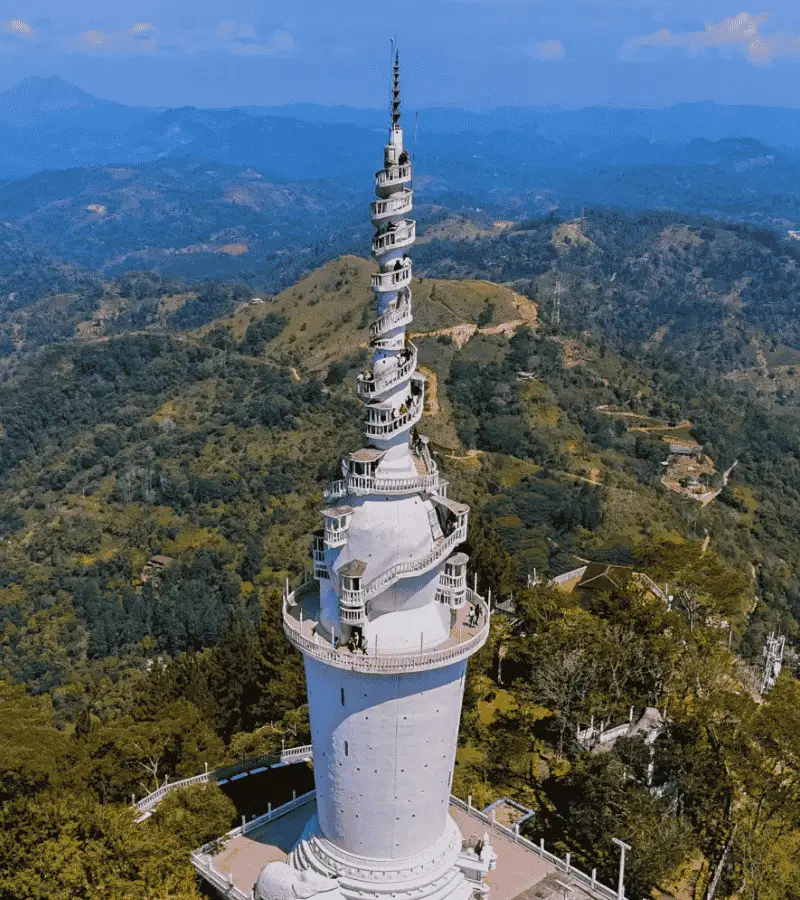
For travelers leaving Kandy and heading deeper into the hill country, Ambuluwawa Tower has become one of the most popular scenic stops along the route. The tower rises high above the surrounding mountains and offers panoramic views across forests, valleys, tea plantations, and distant peaks.
The narrow spiral staircase wrapping around the outside of the tower creates an unforgettable climb, especially for travelers comfortable with heights. On clear days, the views stretch across central Sri Lanka in every direction.
Things To Experience in Nuwara Eliya & the Hill Country
Beyond individual viewpoints and waterfall stops, Sri Lanka's hill country rewards travelers who slow down and let the mountain atmosphere settle around them:
- Drink Fresh Ceylon Tea Overlooking Plantations — Sit inside a colonial-era tea factory café while mist moves across the hills above the valley.
- Hike Horton Plains Cloud Forest — Trek through UNESCO-listed highland wilderness toward World's End before clouds arrive late morning.
- Visit World's End at Sunrise — Watch valleys emerge below a near-900-metre escarpment as fog slowly lifts from the forest.
- Photograph Waterfalls Along the Mountain Roads — Ramboda Falls, St. Clair's Falls, Devon Falls, and Lover's Leap Falls appear naturally along the route.
- Sunset at Gregory Lake — Cold mountain air, pine trees, and the quiet atmosphere of Nuwara Eliya at its most relaxed.
- Stay in a Mountain Cottage or Tea Estate Bungalow — Bonfire nights, morning mist over tea valleys, and cold highland air around Mandaram Nuwara.
- Climb Ambuluwawa Tower — Spiral staircase, panoramic mountain views, and one of the most dramatic stops on the road between Kandy and Nuwara Eliya.
- Ride Sri Lanka's Hill-Country Train — Through tea valleys, mountain villages, tunnels, and bridges on one of Asia's most scenic train routes.
Food, Cafés & Cold Mountain Evenings
Because of its colonial history and colder climate, Nuwara Eliya has a very different food culture compared to much of Sri Lanka. Travelers find English-style breakfasts, tea lounges, bakeries, hot chocolate cafés, fresh strawberries, sweet corn, mountain vegetables, and traditional rice and curry restaurants spread throughout the town.
The colder weather makes warm meals and hot tea especially enjoyable after long drives through the mountains. Few experiences feel more genuinely Sri Lankan than sitting inside a colonial hotel veranda in Nuwara Eliya with a pot of fresh high-grown Ceylon tea while mist rolls in across the garden.
Driving the Hill Country by Tuk Tuk
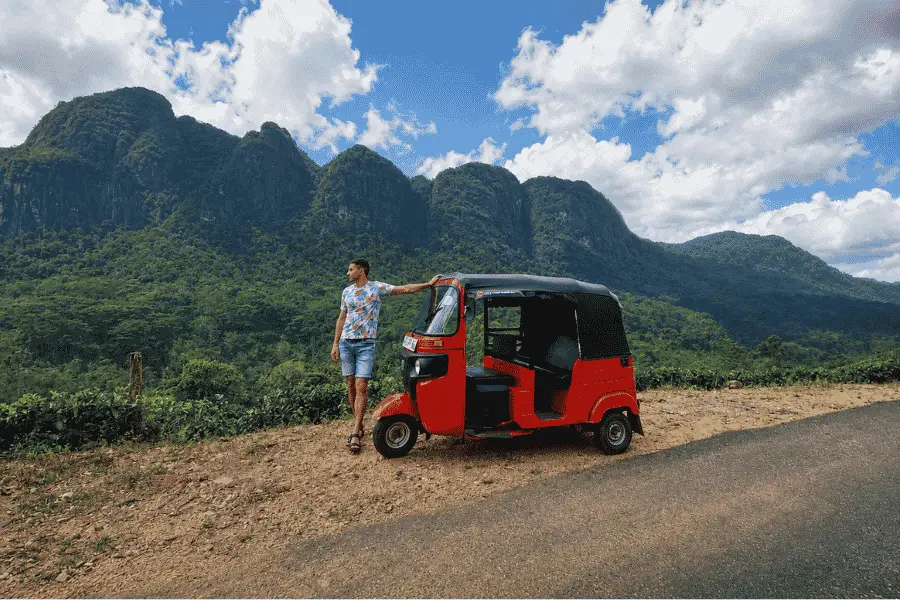
Driving through Nuwara Eliya and Mandaram Nuwara feels completely different from driving through Sri Lanka's lowlands. The roads become steeper, foggier, and filled with sharp bends and mountain curves. At the same time, these roads become some of the most rewarding driving experiences anywhere on the island.
The scenery constantly changes between tea plantations, waterfalls, forests, mountain villages, railway crossings, valleys, and cloud-covered peaks. For travelers exploring by tuk tuk, the hill country offers some of the most scenic and challenging roads on any Sri Lanka road trip.
Tuk Tuk Driving Notes
- Tuk tuks are not permitted on Sri Lankan expressways
- Hill-country roads contain sharp bends and steep climbs — take them slowly
- Fog can reduce visibility quickly in the mountains, especially at dawn and dusk
- Avoid unfamiliar mountain roads after dark
- Carry warm clothing — mornings and evenings get genuinely cold at altitude
- Leeches are common in forests during wetter months — wear covered shoes on trails
Where To Head Next
After Nuwara Eliya and Mandaram Nuwara, most travelers continue south through some of the most scenic mountain roads in Sri Lanka:
- South toward Haputale and Lipton's Seat — sweeping tea plantation views from one of the hill country's most celebrated morning viewpoints, and the dramatic Devil's Staircase road
- Onward to Ella and Bandarawela — Nine Arch Bridge, Little Adam's Peak, waterfalls, and the most dramatic part of Sri Lanka's hill-country scenery
- The Nanu Oya to Ella train — one of the world's most scenic rail journeys, passing through tea valleys, mountain stations, and cloud-covered highland landscapes
For many travelers, however, Nuwara Eliya and Sri Lanka's misty hill country become the place where tea culture, colonial history, mountain railways, waterfalls, cloud forests, and slow mountain travel all come together beneath the cold mountain air.
Frequently Asked Questions — Nuwara Eliya Travel Guide
How cold does Nuwara Eliya get?
Nuwara Eliya is the coldest major town in Sri Lanka. Temperatures typically range between 6°C and 17°C depending on the season. Mornings and evenings can become genuinely cold, especially between December and February. Carrying warm layers is essential, particularly for early morning visits to Horton Plains.
How far is Nuwara Eliya from Kandy by tuk tuk?
Nuwara Eliya is approximately 75–80 km from Kandy. By tuk tuk the drive takes around 3–4 hours depending on stops and road conditions. The route passes through Ambuluwawa Tower near Gampola, Ramboda Falls, and steep mountain roads before arriving in the hill country.
What is Nuwara Eliya known for?
Nuwara Eliya is known for its colonial hill-town atmosphere often called "Little England", Ceylon tea plantations, Gregory Lake, Horton Plains National Park, mountain waterfalls, and its position as the coldest major town in Sri Lanka. The surrounding region produces some of the most prized high-grown Ceylon tea in the world.
Is Horton Plains National Park worth visiting?
Yes. Horton Plains is one of the most unique landscapes in Sri Lanka — UNESCO-listed, over 2,000 metres above sea level, and home to cloud forests, sambar deer, endemic birds, and the dramatic World's End viewpoint where the land drops nearly 900 metres. Visiting early before clouds arrive gives the best visibility.
What is the best time to visit Nuwara Eliya?
The best time to visit Nuwara Eliya is between January and April when the weather is clearer and drier. The Sri Lankan New Year period in April brings festivals, races, and celebrations to the town. December and January are the coldest months. The southwest monsoon between May and August brings heavier rainfall to the region.