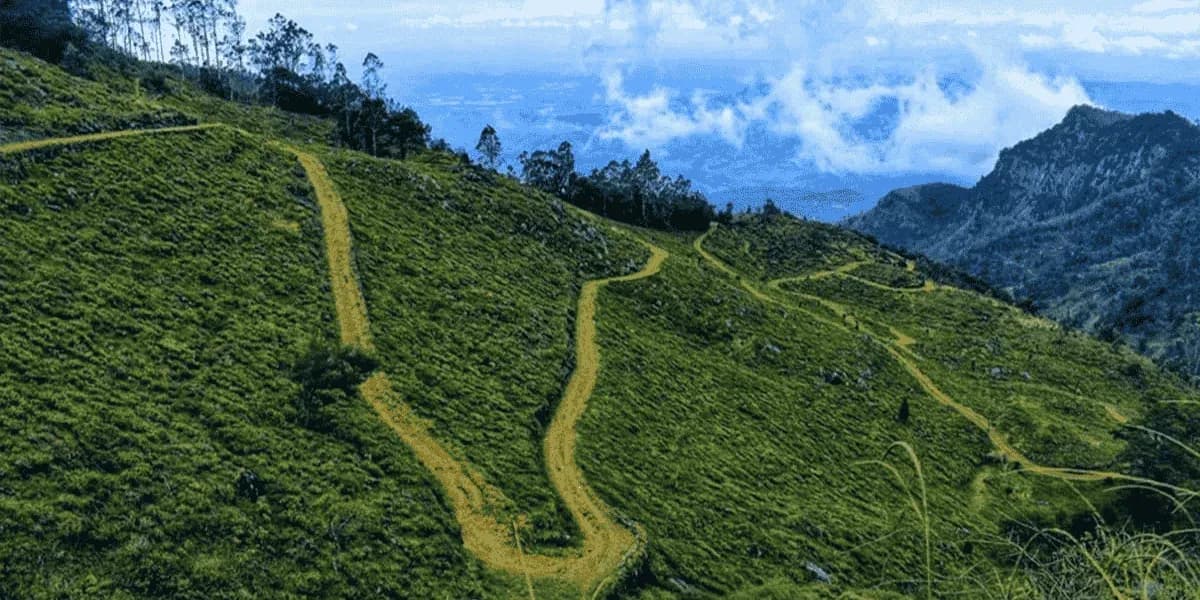
As the roads continue south beyond Nuwara Eliya and Ella, the atmosphere of Sri Lanka's hill country begins changing once again. The mountains become steeper, the valleys deeper, and the landscapes feel quieter and far less crowded. Forests swallow sections of the roads while clouds drift slowly across tea-covered hillsides throughout the day. Waterfalls appear unexpectedly beside sharp mountain bends, and colder winds move constantly through the valleys above the southern plains.
Hidden among tea plantations, cloud forests, colonial-era estates, waterfalls, and dramatic mountain viewpoints lies Haputale — one of the most peaceful and underrated mountain towns anywhere in Sri Lanka.
Unlike the busier tourism atmosphere of Ella, Haputale feels slower, colder, and far more connected to everyday hill-country life. Tea workers move quietly through the plantations during morning fog while trains emerge through the mist beneath towering mountain cliffs. On especially clear mornings, travelers can sometimes see all the way toward Sri Lanka's southern coastline far in the distance.
For many tuk tuk travelers, Haputale becomes one of the most unforgettable regions in Sri Lanka's highlands — a place where tea-country history, waterfalls, cloud forests, railway journeys, dramatic roads, and mountain silence all come together high above the clouds.
Sri Lanka's Tea Country Above the Clouds
Located at around 1,400 meters above sea level, Haputale sits along the southern edge of Sri Lanka's central highlands. Because the town lies directly between the central mountains and the southern plains, weather conditions constantly shift throughout the day. Bright sunshine can suddenly disappear beneath thick mountain fog while entire valleys vanish behind drifting cloud before reappearing again minutes later.
This constantly changing weather gives Haputale a very different atmosphere compared to much of Sri Lanka's hill country. The region also remains deeply connected to Sri Lanka's tea industry. Tea plantations cover enormous sections of the surrounding mountains while Tamil plantation villages, tea factories, railway lines, and colonial-era estates still shape much of the local culture and economy today.
British colonial expansion transformed this region into one of Sri Lanka's most important tea-growing areas during the late 19th century, and many of the tea estates established during that period continue operating today. Unlike more tourism-heavy mountain towns, Haputale still feels like a functioning tea-country region first and a tourism destination second.
Lipton's Seat — Sri Lanka's Most Famous Tea Viewpoint
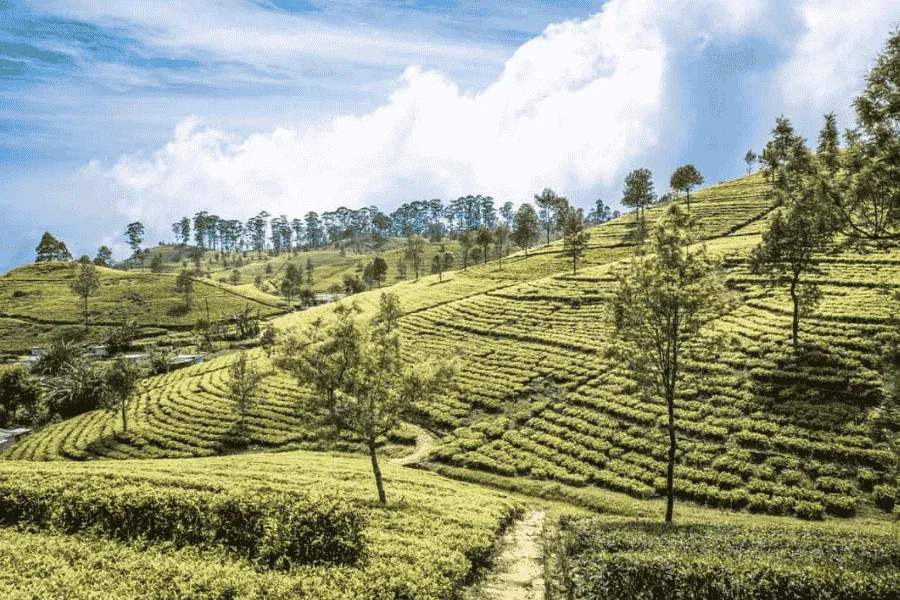
Lipton's Seat is easily the most famous attraction in Haputale and one of the most iconic viewpoints anywhere in Sri Lanka's tea country. Named after Scottish tea planter Sir Thomas Lipton, the viewpoint sits nearly 2,000 meters above sea level overlooking enormous tea plantations stretching across the surrounding mountains. According to local history, Lipton himself once stood here surveying the tea estates that eventually helped build one of the world's most famous tea brands.
But reaching Lipton's Seat becomes just as memorable as the viewpoint itself. The narrow mountain road slowly climbs through endless tea plantations where workers carrying baskets move through the hills during the colder morning fog. Vegetable farms, tea villages, mountain forests, and dramatic viewpoints appear continuously along the route while clouds drift slowly across the valleys below.
Early mornings are considered the best time to visit because the skies are usually clearer before mist begins covering the mountains later in the day. On especially clear mornings, travelers can sometimes see:
- Southern plains stretching toward the horizon
- Ancient reservoirs glittering far below
- Distant mountain ranges rising across the highlands
- Sections of Sri Lanka's southern coastline far in the distance
The cooler temperatures and constant wind at the summit create a completely different atmosphere compared to Sri Lanka's tropical coastline only a few hours away.
Dambatenne Tea Factory — Colonial Tea History Still Working Today
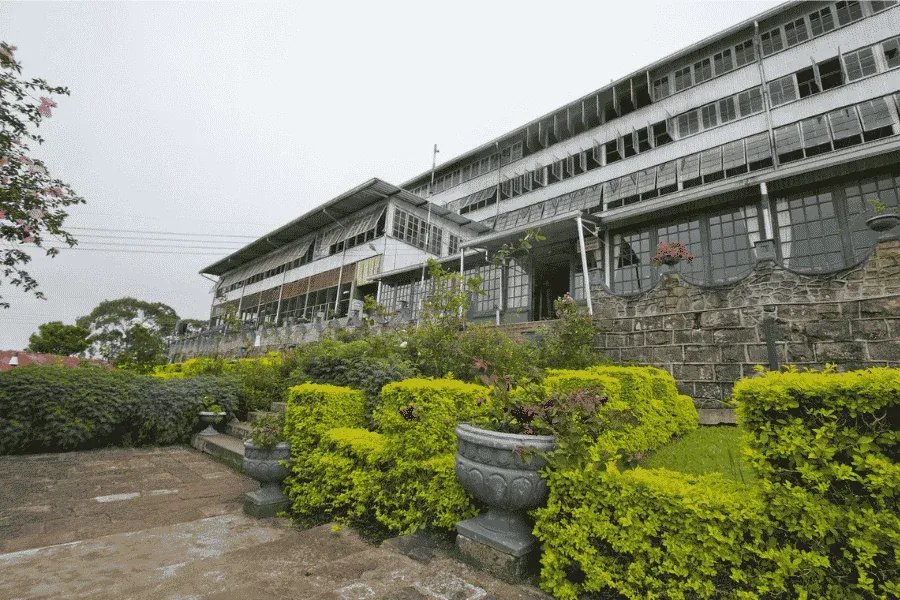
Located beneath Lipton's Seat, Dambatenne Tea Factory remains one of the most historic tea factories in Sri Lanka. Built by Sir Thomas Lipton in 1890, the factory still continues tea production using many traditional methods that have remained largely unchanged for generations.
Inside the old factory building, travelers can follow the complete tea-making process from start to finish:
- Fresh tea leaves arriving from nearby estates
- Drying and withering
- Rolling
- Fermentation
- Sorting
- Packaging for export
The atmosphere inside feels industrial, historic, and deeply connected to Sri Lanka's colonial tea history. The smell of fresh tea leaves fills the rooms while old machinery continues operating beneath wooden ceilings and colonial-era interiors. Many visitors finish the experience by drinking fresh high-grown Ceylon tea while overlooking the surrounding tea-covered mountains.
Because of the elevation and colder temperatures around Haputale, the region produces some of Sri Lanka's best-known high-grown teas, internationally valued for their lighter taste and bright golden color.
Adisham Hall — A Piece of England Hidden in Sri Lanka's Highlands
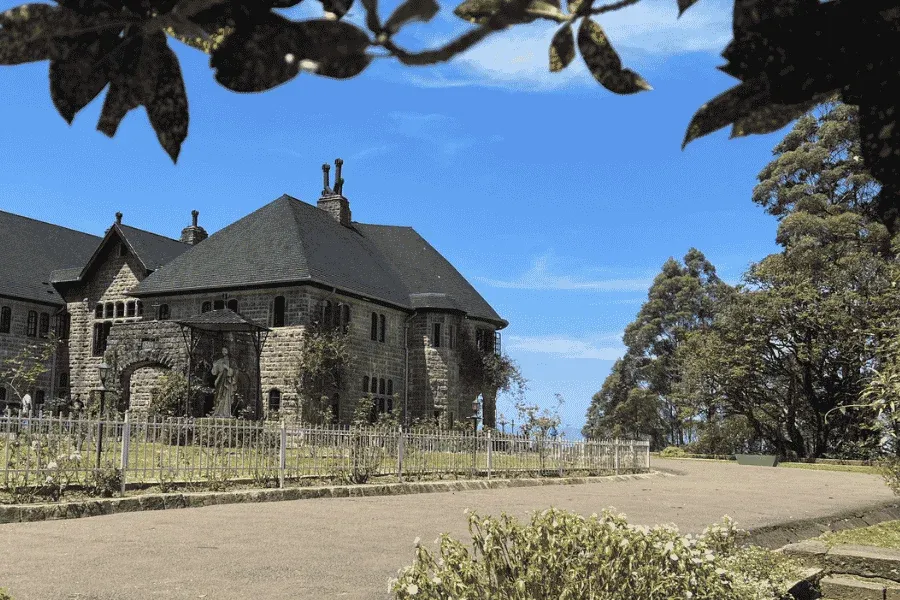
Hidden among forests and tea estates near Haputale lies Adisham Hall, one of the most atmospheric colonial buildings in Sri Lanka. Built in 1931 in English Tudor-style architecture, the mansion feels almost completely out of place within Sri Lanka's tropical mountains. Stone walls, fireplaces, wooden interiors, flower gardens, and mist-covered surroundings create an atmosphere that feels closer to the English countryside than South Asia. The building later became a Benedictine monastery, and monks still continue living quietly within the property today.
The road toward Adisham passes through tea plantations, eucalyptus forests, mist-covered hills, and isolated mountain roads — creating one of the most peaceful drives anywhere around Haputale. Travelers visit not only for the architecture itself but also for the monastery gardens, mountain silence, forest atmosphere, homemade jams and fruit preserves sold by the monks, and the colder hill-country weather that surrounds the estate. During rainy afternoons, clouds often move directly through the monastery grounds while forests surrounding the estate disappear beneath drifting fog.
Bambarakanda Falls — Sri Lanka's Tallest Waterfall
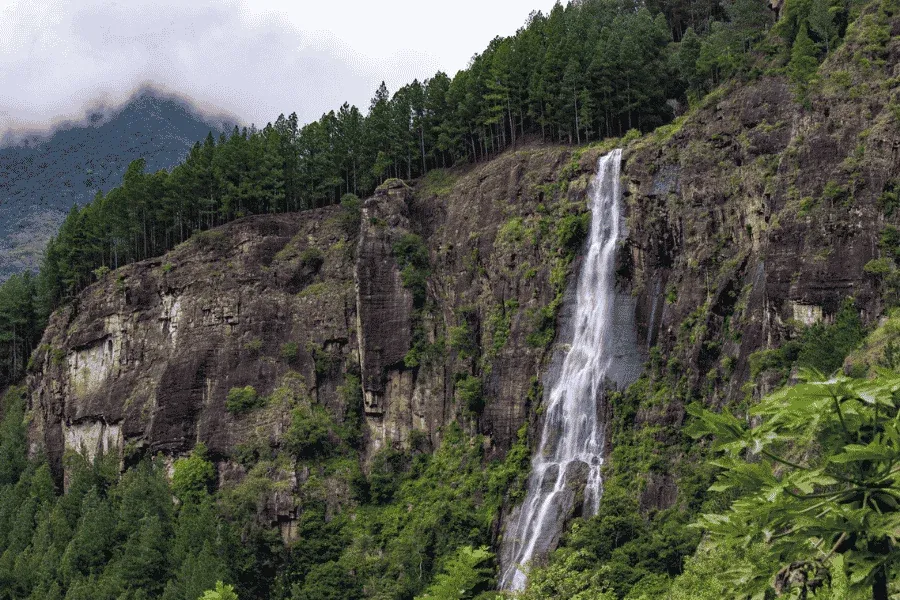
Located within the mountains beyond Haputale, Bambarakanda Falls is the tallest waterfall in Sri Lanka at approximately 263 meters high. The waterfall crashes dramatically through steep mountain cliffs surrounded by pine forests, tea plantations, and cooler mountain air.
The drive toward the falls itself becomes one of the highlights of the journey. Narrow roads pass forests, rivers, isolated villages, steep valleys, and pine-covered hillsides before eventually reaching the waterfall hidden deep within the mountains. During rainy periods, Bambarakanda becomes especially powerful as mist rises through the surrounding cliffs and forests.
Travelers often spend time hiking nearby forest trails, relaxing beside the colder mountain water, photographing the cliffs, and exploring the surrounding pine forests. The forests around Bambarakanda also support mountain birdlife including Sri Lanka white-eye, yellow-eared bulbul, Sri Lanka wood pigeon, and giant squirrels — especially during quieter early mornings along the surrounding trails.
Devil's Staircase — Sri Lanka's Legendary Mountain Adventure Route
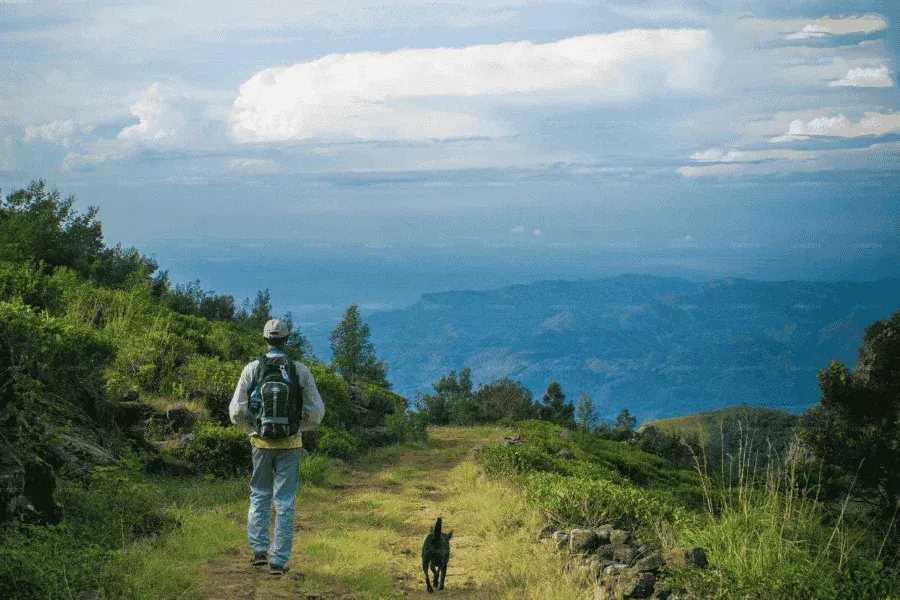
For adventure travelers, Devil's Staircase has become one of the most legendary driving routes anywhere in Sri Lanka. This rough mountain road connecting Haputale toward Ohiya and Kalupahana passes through some of the wildest landscapes in Sri Lanka's hill country. The route is famous for steep drops, narrow gravel roads, sharp hairpin bends, mist-covered cliffs, remote forests, and dramatic mountain scenery at every turn.
Unlike the smoother tea-country roads surrounding Ella or Nuwara Eliya, Devil's Staircase feels rugged, isolated, and unpredictable. During misty weather, visibility can suddenly disappear while clouds move directly across the mountain roads and valleys below.
For tuk tuk travelers, the drive becomes one of the ultimate Sri Lankan road-trip experiences. Many travelers also rent off-road motorbikes separately to explore the region more aggressively through mountain trails, rocky climbs, forest routes, river crossings, and isolated tea villages. The route becomes especially rewarding during dry weather when clearer skies reveal enormous mountain views stretching across Sri Lanka's southern highlands.
Thangamale Sanctuary — Cloud Forests, Rare Birds & Mountain Silence
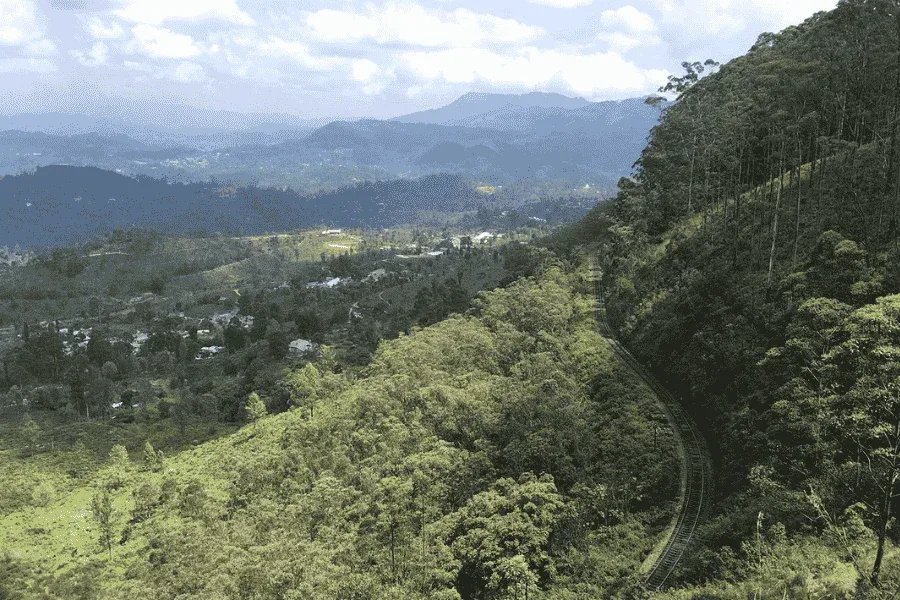
Located near Haputale town, Thangamale Sanctuary protects sections of Sri Lanka's remaining cloud forest ecosystem. The forest feels cool, quiet, and misty throughout much of the year. Walking trails pass through dense mountain vegetation filled with moss-covered trees, colder forest air, hidden viewpoints, cloud forest plants, and bird calls echoing through the fog.
Birdwatchers often visit hoping to spot rare Sri Lankan endemic species including the Sri Lanka blue magpie, yellow-eared bulbul, Sri Lanka white-eye, dull-blue flycatcher, and Sri Lanka hanging parrot. The sanctuary also supports purple-faced langurs, giant squirrels, endemic amphibians, and rare cloud-forest reptiles — many of which are found only within Sri Lanka's central highlands and nowhere else on Earth.
Compared to Sri Lanka's hotter lowland forests, the atmosphere here feels calmer and far more atmospheric because of the colder temperatures and constant mountain mist.
Idalgashinna Railway Station — Sri Lanka's Most Atmospheric Train Stop
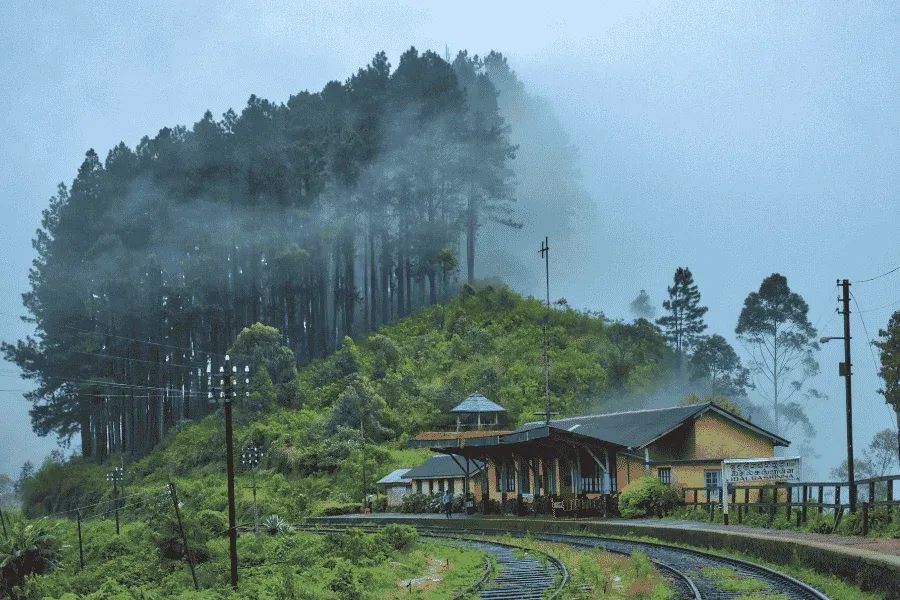
Hidden among forests and mountains between Haputale and Ohiya lies Idalgashinna Railway Station, one of the most scenic and isolated railway stations in Sri Lanka. The station sits surrounded entirely by tea plantations, forests, tunnels, mountain cliffs, and mist-covered valleys.
The railway line itself forms part of the famous British-built hill-country railway network completed during the colonial tea era to transport tea from the mountains toward Colombo. Today, train journeys between Haputale, Ohiya, Ella, and Idalgashinna remain among the most beautiful railway experiences anywhere in Asia.
Many travelers visit simply to photograph trains emerging through the mist, walk along the tracks, experience the mountain silence, and watch clouds move through the valleys below. The cooler wind moving through the open train doors combined with the endless scenery outside creates one of the most memorable experiences in Sri Lanka's hill country.
Diyaluma Falls — Infinity Pools Above the Southern Plains
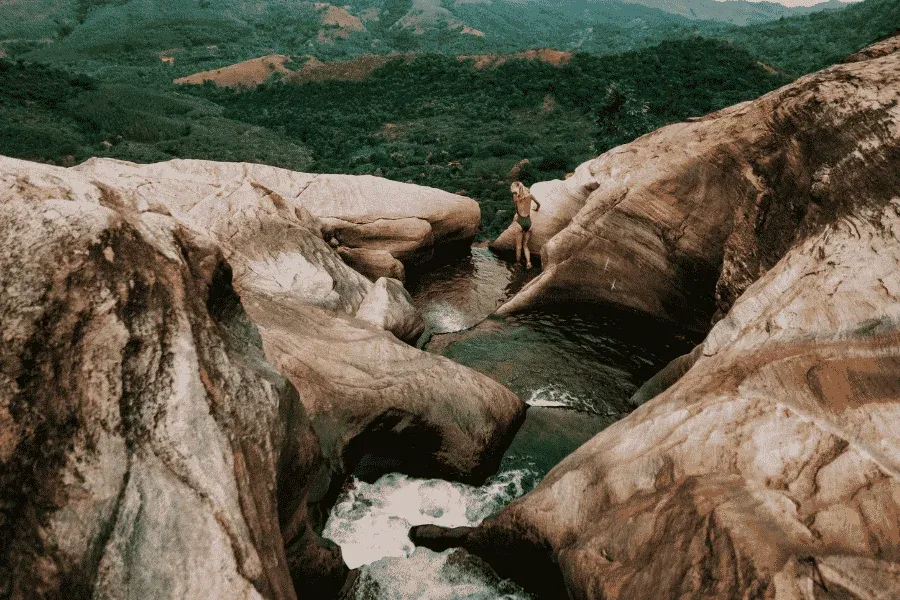
Located beyond Haputale near Koslanda, Diyaluma Falls is the second tallest waterfall in Sri Lanka and one of the country's most famous hiking experiences. The waterfall is especially famous for its natural infinity pools located above the main waterfall drop. Travelers hike through forests and grasslands before reaching crystal-clear pools flowing directly toward enormous mountain valleys below.
During clearer weather, the upper pools reveal panoramic views stretching across the southern plains beneath the surrounding cliffs. The contrast between colder mountain water and the hotter lowlands below makes Diyaluma one of the most unique waterfall experiences in Sri Lanka.
Things To Experience Around Haputale
- Drive through tea estates before sunrise toward Lipton's Seat while mist moves across the hills
- Drink fresh high-grown Ceylon tea overlooking mountain valleys at Dambatenne Tea Factory
- Explore the monastery gardens and colder mountain atmosphere of Adisham Hall
- Drive the rough hairpin bends of Devil's Staircase through forests and cliffs
- Watch trains emerge through mountain mist near Idalgashinna Railway Station
- Hike toward the upper infinity pools of Diyaluma Falls
- Stay inside tea bungalows, mountain lodges, and hillside guesthouses overlooking cloud forests
- Walk through Tamil tea villages surrounded by plantations and vegetable farms
- Photograph sunrise cloud movements above the valleys surrounding Haputale
- Ride the hill-country railway through tunnels, forests, and tea-covered mountains
Food, Tea & Mountain Life
Compared to Ella or Nuwara Eliya, Haputale feels quieter and more local, but travelers still find cozy cafés, tea shops, bakeries, and mountain restaurants overlooking the valleys. Hot tea naturally becomes part of daily life here because of the colder climate. Travelers regularly encounter vegetable rotis, fresh bread from hill-country bakeries, rice and curry meals, hot soups, milk tea, short eats, fresh strawberries during season, and locally grown vegetables from nearby farms.
Roadside tea shops and small restaurants often sit directly beside dramatic mountain viewpoints where clouds drift slowly through the valleys during colder evenings. The slower rhythm of daily life becomes one of Haputale's biggest attractions itself.
Driving Through Haputale by Tuk Tuk
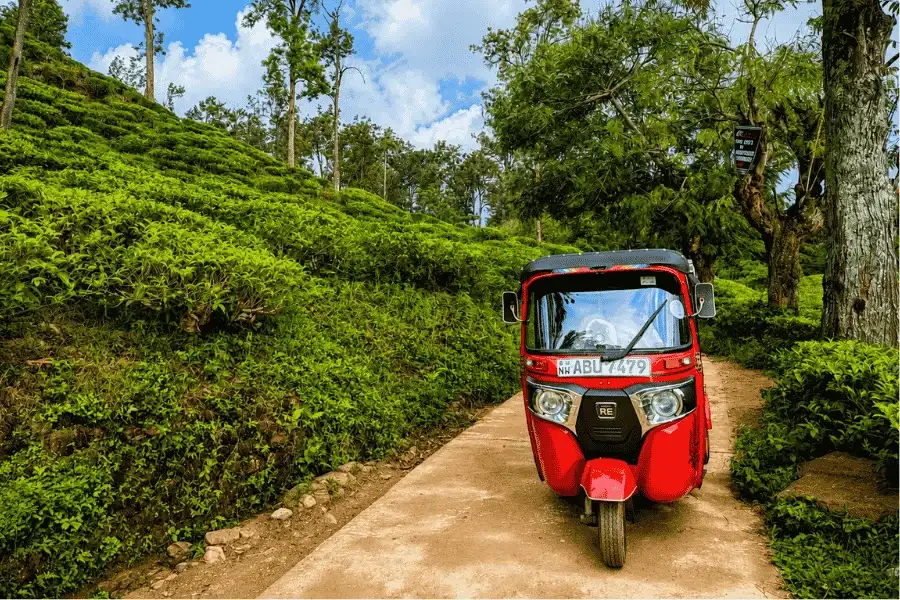
Driving around Haputale becomes one of the most scenic road-trip experiences anywhere in Sri Lanka. The roads constantly wind through tea plantations, waterfalls, cloud forests, steep valleys, tunnels, railway crossings, isolated villages, and mountain cliffs.
At the same time, changing mountain weather requires careful driving. Fog can suddenly reduce visibility while steep roads and wet conditions make certain routes challenging during heavy rain. But for many travelers, these mountain roads become one of the most rewarding parts of the journey itself.
Important Driving Notes
- Tuk tuks are not permitted on Sri Lankan expressways
- Start early for clearer mountain weather and better driving conditions
- Avoid Devil's Staircase during heavy rain
- Carry warm clothing for mornings and evenings
- Fog can reduce visibility quickly around mountain roads
- Keep extra fuel before remote routes like Ohiya and Kalupahana
Where To Head Next
After Haputale, many travelers continue south toward Ella, Diyaluma Falls, and eventually Sri Lanka's southern coastline where the colder mountain air slowly transitions into tropical forests, rice fields, and warmer lowland landscapes. Others continue deeper into the mountains toward Horton Plains National Park and Ohiya, exploring even colder and more remote sections of Sri Lanka's central highlands.
For many travelers, however, Haputale becomes one of the most unforgettable regions in Sri Lanka — a place where tea plantations, colonial history, dramatic mountain roads, waterfalls, cloud forests, railway journeys, and peaceful hill-country life all come together high above the clouds.
Frequently Asked Questions — Haputale
How do you get to Lipton's Seat?
Lipton's Seat is reached by driving or walking up through the Dambatenne tea estate above Haputale. Tuk tuks can drive most of the route. The viewpoint sits at around 1,800 metres and on clear mornings offers views across multiple provinces. Arrive before 8–9 am for the best chance of clear skies before the mist rolls in.
What is the Devil's Staircase in Sri Lanka?
The Devil's Staircase is a mountain pass road that descends steeply from the hill country near Haputale toward the southern lowlands. The road drops through a series of tight switchbacks with dramatic views across valleys and plains below. It is one of the most challenging and memorable drives in Sri Lanka for tuk tuk travelers.
How far is Haputale from Ella?
Haputale is approximately 25–30 km west of Ella by road. The drive takes around 45–60 minutes by tuk tuk through mountain roads. The two towns are often visited on the same loop through the hill country.
What is Bambarakanda Falls?
Bambarakanda is Sri Lanka's tallest waterfall, dropping approximately 263 metres in the mountains between Haputale and Belihuloya. It is visible from the road and is most impressive after heavy rain. A short walk leads to the base of the falls.
What is Adisham Hall in Haputale?
Adisham Hall is a colonial-era Benedictine monastery built in 1931 in the style of an English country house. It sits on a ridge above Haputale surrounded by gardens and forest. The building is open to visitors on weekends and public holidays. The combination of English architecture and Sri Lankan highland scenery makes it one of the most unusual places in the hill country.