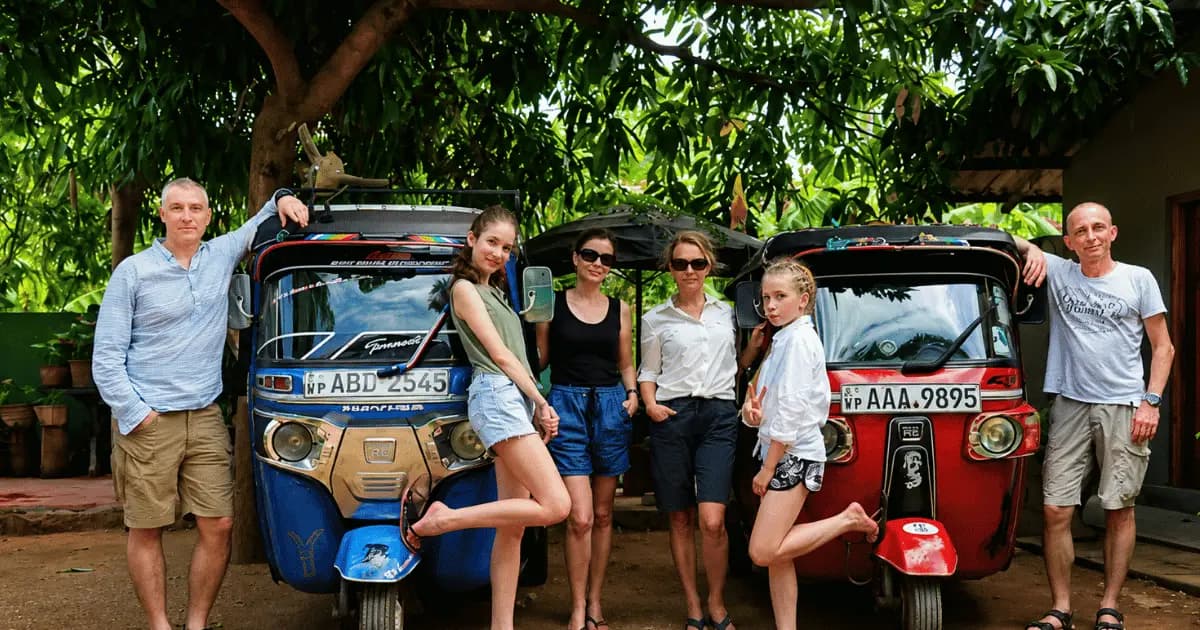
Most travelers arriving in Sri Lanka see Negombo simply as the town beside the airport. But spending even a single day here quickly changes that impression.
Negombo has a completely different atmosphere compared to nearby Colombo. The pace feels slower, the roads feel easier, and the mix of beach life, fishing culture, seafood restaurants, colonial churches, cafés, lagoon scenery, and tropical coastal roads makes it one of the best places to ease into Sri Lanka before exploring the rest of the island.
For many travelers, Negombo becomes the place where the journey truly begins. It is where the warm tropical air first hits after leaving the airport, where ocean sunsets replace airport stress, and where Sri Lanka slowly introduces itself through seafood dinners, beach roads, fishing boats, and slow coastal evenings beside the Indian Ocean.
Instead of rushing inland immediately after landing, spending a night or two in Negombo gives travelers time to recover from long flights, settle into the island's rhythm, and experience Sri Lanka at a much more relaxed pace. Negombo does not try too hard to impress visitors — and that is exactly why so many travelers end up loving it.
What Negombo Feels Like
Negombo is not a polished luxury beach town — and that is exactly what makes it interesting.
The town feels tropical, local, busy, authentic, and wonderfully unfiltered. Fishing boats line the coast while tuk tuks weave through market streets filled with fruit stalls, bakeries, seafood vendors, and roadside cafés. During the evenings, music drifts out from beach bars while the smell of grilled seafood moves through the warm air beside the ocean.
Along the beach road, travelers find rooftop restaurants, surf-style hostels, boutique hotels, small cafés, seafood restaurants, cocktail bars, and local bakeries all sitting beside one another in a way that feels relaxed rather than overly developed.
As sunset approaches, the entire atmosphere changes. Locals gather near the roadside, travelers slowly walk between cafés and restaurants, and the coastline begins glowing beneath the orange evening light while waves crash quietly beside the beach. Many evenings here are wonderfully simple — seafood dinners beside the ocean, cold drinks beneath swaying palm trees, and long walks beside the coastline while the town slowly settles into the night.
Negombo feels less like a major tourist destination and more like the perfect introduction to Sri Lanka itself.
Things To Experience in Negombo
Negombo rewards slow exploration. These are the experiences worth building time around:
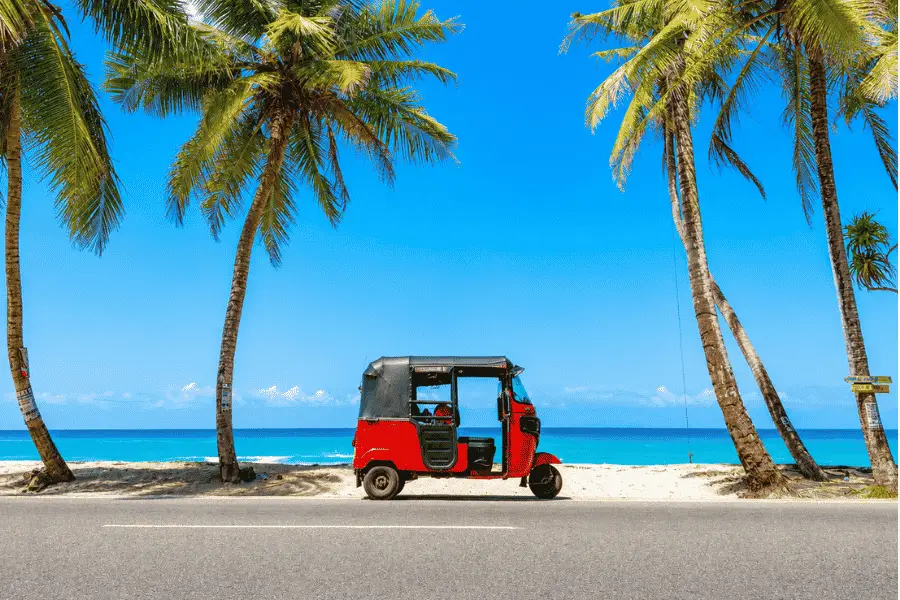
- Sunrise at the Fish Market — Watch fishing boats unload the morning catch before the rest of the town wakes up.
- Drive the Beach Road at Sunset — Warm ocean air, glowing evening light, and the entire coastline turning orange beside the Indian Ocean.
- Lagoon Boat Tour — Quiet mangroves, fishing villages, open water, and birdlife on a completely different side of town.
- Seafood Dinner Beside the Ocean — Fresh catch grilled at beachfront restaurants while waves crash nearby.
- St. Mary's Church & Colonial Streets — Portuguese-era architecture, Catholic heritage, and streets that feel unlike anywhere else in Sri Lanka.
- Slow Tropical Mornings — Iced coffee, fresh king coconut, and breakfast near the beach before the day gets going.
- Cycle Through Fishing Villages — Boats, churches, local markets, and everyday coastal life away from the tourist strip.
The Negombo Beach Road
Negombo is less about rushing between attractions and more about adjusting to the feeling of Sri Lanka itself.
The best first days here are usually simple. Wake up slowly after the flight, have breakfast near the beach, explore the lagoon during the afternoon, stop for iced coffee or fresh king coconut, and finish the day with seafood and sunset drinks beside the ocean. The town naturally encourages travelers to slow down.
Some people arrive expecting only a quick overnight stop before eventually staying several days simply because Negombo feels easy. There is no pressure to do too much. And that is part of the charm.
What To Do on the Beach Road
- Stop for Fresh King Coconut — Cool down beside the beach with one of Sri Lanka's most iconic roadside drinks.
- Café Hopping Along the Coastline — Explore relaxed cafés and bakeries hidden along the beach road.
- Cycle Through Fishing Villages — Quieter local neighborhoods, boats, churches, and everyday coastal life away from the main strip.
- Beachfront Sunsets & Nightlife — Music, seafood, and warm tropical evenings beside the Indian Ocean.
Negombo Fish Market
One of the most interesting experiences in Negombo happens before sunrise.
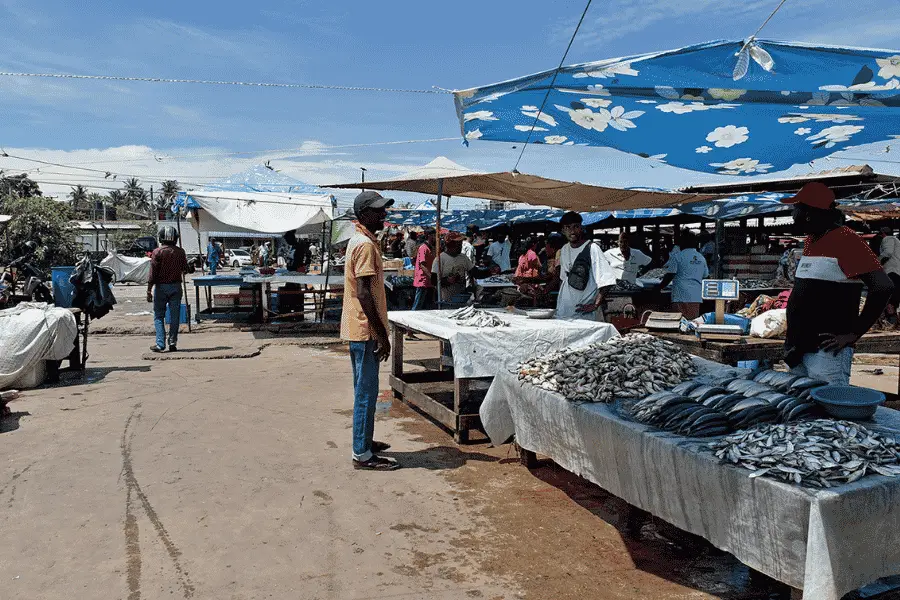
Long before the cafés open along the beach road, the famous Negombo Fish Market is already fully alive. Fishing boats return toward shore carrying fresh seafood while traders, fishermen, and buyers move rapidly through the crowded market preparing the day's sales.
The atmosphere feels loud, chaotic, humid, and completely authentic. Giant tuna are unloaded beside the docks while rows of dry fish are laid out beneath the morning sun and traditional fishing boats line the shoreline nearby.
For travelers interested in photography or local experiences, the fish market reveals the side of Negombo most tourists never fully see. Fishing has shaped the town for generations, and even today the rhythm of life here still revolves around the sea.
What To Experience at the Fish Market
- Arrive Before Sunrise — Watch fishing boats returning to shore while the market begins its morning trading.
- Traditional Fishing Culture — One of Sri Lanka's busiest coastal fishing communities, unchanged for generations.
- Photography & Street Scenes — Colorful boats, seafood trading, local fishermen, and the raw atmosphere of the docks.
- Dry Fish Markets — Traditional fish drying techniques still practiced along the coastline today.
Negombo Lagoon
While most travelers spend time near the beach, the lagoon side of Negombo feels entirely different.
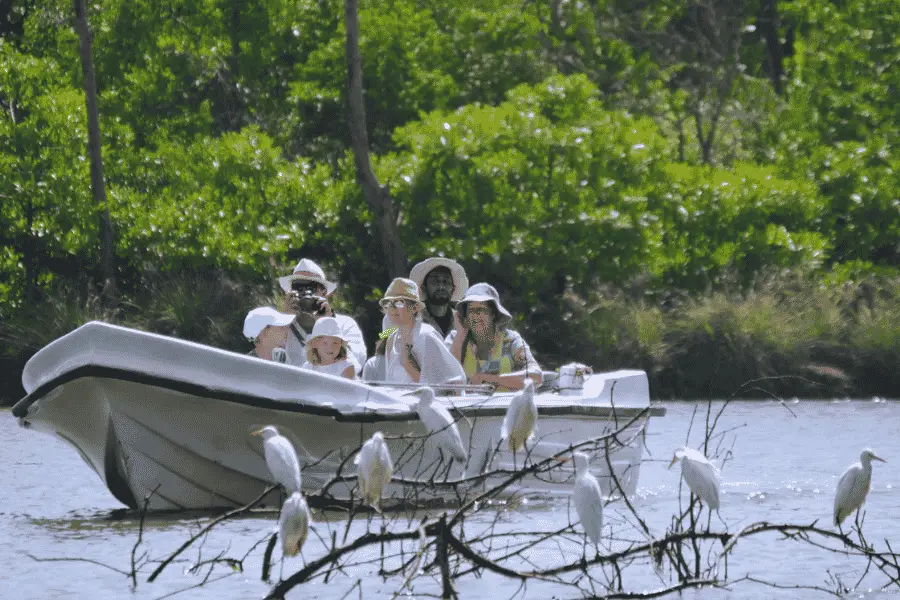
Negombo Lagoon is quieter, greener, and far more peaceful compared to the busy coastline. Boat rides through the lagoon pass mangroves, fishing villages, birds, narrow waterways, and calm open water hidden away from the tourist areas near the beach road.
During sunset, the light across the water changes beautifully while fishing boats move slowly through the lagoon beneath enormous open skies. For travelers wanting a calmer introduction to Sri Lanka before beginning longer journeys inland, the lagoon becomes one of the most relaxing places in town.
Nearby canal systems including the historic Dutch Canal also quietly connect parts of Negombo's fishing and colonial history to the waterways surrounding the town.
What To Do on the Lagoon
- Lagoon Boat Tour — Mangroves, fishing villages, calm waterways, and tropical birdlife on a slow boat through the backwaters.
- Birdwatching — Egrets, kingfishers, herons, and lagoon wildlife around the wetlands.
- Sunset on the Water — Fishing boats crossing the lagoon beneath orange evening skies.
- The Dutch Canal — Part of Negombo's colonial-era canal network connected to Sri Lanka's coastal trade history.
Churches & Colonial History
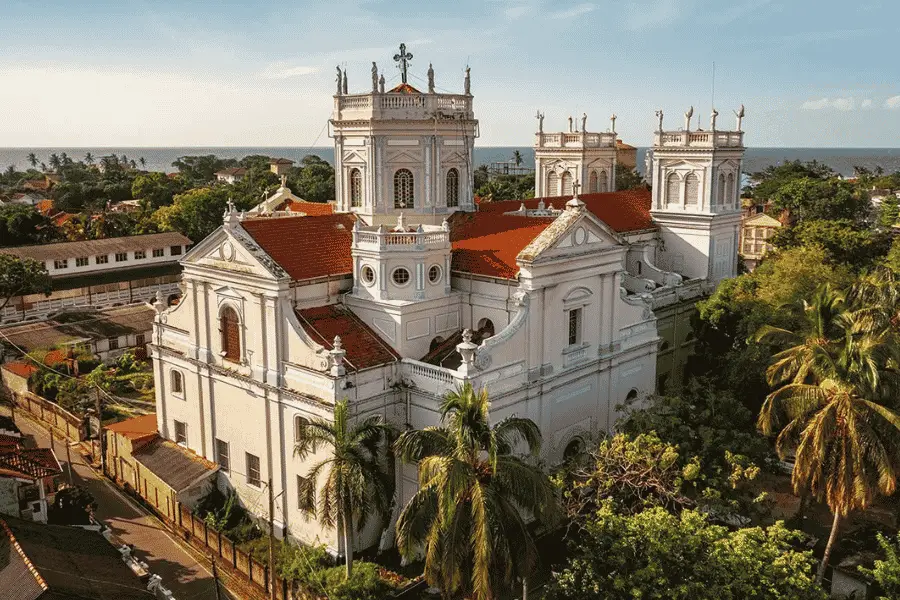
Negombo is often called "Little Rome" because of its strong Catholic heritage dating back to the Portuguese colonial era.
Large churches appear throughout the town, often rising unexpectedly between houses, fishing streets, and roadside shops. One of the most impressive is St. Mary's Church, famous for its detailed ceiling artwork, colonial architecture, and long historical connection to the town's Catholic community.
The influence of Portuguese rule can still be felt throughout Negombo today — not only through religion, but through family names, architecture, fishing traditions, and local culture that have remained part of the town for centuries. Compared to many other parts of Sri Lanka, Negombo feels culturally unique because of this blend of Catholic traditions, fishing life, colonial history, and tropical coastal atmosphere.
During religious festivals and feast periods, the streets around churches fill with lights, decorations, music, and local celebrations that remain deeply connected to Negombo's identity.
What To See Around Negombo's Churches
- St. Mary's Church — Ceiling artwork, colonial architecture, and a long history at the center of the town's Catholic community.
- "Little Rome" Streets — Catholic traditions, colonial influences, and a cultural identity unlike the rest of Sri Lanka.
- Colonial Architecture — Older parts of Negombo where churches, homes, and fishing streets blend together.
- Religious Festivals — Feast celebrations, lights, music, and Catholic traditions during festival periods.
Seafood & Food Culture
Negombo is one of the best places in Sri Lanka to eat seafood. Fresh grilled fish, giant prawns, crab curry, calamari, lagoon crab, rice and curry buffets, tropical fruit juices, and beachfront BBQ restaurants appear throughout the town.
Compared to many smaller Sri Lankan destinations, Negombo also has a wider range of international cafés and restaurants, making it especially comfortable for travelers adjusting after long flights.
Some evenings are spent eating beside the beach while waves crash quietly in the background and music drifts through the warm night air from nearby bars. Others are spent in small local restaurants where fish arrives directly from the morning market only hours earlier. Food in Negombo feels deeply connected to the coastline itself.
What To Try in Negombo
- Fresh Seafood BBQ — Grilled fish, prawns, calamari, lagoon crab, and seafood curries cooked to order beside the ocean.
- Beachfront Dining — Rooftop restaurants and beach cafés with coastline views.
- Local Rice & Curry — Traditional Sri Lankan flavors at family-run eateries away from the tourist strip.
- Tropical Drinks — King coconut, fresh juices, iced coffee, and tropical smoothies at roadside stalls and cafés.
Before You Leave Negombo
Negombo is one of the easiest places in Sri Lanka to prepare for the rest of the journey. Most travelers use the first day or two here to buy local SIM cards, withdraw cash, exchange currency, organize luggage, and download offline maps before beginning longer routes inland.
Doing these things in Negombo makes the rest of the journey far smoother and less stressful. The town acts as a natural transition point between arriving and fully beginning the adventure. For everything you need to know about renting a tuk tuk and preparing for the road, see our full guide.
What To Organize Before Leaving
- Buy a Local SIM Card — Mobile data and navigation sorted before traveling further into the island.
- Withdraw Cash & Exchange Currency — Smaller towns and rural areas throughout Sri Lanka are largely cash-only.
- Download Offline Maps — Mobile coverage is patchy in remote regions — offline maps are essential.
- Organize Bags & Essentials — Pack properly before longer drives begin.
Tuk Tuk Driving Notes
- Tuk tuks are not permitted on Sri Lankan expressways or highways
- Use scenic A-roads and local routes between destinations
- Plan extra travel time — tuk tuks travel slower than cars on longer routes
- Drive carefully while adjusting to Sri Lankan traffic, especially in the first day or two
Where To Head Next
After Negombo, the island opens in several directions:
- Inland toward Sigiriya and the Cultural Triangle — ancient kingdoms, safari parks, village roads, and jungle landscapes replace the coastline
- Toward Kandy and the hill country — tea plantations, waterfalls, forests, and winding mountain roads create a completely different side of Sri Lanka
- North toward Kalpitiya and Wilpattu — lagoons, safari experiences, fishing villages, and quieter coastlines reveal another side of the island
But no matter where the journey leads next, Negombo remains the place where travelers first settle into the rhythm of Sri Lanka — where ocean roads, tropical sunsets, seafood dinners, and warm coastal air slowly introduce the feeling of island life itself.
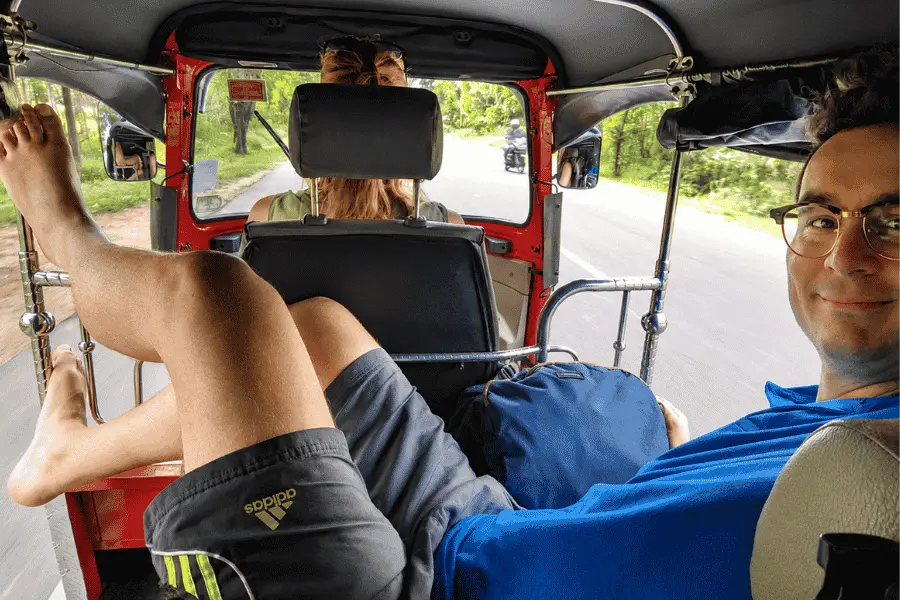
And somewhere between the beach roads, fishing villages, roadside cafés, and sunset drives, many travelers discover something unexpected — that driving a tuk tuk through Sri Lanka is not just transportation, but one of the most memorable parts of the entire adventure.
Frequently Asked Questions — Negombo Travel Guide
How far is Negombo from Bandaranaike International Airport?
Negombo is approximately 6–7 km from Bandaranaike International Airport. The drive takes around 15–20 minutes by tuk tuk depending on traffic. Most travelers choose to stay in Negombo on their arrival night to avoid rushing directly inland after a long flight.
What is Negombo known for?
Negombo is known for its active fishing harbour, the famous Negombo Fish Market, lagoon boat tours, Catholic churches including St. Mary's Church, beachfront seafood restaurants, and its position as the nearest coastal town to Sri Lanka's international airport. The town has a strong Catholic heritage dating from Portuguese colonial rule.
How many days should you spend in Negombo?
Most travelers spend one to two nights in Negombo — enough time to recover from long flights, explore the beach road, visit the fish market, enjoy seafood dinners, and prepare for the journey ahead. Some travelers end up staying longer simply because the town feels easy and relaxed.
What is the best food to try in Negombo?
Negombo is one of the best places in Sri Lanka for fresh seafood. Grilled fish, giant prawns, lagoon crab, calamari, and fish curry are available across beachfront restaurants, local eateries, and the market area. Fresh king coconut, tropical fruit, and local rice and curry are also widely available.
Can you drive a tuk tuk from Negombo to other parts of Sri Lanka?
Yes. Negombo is one of the most common starting points for tuk tuk road trips around Sri Lanka. Common routes head toward Sigiriya and the Cultural Triangle, Kandy and the hill country, or down the coast. Tuk tuks are not permitted on expressways and must use scenic A-roads and local routes throughout the journey.