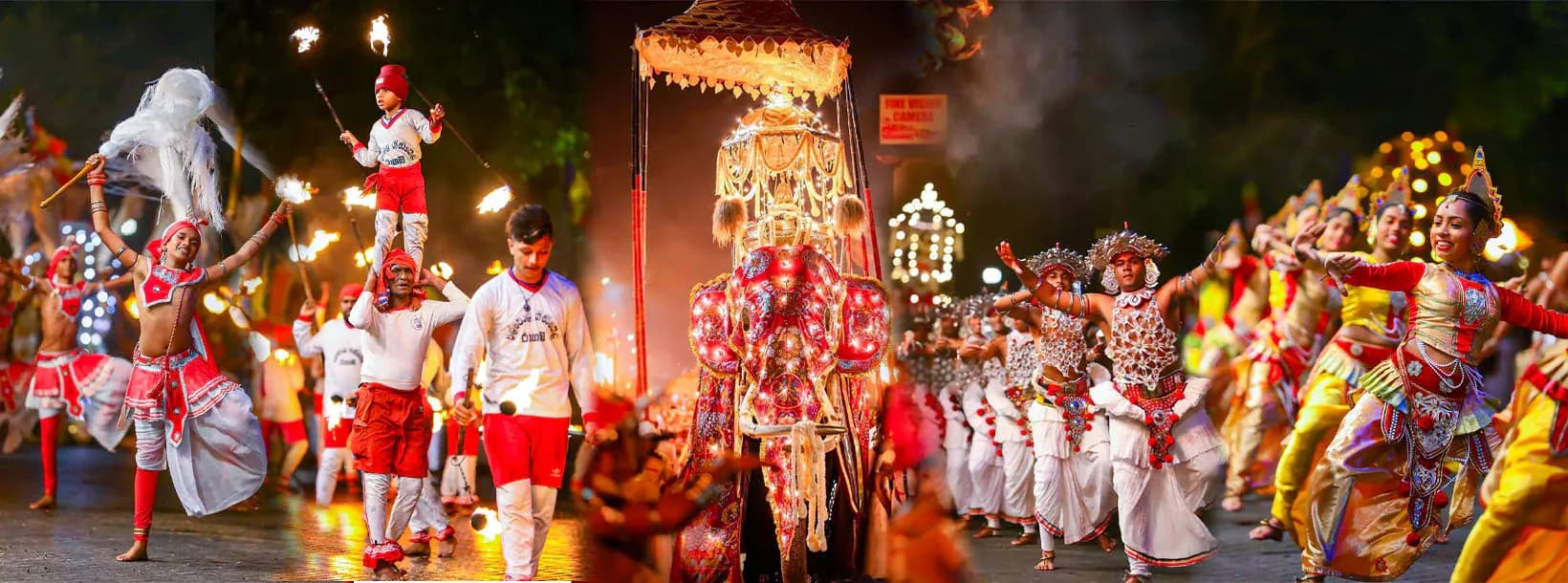
As night falls over the ancient hill capital of Kandy, the city begins to tremble with the sound of drums. Torches flicker through the darkness. Crowds gather shoulder to shoulder along the streets. The scent of incense drifts through the cool mountain air while traditional Kandyan dancers prepare behind glowing temple walls.
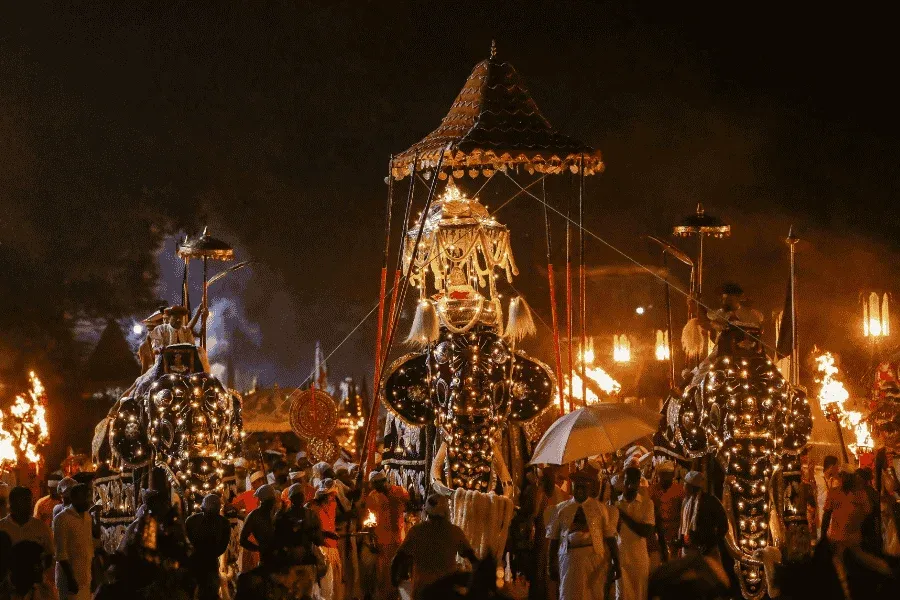
Then the sound of cracking whips echoes through the city. Out of the darkness emerge towering elephants draped in shimmering ceremonial garments, fire dancers spinning flames into the night sky, and hundreds of drummers creating a rhythm so powerful it moves through your chest.
This is the Kandy Esala Perahera — Sri Lanka's grandest cultural festival and one of the oldest religious processions in the world. For many travelers, witnessing the Perahera becomes the moment they truly feel the soul of the island.
When Does the Kandy Esala Perahera Take Place?
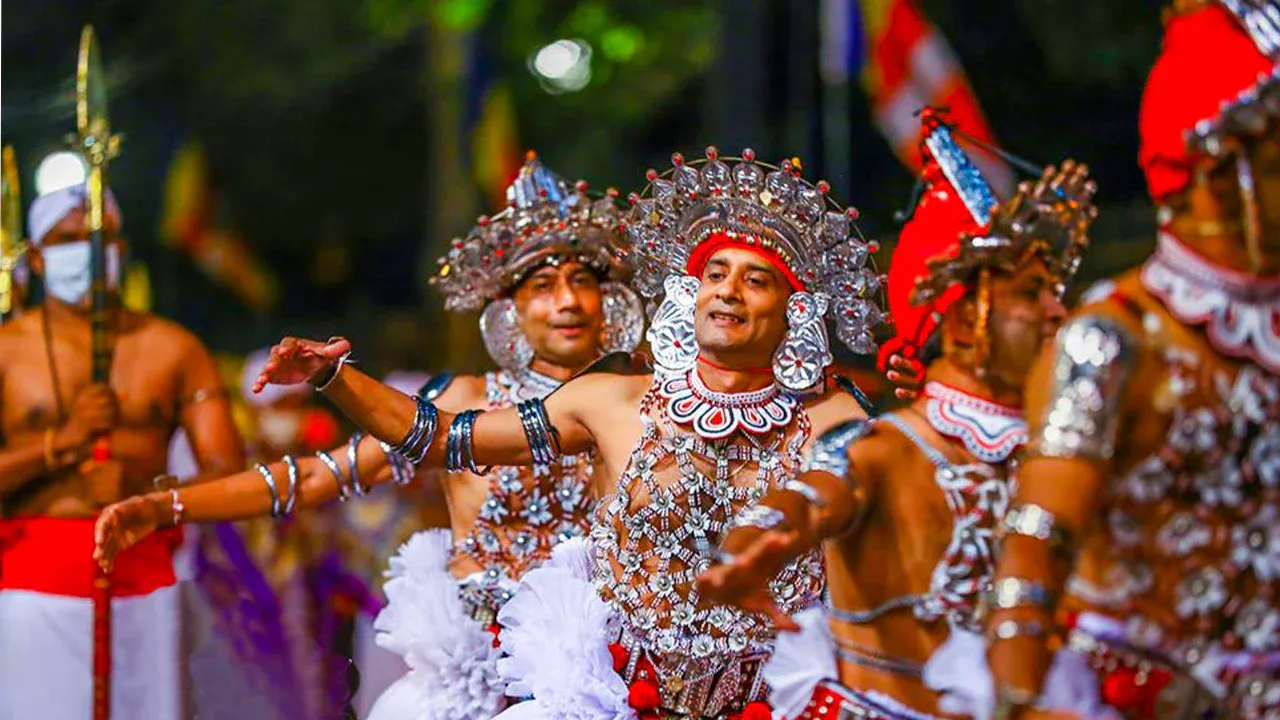
The Kandy Esala Perahera is held annually in July and August, following the lunar calendar. The festival runs for approximately 10 nights, beginning with smaller traditional processions and building toward the spectacular final Randoli Perahera nights.
- Typical period: Late July to mid-August
- Duration: Approximately 10 nights
- Best nights: The final 3–4 nights are the most dramatic and visually spectacular
Hotels in Kandy fill months in advance during this period. If you are planning to attend the Perahera as part of a tuk tuk road trip, book accommodation well ahead of your arrival date.
July and August fall during Sri Lanka's southwest monsoon, when the hill country can receive afternoon and evening showers. The Sri Lanka rainy seasons guide covers what to expect weather-wise during this period.
A Festival Older Than Empires
Dating back more than 1,700 years, the Kandy Esala Perahera is deeply connected to Buddhism, Sri Lankan royalty, and the Sacred Tooth Relic of the Buddha preserved inside the Temple of the Tooth in Kandy. For centuries, the relic symbolized royal power in Sri Lanka — whoever protected it was believed to hold the divine right to rule the island.
Today the relic remains one of the country's most sacred treasures, and the Perahera is held annually to honor it through ritual, devotion, music, and ceremony. Though the actual relic never leaves the temple, a sacred replica casket is carried during the procession by the main ceremonial elephant.
When Kandy Transforms Into a Festival City
The days leading up to the Perahera transform the usually peaceful hill-country city into a glowing cultural stage. Pilgrims arrive from across Sri Lanka dressed in white. Travelers fill cafés and hotels overlooking the streets. Vendors sell traditional snacks beside temples illuminated with lanterns and flags.
As evening approaches, anticipation spreads through the city. Families line the sidewalks hours before the procession begins. Drummers warm up beneath temple archways while dancers adjust silver costumes embroidered with centuries of tradition. Then the streets go quiet for a moment — before the thunder of drums takes over everything.
The Procession: Fire, Elephants and Ancient Ritual
The Kandy Esala Perahera is not a single parade. It is a moving cultural spectacle involving hundreds of performers, ceremonial elephants, musicians, dancers, monks, and spiritual rituals unfolding through the streets over multiple nights. Each evening grows larger and more elaborate, leading toward the grand final procession.
The Sound of Kandyan Drums
You hear the drums before you see anything. Deep rhythmic beats roll through the streets like thunder across the mountains. Kandyan drumming is one of Sri Lanka's oldest traditional art forms, originally performed during royal ceremonies and temple rituals. During the Perahera, the drummers create the heartbeat of the festival. The sound becomes hypnotic — even travelers who know nothing about Sri Lankan culture often describe the drums as the moment the festival truly becomes unforgettable.
The Fire Dancers
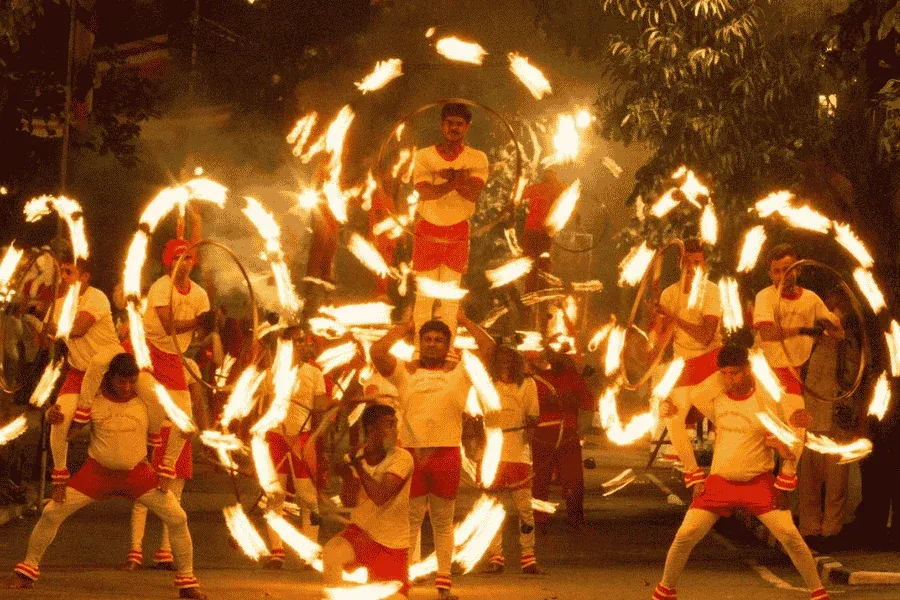
As darkness deepens, flames begin spinning through the air. Fire performers whirl burning torches around their bodies while sparks fly above the crowd. Some performers walk barefoot through fire while others dance surrounded by smoke and glowing embers. Against the backdrop of ancient temples and colonial-era buildings, the performances feel almost unreal. Traditional fire dancing in Sri Lanka originated from ritual ceremonies connected to spiritual and protection blessings.
The Elephants of the Perahera
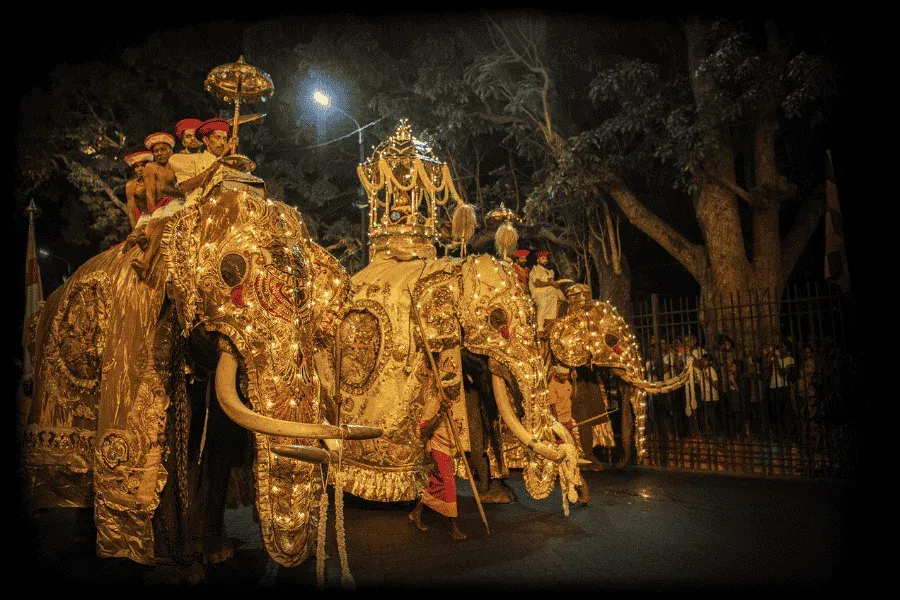
Towering tuskers dressed in illuminated ceremonial garments slowly emerge from the darkness surrounded by drummers, dancers, and torch bearers. Thousands of tiny lights shimmer across hand-stitched fabrics while the crowd watches in silence. At the centre of the procession, the main ceremonial tusker carries the sacred casket. Some ceremonial elephant garments contain intricate embroidery and thousands of decorative lights carefully prepared over many months.
More Than a Festival — A Spiritual Gathering
Despite its visual grandeur, the Kandy Esala Perahera is deeply spiritual for Sri Lankans. Many families travel for days to witness the procession as an act of devotion and religious respect. Buddhist monks observe quietly beside tourists, elderly pilgrims carry lotus flowers, and children watch the dancers with complete amazement.
The festival blends spirituality with performance, history with celebration, and religion with community. It is not designed purely for entertainment. It is living culture — the same ceremony that has been performed for over seventeen centuries, still unfolding through the same hill-country streets.
Exploring Kandy Beyond the Festival
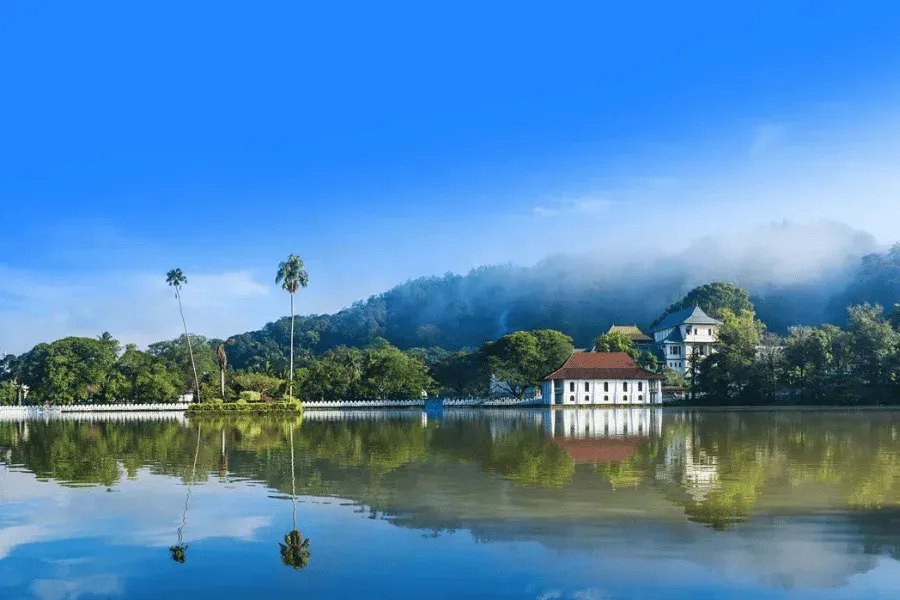
While the Perahera is the main attraction, Kandy itself is one of Sri Lanka's most rewarding hill-country destinations. The city is surrounded by misty mountains, tea plantations, colonial architecture, and cool highland air. Travelers combine the Perahera with visits to the Temple of the Sacred Tooth Relic, Kandy Lake, and nearby tea estates.
Reaching Kandy by Tuk Tuk
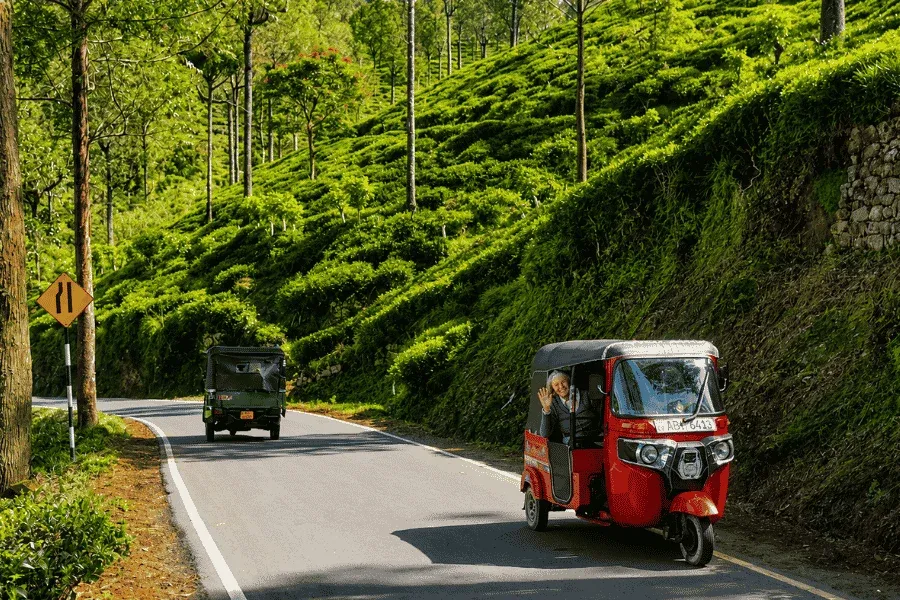
For travelers exploring Sri Lanka by tuk tuk, arriving in Kandy during Perahera season becomes part of the adventure itself. The journey into Sri Lanka's central highlands passes through winding mountain roads, tea-covered hills, waterfalls, cloud forests, and roadside tea shops hidden in the mist.
Many travelers combine Kandy with a broader hill country circuit through Ella and Bandarawela and Haputale and Lipton's Seat, making the Perahera a natural anchor point for a longer mountain road trip. Full route suggestions are on the tuk tuk rental Sri Lanka page.
Frequently Asked Questions — Kandy Esala Perahera
When is the Kandy Esala Perahera?
Late July to mid-August, following the lunar calendar. The festival runs approximately 10 nights. Exact dates change slightly each year. The final 3–4 nights are the most spectacular.
What is the Kandy Esala Perahera?
Sri Lanka's most important cultural and religious festival, held annually in Kandy to honor the Sacred Tooth Relic of the Buddha. The procession includes ceremonial elephants, Kandyan drummers, fire dancers, and hundreds of performers. It has been held for over 1,700 years.
Which nights of the Perahera are best to attend?
The final 3 to 4 nights are the most dramatic, culminating in the grand Randoli Perahera. Hotels fill months in advance for these nights — book early.
Can I reach Kandy by tuk tuk for the Perahera?
Yes. The road from Negombo to Kandy passes through Sri Lanka's central highlands — winding mountain roads, tea estates, and hill-country villages. Many travelers combine the Perahera with a broader road trip through Ella, Nuwara Eliya, and Sigiriya.
Is the Sacred Tooth Relic carried during the procession?
No. The actual relic never leaves the Temple of the Sacred Tooth Relic. A sacred replica casket is carried by the main ceremonial elephant during the procession instead.