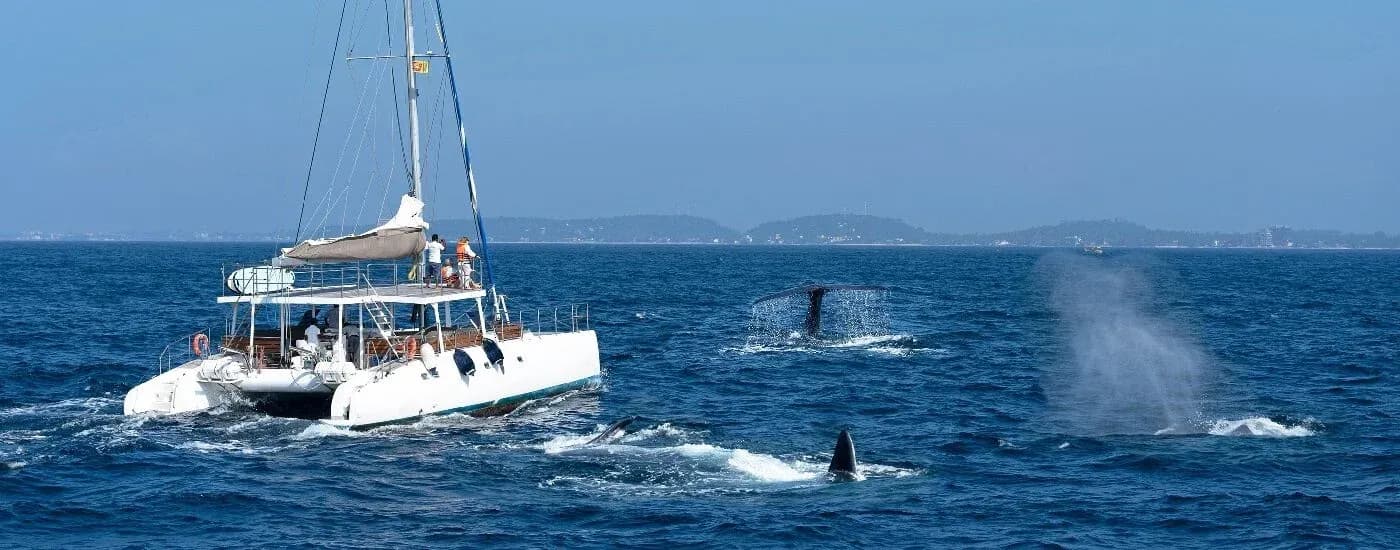
Before sunrise, the harbor at Mirissa begins to stir. Fishermen prepare their boats beneath dim yellow lights while travelers gather quietly near the docks holding cameras against the cool ocean breeze. The sea is still dark. Waves roll softly against the harbor walls.
As the boats leave shore, the coastline slowly disappears behind the Indian Ocean mist. Flying fish leap across the water. Spinner dolphins begin racing alongside the boats. The sunrise turns the ocean gold.
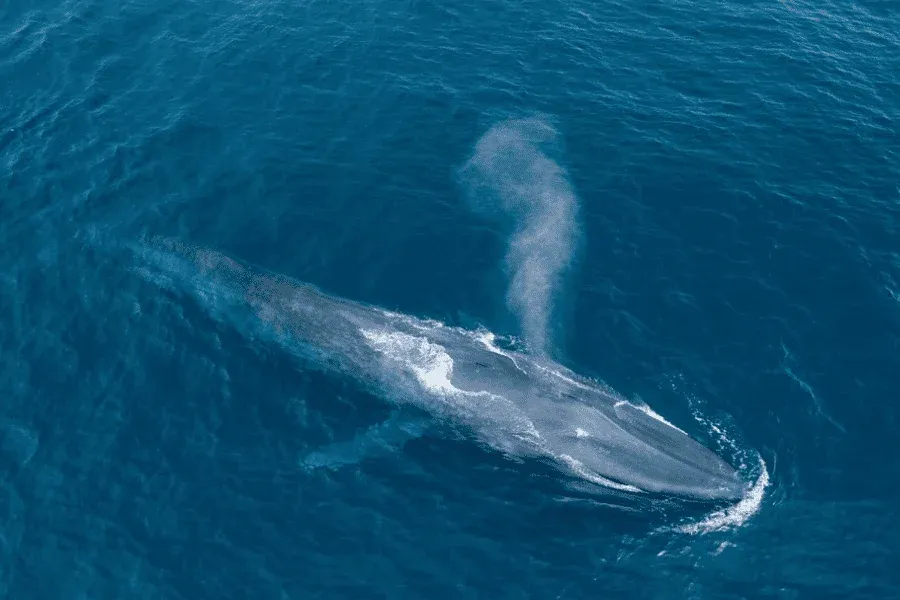
Then, far ahead, a towering column of mist explodes into the air. A few seconds later, an enormous blue-grey back slowly rises from the sea before disappearing beneath the surface.
A blue whale. The largest animal ever known to exist on Earth — not the largest living animal, but the largest animal in the history of the planet. And Sri Lanka is one of the very few places in the world where travelers can witness these giants relatively close to shore.
Why Sri Lanka Is One of the World's Best Whale Watching Destinations
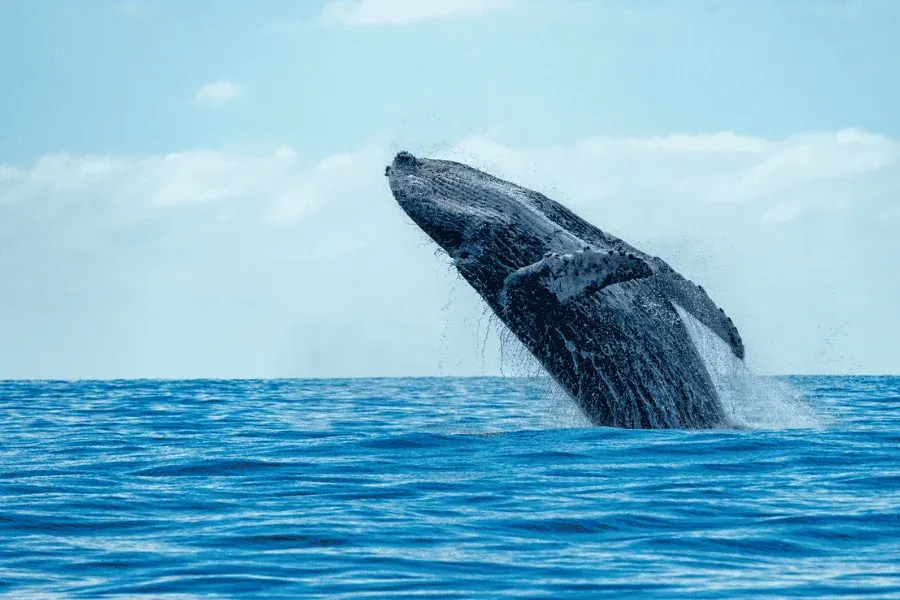
Sri Lanka sits directly beside major Indian Ocean migration routes used by whales traveling through deep, nutrient-rich waters. What makes the island particularly unusual is how quickly the ocean floor drops into deep submarine canyons just off the southern and eastern coastline. This allows blue whales and sperm whales to travel surprisingly close to land.
In many countries, whale watching boats must travel hours offshore before reaching deep enough water. In Sri Lanka, sightings can happen within a relatively short distance from the coast. Marine researchers believe certain blue whale populations near Sri Lanka may not migrate as far as populations found in colder oceans, which helps explain the consistency of sightings throughout the whale seasons.
The Largest Animal Ever to Exist
Blue whales are almost impossible to comprehend until you see one in person. An adult blue whale can reach over 30 metres in length and weigh more than 150 tons. Their tongues alone can weigh as much as an elephant. Their hearts weigh close to 180 kilograms — roughly the size of a small car.
Despite their enormous size, blue whales feed mainly on tiny shrimp-like creatures called krill. The sound produced by a blue whale is considered one of the loudest biological sounds on Earth and can travel hundreds of kilometres underwater.
Best Time for Blue Whale Watching in Sri Lanka
Sri Lanka's whale watching seasons shift with the island's two monsoon systems. Travelers can experience whale watching during different parts of the year depending on which coast they visit. Understanding the seasons — covered in detail in the Sri Lanka rainy seasons guide — makes planning straightforward.
South Coast — Mirissa (November to April)
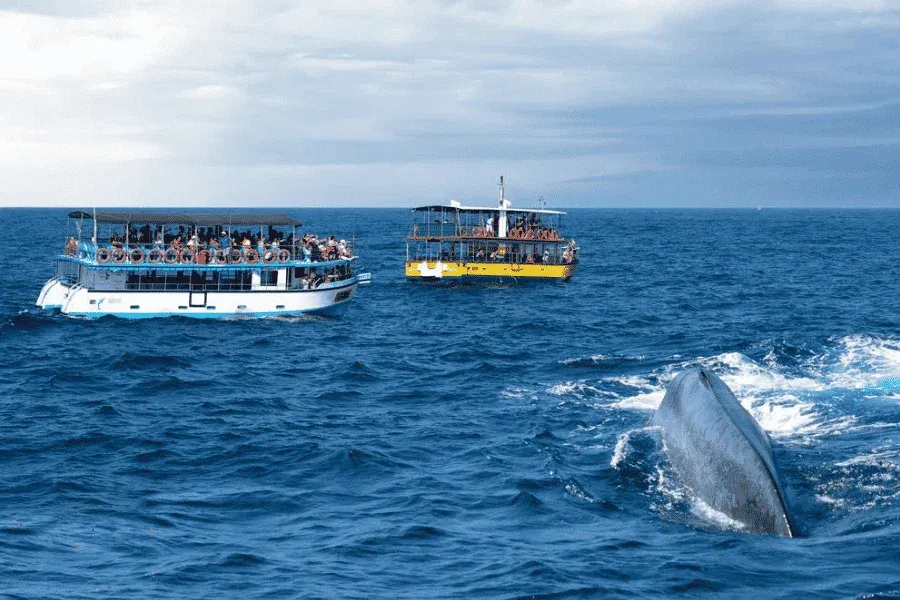
During Sri Lanka's northeast monsoon season, the south coast experiences calmer seas and clear visibility. This transforms Mirissa into Sri Lanka's whale watching capital. Every morning before sunrise, boats leave the harbor carrying travelers into deep offshore waters. The continental shelf near the south coast drops rapidly into deep ocean trenches, creating ideal feeding routes for whales passing through the Indian Ocean.
- Species commonly seen: Blue whales, sperm whales, Bryde's whales, spinner dolphins, sea turtles
- Best months: November to April
- Departure point: Mirissa harbor
East Coast — Trincomalee (May to September)
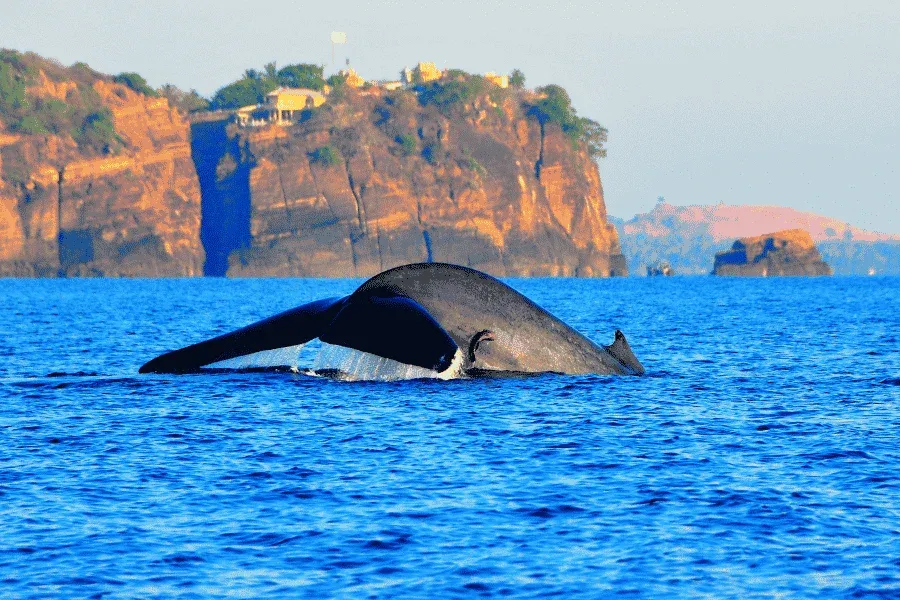
As conditions shift toward the east coast during the southwest monsoon, whale watching activity moves to Trincomalee. The calmer eastern waters become ideal for marine wildlife excursions during mid-year months. Compared to Mirissa, Trincomalee often feels quieter, less crowded, and more relaxed. Trincomalee sits beside one of the world's largest natural deep-water harbors, and the surrounding waters attract significant marine wildlife throughout the east coast season.
- Species commonly seen: Blue whales, sperm whales, spinner dolphins, bottlenose dolphins
- Best months: May to September
- Departure point: Trincomalee harbor
The Experience of Seeing a Blue Whale
The first thing travelers usually notice is the silence. Even on crowded boats, people often stop talking the moment a whale appears. Then comes the blow — a vertical column of mist erupting high above the ocean surface, visible from surprisingly far away.
Moments later, the whale itself emerges slowly from the sea. The back appears almost endless. Dark blue-grey skin glistens beneath the morning sunlight while the animal moves with an almost impossible calmness for something so enormous. Sometimes it dives deeply enough to reveal its giant tail disappearing into the water. Other times it surfaces repeatedly beside the boat before fading back into the deep ocean.
Blue whales can hold their breath for around 20 minutes, though many surface more frequently while feeding. For many travelers, this becomes one of the most affecting wildlife experiences of their lives.
More Than Just Whales
Sri Lanka's whale watching tours often become full marine wildlife excursions. Depending on the season, travelers may also encounter:
- Spinner dolphins performing aerial spins above the surface
- Bottlenose dolphins
- Sperm whales
- Flying fish
- Sea turtles
- Large tuna schools
- Tropical seabirds
Some mornings, hundreds of dolphins surround the boats simultaneously, turning the ocean into a moving display of sound and motion. Spinner dolphins receive their name from their habit of spinning rapidly through the air during jumps.
Mirissa: Sri Lanka's Whale Watching Capital
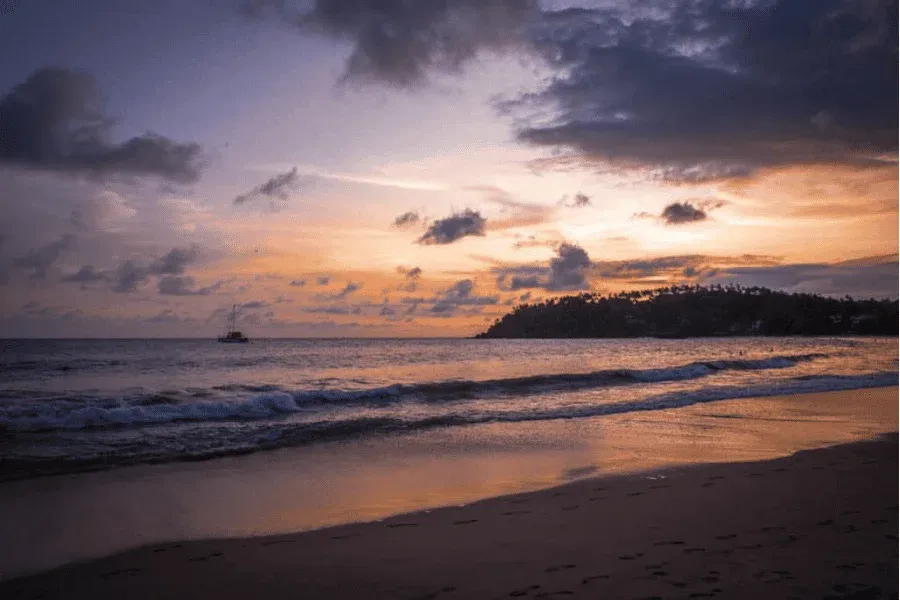
During whale season, Mirissa becomes one of the busiest beach destinations in Sri Lanka. Fishing boats line the beaches beside surfboards and beach cafés. Travelers spend mornings whale watching and evenings watching sunsets from palm-covered cliffs overlooking the Indian Ocean.
Many visitors combine whale watching with surfing, coastal road trips, and seafood dinners — making Mirissa one of the most complete beach destinations on the south coast circuit. Read the full south coast travel guide for what to expect on the road from Negombo.
Trincomalee: The East Coast's Marine Destination
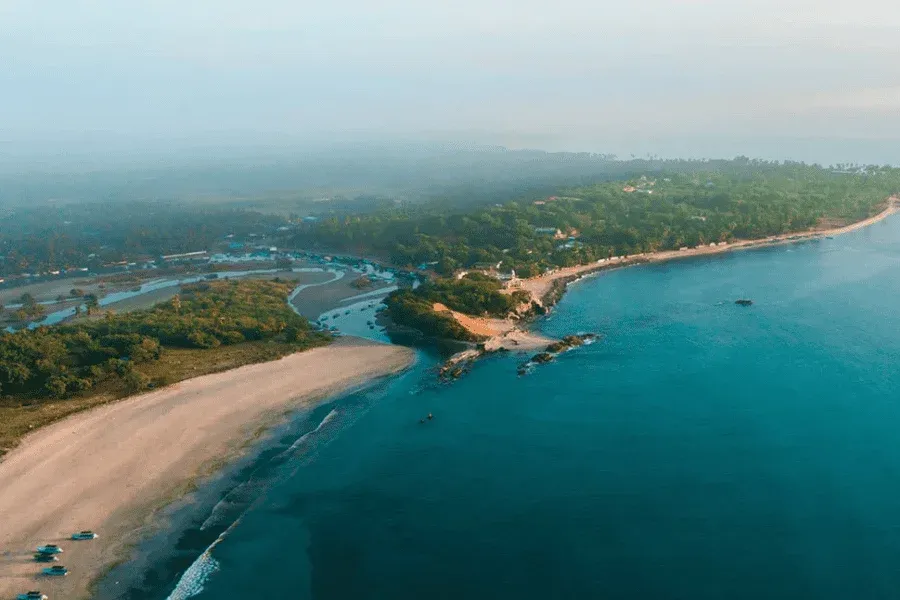
On the east coast, whale watching feels completely different. Trincomalee offers calmer beaches, quieter roads, and clearer turquoise waters during the east coast season. Travelers often combine whale watching with snorkeling at Pigeon Island, diving, beach stays, and temple visits. The waters around Pigeon Island contain some of Sri Lanka's best coral reef ecosystems.
Read the full north and east coast travel guide for distances and road conditions heading toward Trincomalee.
Whale Watching by Tuk Tuk
For travelers exploring Sri Lanka by tuk tuk, the whale watching journey becomes part of the overall road trip. On the south coast, the roads toward Mirissa pass surf towns, palm-lined beaches, fishing villages, and hidden cafés — making sunrise drives toward the harbor an experience in themselves.
On the east coast, routes toward Trincomalee pass through forests, lagoons, rice fields, and quiet coastal roads far removed from the island's busier tourist zones. Both whale watching destinations fit naturally into the standard tuk tuk tour circuits without requiring a separate journey.
Responsible Whale Watching in Sri Lanka
As Sri Lanka's whale tourism industry grows, responsible marine tourism becomes increasingly important. Travelers should choose operators that respect whale distances, avoid chasing animals, follow marine wildlife regulations, limit overcrowding, and reduce plastic waste on board.
Blue whales remain listed as endangered despite their size, and protecting the Indian Ocean ecosystems that sustain them is essential for the future of whale watching in Sri Lanka.
Frequently Asked Questions — Blue Whale Watching in Sri Lanka
When is the best time for blue whale watching in Sri Lanka?
The south coast season runs November to April, with Mirissa as the main departure point. The east coast season runs May to September, with Trincomalee as the base. Both offer reliable blue whale sightings thanks to deep submarine canyons close to shore.
Where is the best place to see blue whales in Sri Lanka?
Mirissa on the south coast is Sri Lanka's most well-known whale watching destination and operates November to April. Trincomalee on the east coast operates May to September. Both sit beside deep ocean trenches that bring whales unusually close to land.
How large are blue whales?
An adult blue whale can reach over 30 metres in length and weigh more than 150 tons. They are the largest animals ever known to have existed on Earth. Their hearts weigh close to 180 kilograms.
What other marine life can you see on whale watching tours in Sri Lanka?
Spinner dolphins, bottlenose dolphins, sperm whales, flying fish, sea turtles, and large tuna schools are all regularly encountered depending on the season. Some mornings hundreds of dolphins surround the boats at once.
Can you combine whale watching with a tuk tuk road trip in Sri Lanka?
Yes. Mirissa sits on the south coast tuk tuk circuit (November to April) and Trincomalee on the east coast circuit (May to September). Whale watching fits naturally into both routes without a separate detour.