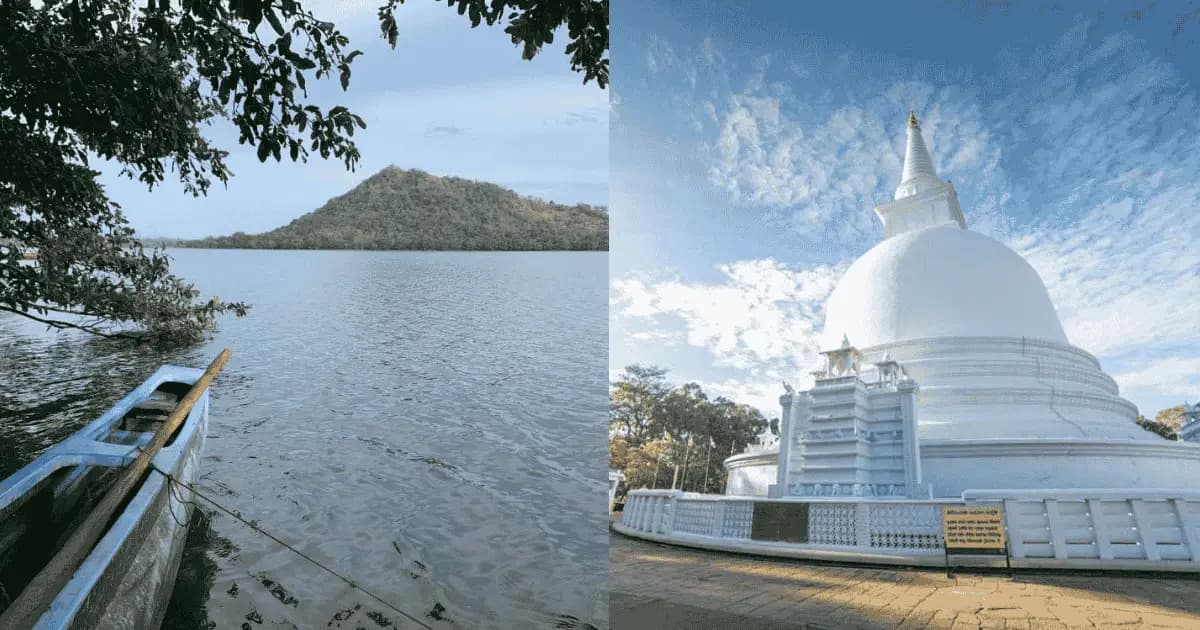
Driving toward Mahiyanganaya and Gal Oya National Park feels like entering a quieter and far less explored side of Sri Lanka.
The busy tourist roads slowly disappear while forests, paddy fields, reservoirs, and rivers begin stretching endlessly across the landscape. Small farming villages appear between jungle-covered hills, roadside fruit stalls sit beneath giant kumbuk trees, and the atmosphere suddenly feels slower, older, and deeply connected to both nature and history.
For many travelers, this region becomes one of the biggest surprises in Sri Lanka because it combines ancient Buddhist legends, indigenous Vedda heritage, remote wildlife experiences, mountain roads, jungle reservoirs, village culture, and untouched wilderness — all within one journey that many tourists completely overlook.
Unlike the crowded southern beaches or the more developed safari regions, Mahiyanganaya and Gal Oya still feel raw and deeply authentic. The roads are quieter, the scenery constantly shifts between forests, farmland, mountains, and reservoirs, while daily life still revolves around rivers, temples, agriculture, wildlife, and village communities rather than tourism.
For travelers exploring Sri Lanka by tuk tuk, this region often feels like discovering one of the island's last true frontiers.
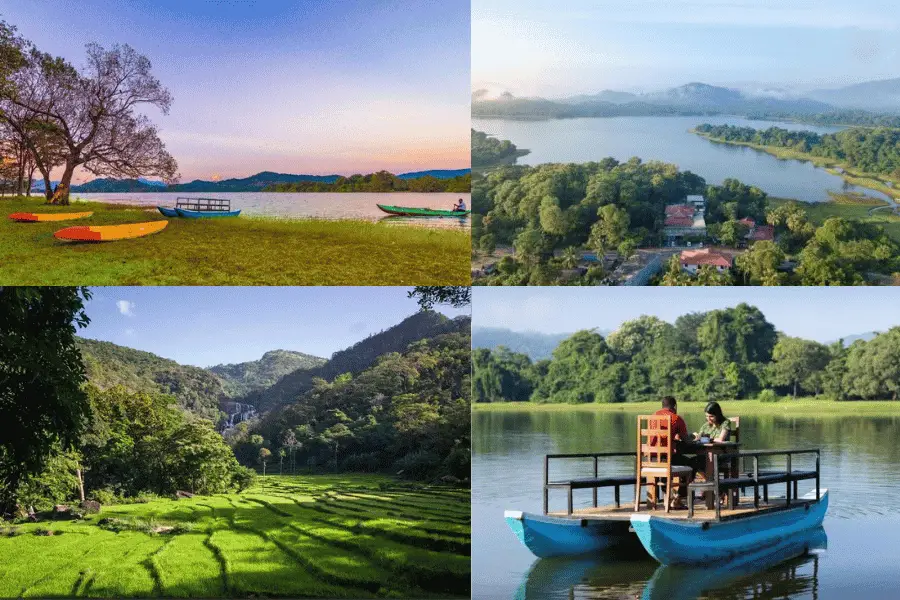
Sri Lanka's Eastern Frontier of Legends, Forests & Indigenous Heritage
The region surrounding Mahiyanganaya sits between Sri Lanka's central mountains and the eastern plains, creating a landscape where forests, rivers, reservoirs, and ancient history naturally blend together.
Historically, this area has long been connected to some of Sri Lanka's oldest Buddhist traditions. According to Sri Lankan chronicles, Mahiyangana Raja Maha Vihara marks the location of the Buddha's first legendary visit to Sri Lanka more than 2,500 years ago. The site later became one of the island's earliest Buddhist worship locations and remains deeply important to Sri Lankan pilgrims today.
At the same time, the forests surrounding Mahiyanganaya and Gal Oya also hold strong connections to the Vedda people — the indigenous people of Sri Lanka whose history predates kingdoms, colonial rule, and even many of the island's oldest recorded civilizations.
This mixture of Buddhist pilgrimage history, indigenous culture, rivers and reservoirs, wildlife corridors, and mountain landscapes gives the region an identity completely different from anywhere else in Sri Lanka.
Recommended Stay & Best Time To Visit
Most travelers spend between two and four nights exploring Mahiyanganaya and Gal Oya properly, especially when combining village stays, safaris, reservoir experiences, and long countryside drives.
The driest and most comfortable months usually fall between December and April when the eastern plains receive less rainfall and safari conditions become easier.
Because the region sits between Sri Lanka's hill country and eastern dry zone, temperatures here often feel hotter and drier compared to places like Nuwara Eliya or Ella.
Early mornings and evenings become especially atmospheric as mist slowly rises above the paddy fields and rivers while sunlight begins touching the forests and distant mountains.
The 18 Bend Road — One of Sri Lanka's Most Scenic Mountain Drives
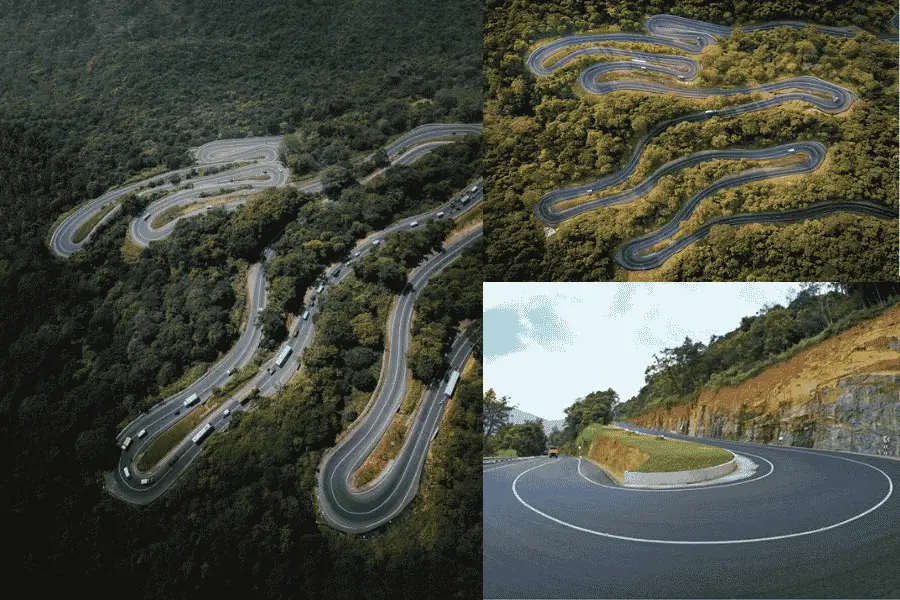
One of the highlights of traveling toward Mahiyanganaya is driving along the famous 18 Bend Road, one of the most dramatic mountain roads in Sri Lanka.
The road twists sharply through forests and steep hillsides with bend after bend opening toward valleys, rivers, jungle-covered mountains, and distant eastern plains.
For tuk tuk travelers especially, this journey becomes less about reaching the destination and more about experiencing the changing landscapes themselves.
As the road descends from the cooler highlands toward the drier eastern regions, the climate slowly changes too. Mountain mist gradually disappears while warmer air rises from the plains below. Forests begin opening into paddy fields and reservoirs while roadside tea stalls and fruit sellers appear beside the bends.
Stopping along the route often reveals:
- Forest viewpoints
- Waterfalls during rainy months
- Mist drifting through valleys
- Mountain cliffs
- Roadside king coconut stalls
- Village tea shops overlooking the hills
The road itself has become one of the most memorable independent-driving routes in Sri Lanka.
Mahiyangana Raja Maha Vihara — One of Sri Lanka's Oldest Buddhist Sites
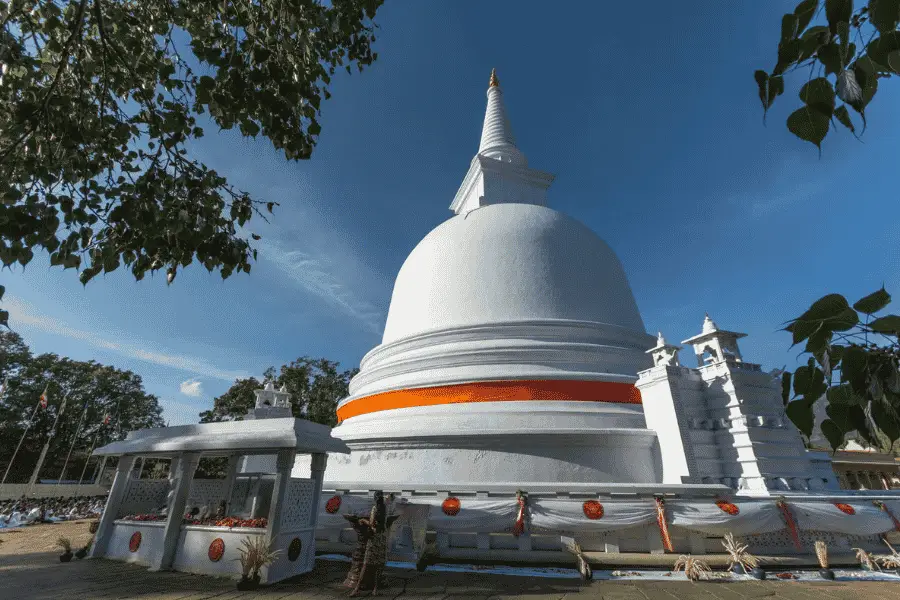
The spiritual center of the region is Mahiyangana Raja Maha Vihara, one of the oldest and most sacred Buddhist temples in Sri Lanka.
According to Buddhist tradition, this was the location of the Buddha's first legendary visit to the island. Ancient stories describe how he arrived to settle conflicts among supernatural beings believed to inhabit the forests and mountains surrounding the area during ancient times.
Because of this connection, Mahiyanganaya became one of Sri Lanka's earliest Buddhist pilgrimage destinations.
Today, large white stupas rise above the surrounding countryside while monks, worshippers, and pilgrims continue bringing flowers, lighting oil lamps, and participating in religious rituals throughout the day.
Compared to the larger temple complexes in Kandy or Anuradhapura, Mahiyanganaya often feels calmer and more closely connected to the surrounding forests and countryside.
During Poya days and religious festivals, the roads leading toward the temple become filled with pilgrims dressed in white carrying lotus flowers and offerings beneath the hotter eastern sunlight.
Vedda Culture — Sri Lanka's Indigenous Heritage
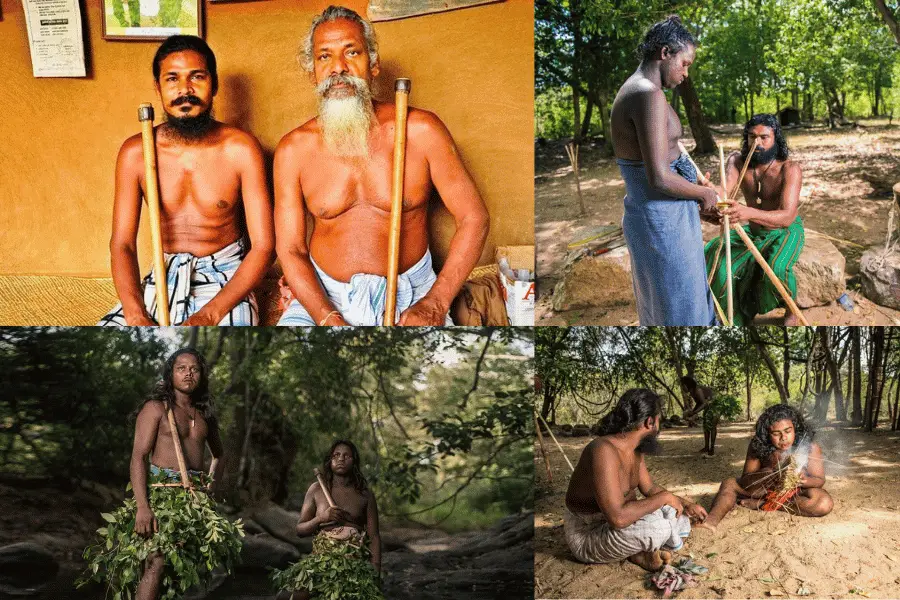
One of the most unique aspects of Mahiyanganaya and Gal Oya is their deep connection to the Vedda people.
For centuries, Vedda communities lived within the forests and wilderness areas surrounding these regions, relying on:
- Hunting traditions
- Herbal medicine
- Forest knowledge
- Cave shelters
- River fishing
- Small-scale farming
All deeply connected to the surrounding environment.
Traditional Vedda culture included honey gathering, bow hunting, forest tracking, herbal healing practices, and spiritual rituals connected to nature.
Even today, parts of these traditions and identities continue surviving despite modernization and changing lifestyles. Travelers visiting Vedda communities around Gal Oya often gain insight into a side of Sri Lanka that predates kingdoms, colonial rule, and modern cities entirely.
The Vedda heritage adds an entirely different cultural layer to the region and reminds travelers that Sri Lanka's history extends far beyond temples and ancient capitals into much older human relationships with forests and wilderness.
Rivers, Paddy Fields & Sri Lanka's Eastern Countryside
Beyond its spiritual and cultural importance, the landscapes around Mahiyanganaya are among the most underrated rural regions in Sri Lanka.
The region sits near the Mahaweli River — Sri Lanka's longest river — which shapes much of the surrounding farmland and irrigation systems.
Driving through the countryside reveals:
- Vast rice fields
- Irrigation canals
- Grazing water buffalo
- Forest roads
- Riverside villages
- Jungle-covered hills
- Small Buddhist shrines beside the roads
Compared to Sri Lanka's busier tourism regions, life here feels slower and deeply connected to agriculture and the land itself. During sunrise and sunset, golden light spreads across the paddies while mist hangs above rivers and forests surrounding the villages.
Sorabora Wewa — Ancient Engineering Beside the Mountains
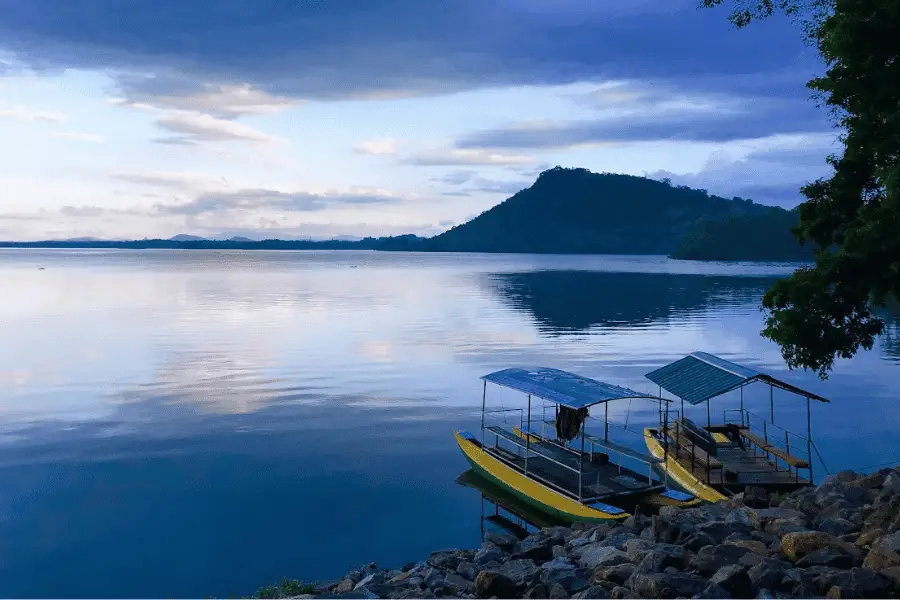
One of the most scenic places near Mahiyanganaya is Sorabora Wewa, an ancient reservoir believed to date back thousands of years.
Unlike many reservoirs built with massive embankments, Sorabora Wewa is famous for its unusual stone sluice system believed to have been constructed using natural rock formations. Sri Lanka's ancient irrigation civilization became internationally recognized for advanced hydraulic engineering systems that allowed kingdoms to survive in dry-zone environments for centuries, and Sorabora Wewa remains one of the lesser-known examples of that engineering tradition.
The reservoir remains surrounded by forests, mountain views, fishing villages, farmland, and quiet countryside roads.
Travelers often stop here during sunrise or sunset to watch:
- Fishermen crossing the water
- Birds gathering near the shoreline
- Mountain reflections across the reservoir
- Village life beside the lake
Compared to Sri Lanka's more commercial lakes and reservoirs, Sorabora Wewa still feels calm and largely untouched.
Gal Oya — Sri Lanka's Most Underrated Safari Region
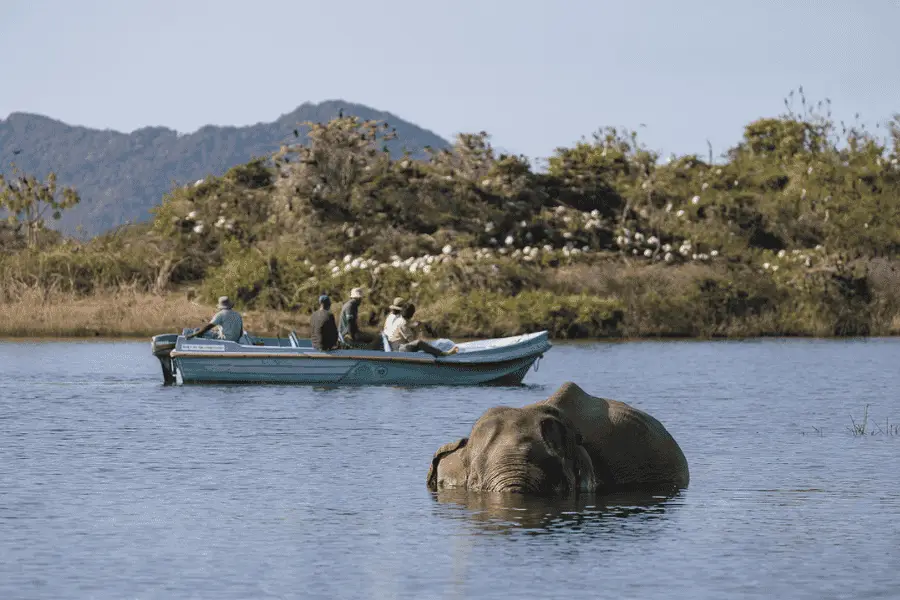
Further east, the journey becomes wilder as travelers arrive in Gal Oya National Park — one of Sri Lanka's least crowded and most underrated wildlife regions.
Unlike the busier safari parks in the south, Gal Oya feels remote, quiet, and deeply connected to untouched wilderness.
The region surrounds Senanayake Samudraya, the largest reservoir in Sri Lanka, which completely changes the safari experience compared to parks like Yala National Park or Udawalawe National Park.
Instead of dry jeep tracks and crowded safari routes, Gal Oya offers:
- Jungle-covered islands
- Boat safaris
- Open-water wildlife viewing
- Dense forests
- Remote shorelines
- Quiet wetlands
The park is internationally famous for one extraordinary sight — elephants swimming between islands across the reservoir. Watching wild elephants move through open water surrounded by forested islands has become one of the most unique wildlife experiences anywhere in Sri Lanka.
Because visitor numbers remain relatively low, safaris here often feel quieter and far more immersive than in Sri Lanka's more crowded parks.
Wildlife Around Gal Oya
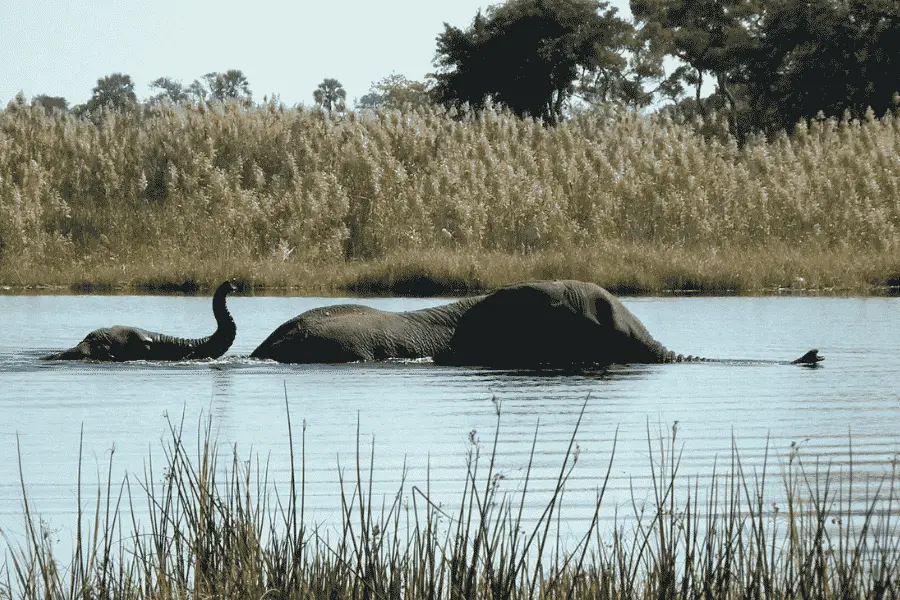
The forests and waterways surrounding Gal Oya support one of Sri Lanka's richest ecosystems. Wildlife throughout the region includes:
- Elephants
- Leopards
- Sloth bears
- Crocodiles
- Deer
- Monkeys
- Water buffalo
- Endemic birds
- Fish eagles
The combination of forests, wetlands, reservoirs, and remote wilderness creates exceptional biodiversity throughout the region. Birdwatchers especially love Gal Oya because enormous numbers of wetland and forest bird species gather around the reservoir and surrounding jungle.
The forests surrounding Gal Oya also form part of one of Sri Lanka's important elephant migration corridors connecting eastern wilderness areas.
Things To Experience in Mahiyanganaya & Gal Oya
- Drive the winding mountain curves of the 18 Bend Road during early morning mist
- Watch pilgrims gather at Mahiyangana Raja Maha Vihara carrying lotus flowers and oil lamps
- Visit ancient reservoirs and fishing villages around Sorabora Wewa
- Explore rural farming roads beside rice paddies and irrigation canals
- Experience boat safaris through Gal Oya National Park
- Watch elephants swimming between islands in Senanayake Samudraya
- Stay in jungle eco lodges surrounded by forests and reservoirs
- Learn about indigenous forest traditions connected to the Vedda people
- Photograph sunrise mist rising above rivers and paddy fields
- Stop at roadside stalls selling king coconut, mangoes, bananas, and papaya during long countryside drives
Food & Village Culture
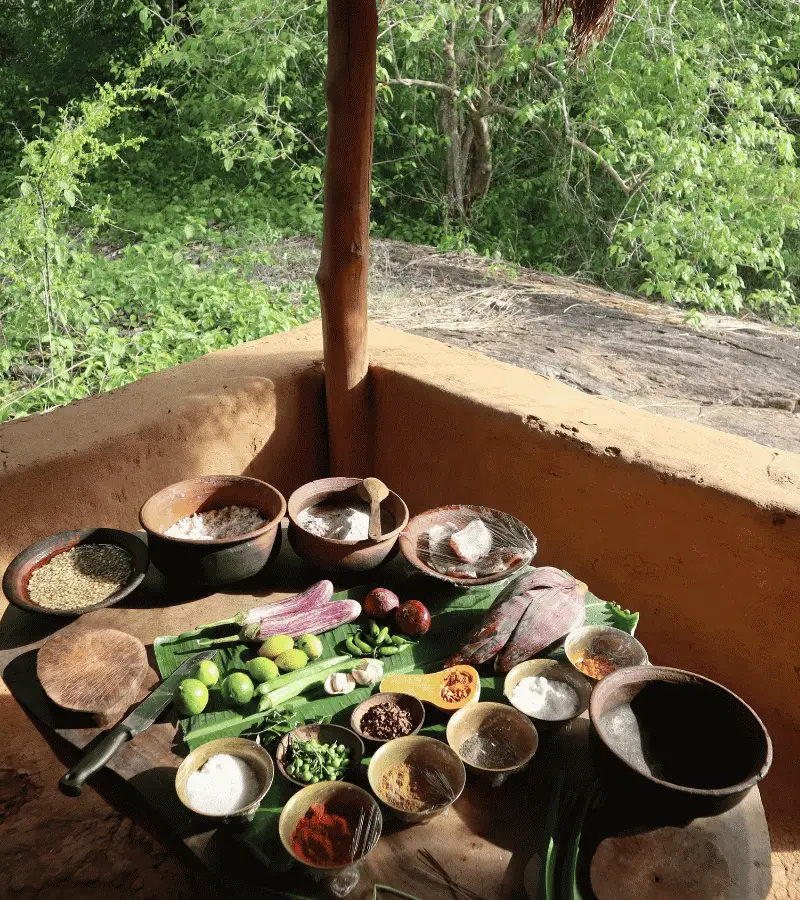
Food throughout Mahiyanganaya and Gal Oya feels deeply connected to village life and Sri Lanka's eastern countryside culture. Meals often include:
- Rice and curry
- Freshwater fish curries
- Jungle vegetables
- Coconut sambol
- Village chicken curry
- Buffalo curd with treacle
- Spicy sambols
Roadside stalls selling bananas, mangoes, papaya, king coconut, and seasonal fruits appear constantly along the quieter village roads.
Compared to Sri Lanka's tourism-heavy beach towns, the food and atmosphere here feel simpler, slower, and much more local.
Many homestays and eco lodges around Gal Oya also serve traditional clay-pot cooking using ingredients sourced directly from surrounding farms and villages.
Driving Through the Region by Tuk Tuk
For tuk tuk travelers, this region becomes less about individual attractions and more about the atmosphere of the journey itself.
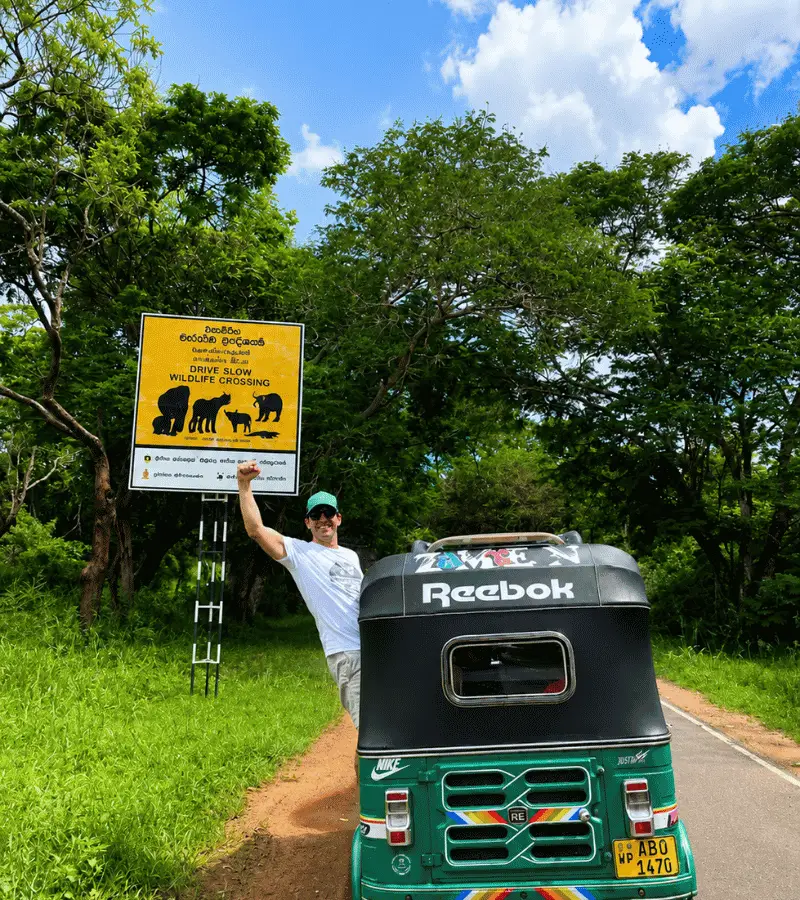
The roads through Mahiyanganaya and Gal Oya feel scenic, peaceful, and far less crowded than Sri Lanka's major tourism routes. Driving through forests, rice fields, reservoirs, and village roads while occasionally passing temples, farmers, cattle, elephants, and roadside fruit stalls creates a completely different experience from the beaches and cities elsewhere on the island.
The journey toward Gal Oya especially feels adventurous and remote, making it one of the most rewarding road trips in eastern Sri Lanka.
At sunset, smoke rises from village kitchens while orange light spreads across the paddies and reservoirs, creating some of the most atmospheric countryside scenes anywhere on the island.
Important Driving Notes
- Tuk tuks are not permitted on Sri Lankan expressways
- National parks require registered safari vehicles or boat safaris
- Elephant crossings are possible near forest roads — drive slowly at dawn and dusk
- Carry cash before entering remote regions
- Mobile signal can become limited near forests and reservoirs
- Roads may become slippery during heavy rain
Where To Head Next
From Mahiyanganaya and Gal Oya National Park, many travelers continue east toward Pasikuda and Batticaloa, where forests and reservoirs slowly transition into lagoons, Tamil coastal towns, seafood restaurants, and the calmer atmosphere of Sri Lanka's east coast.
Others continue north toward Anuradhapura and the elephant regions surrounding Minneriya National Park and Kaudulla National Park within Sri Lanka's Cultural Triangle.
Travelers returning toward the mountains often drive back toward Ella, Nuwara Eliya, and Kandy where dry plains and forests gradually transition once again into waterfalls, tea plantations, colder temperatures, and mist-covered highlands.
For many travelers, however, Mahiyanganaya and Gal Oya become unforgettable precisely because they reveal a slower, older, and wilder side of Sri Lanka — one where rivers, forests, indigenous culture, wildlife, reservoirs, and ancient legends still shape the rhythm of everyday life.
Frequently Asked Questions — Mahiyanganaya & Gal Oya
How far is Mahiyanganaya from Kandy by tuk tuk?
Mahiyanganaya is approximately 80–90 km from Kandy. By tuk tuk the drive takes around 2.5–3 hours depending on road conditions. Part of the route includes the dramatic 18 Bend Road, one of Sri Lanka's most scenic mountain drives.
What is the 18 Bend Road in Sri Lanka?
The 18 Bend Road is a winding mountain route that descends from Sri Lanka's central highlands toward the eastern plains near Mahiyanganaya. It passes through forests and steep hillsides with sharp bends opening toward valleys, rivers, and distant eastern landscapes. For tuk tuk travelers it is one of the most memorable independent-driving routes in the country.
What is special about Gal Oya National Park?
Gal Oya is one of Sri Lanka's least crowded and most underrated wildlife parks. It surrounds Senanayake Samudraya, the largest reservoir in Sri Lanka, and offers boat safaris through jungle-covered islands. The park is internationally known for elephants swimming between islands across the reservoir — one of the most unique wildlife sights in Asia.
Who are the Vedda people of Sri Lanka?
The Vedda are the indigenous people of Sri Lanka whose history predates kingdoms, colonial rule, and many of the island's oldest recorded civilizations. Communities historically lived within the forests and wilderness areas around Gal Oya, relying on hunting, forest knowledge, river fishing, and herbal traditions deeply connected to the surrounding environment.
When is the best time to visit Mahiyanganaya and Gal Oya?
The driest and most comfortable months are between December and April when the eastern plains receive less rainfall and safari conditions are easier. Because the region sits between the hill country and the eastern dry zone, temperatures feel hotter and drier than places like Nuwara Eliya or Ella.