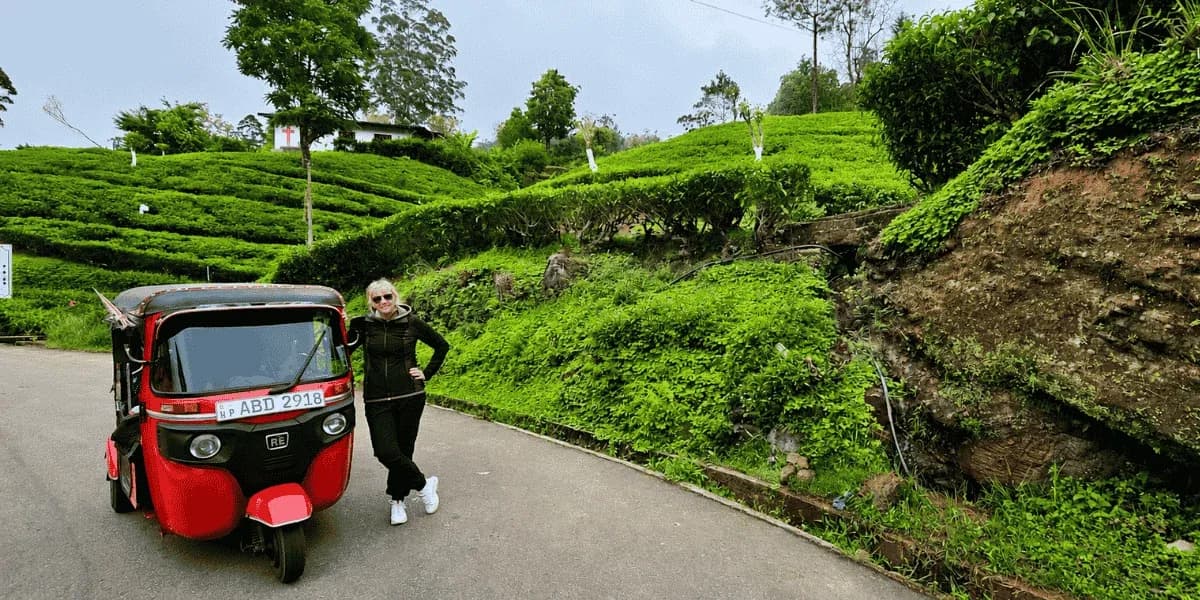
Leaving behind Sri Lanka's southern coastline and gradually climbing inland toward Deniyaya feels like entering an entirely different side of the island. The roads slowly narrow beneath thick rainforest trees while rivers begin appearing beside the valleys and mountain mist drifts across the hills by late afternoon. Tea-covered slopes suddenly give way to dense jungle, waterfalls emerge unexpectedly beside winding roads, and the humid air becomes cooler and wetter deeper into the mountains.
Unlike the busier tourism regions of Ella or Nuwara Eliya, Deniyaya feels deeply connected to wilderness. The region is dominated by rainforest valleys, hidden waterfalls, jungle rivers, tea hills, mist-covered mountains, farming villages, and remote forest roads — all surrounding one of Sri Lanka's most important natural treasures: Sinharaja Forest Reserve.
For many travelers exploring Sri Lanka by tuk tuk, Deniyaya becomes one of the island's most immersive journeys — a place where rainforest sounds slowly replace traffic noise and where the roads themselves feel like part of the adventure.
Sri Lanka's Last Great Rainforest Region
The identity of Deniyaya is inseparable from the rainforest landscapes surrounding it. The region acts as one of the main southern gateways into Sinharaja Forest Reserve — Sri Lanka's last major primary tropical rainforest and a UNESCO World Heritage Site recognized for its extraordinary biodiversity and ecological importance.
Unlike Sri Lanka's safari parks, Sinharaja is not experienced through jeep tracks or open grasslands. It is experienced on foot. Travelers walk directly into dense rainforest where giant trees rise above the canopy covered in vines, orchids, moss, and tropical vegetation while rivers move beneath hanging roots and bird calls echo through the forest throughout the day.
The rainforest survives because this part of Sri Lanka receives some of the island's heaviest rainfall, creating one of the richest ecosystems in South Asia. More than half of Sri Lanka's endemic mammals and butterflies have been recorded within Sinharaja's ecosystem, along with an enormous number of endemic reptiles, amphibians, and rainforest trees.
Yet despite its international ecological importance, the region surrounding Deniyaya still feels surprisingly untouched compared to many of Sri Lanka's tourism hotspots.
Driving Into Deniyaya — Where Tea Country Meets the Rainforest
The journey toward Deniyaya becomes one of the most memorable drives in southern Sri Lanka. Depending on the route, travelers pass through:
- Tea plantations
- Jungle-covered mountains
- Waterfalls
- Farming villages
- Winding mountain roads
- Rivers flowing beside the valleys
before eventually reaching rainforest country. One of the most fascinating parts of the drive is how suddenly the scenery changes — the roads may pass through tea-covered hills one moment and dense tropical rainforest the next. Fog drifts across the mountain roads during colder mornings while roadside fruit stalls and village tea shops appear unexpectedly between the forests.
For tuk tuk travelers especially, the roads around Deniyaya feel adventurous without becoming overwhelmingly difficult, making the region one of the most rewarding independent-driving experiences in Sri Lanka's southern highlands.
Explore Sinharaja — Sri Lanka's UNESCO Rainforest Wilderness
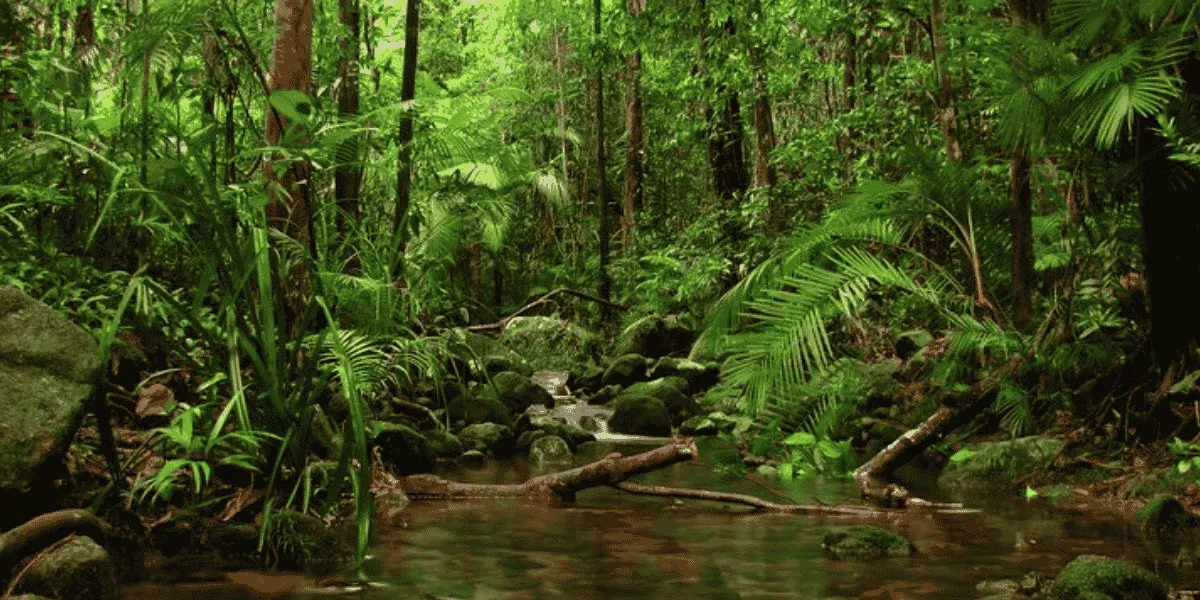
Sinharaja is easily the most important attraction in the region and one of the most biologically significant ecosystems anywhere in Sri Lanka. Recognized by UNESCO for its exceptional biodiversity, the rainforest protects one of the island's last surviving areas of primary tropical rainforest.
Inside the forest, sunlight barely reaches the ground in some sections. Massive rainforest trees tower above narrow jungle trails while rivers cut through giant boulders beneath dense vegetation and hanging vines. The atmosphere inside Sinharaja feels alive constantly — birds calling through the canopy, insects echoing through the forest, water moving through rivers, mist drifting between trees, and rain falling suddenly through the jungle.
Unlike more commercial nature destinations, Sinharaja still feels genuinely wild. Mobile signals disappear in deeper sections while forest trails become quieter and more immersive the further travelers walk into the rainforest.
Rare Wildlife & Birdlife of Sinharaja
One of the reasons Sinharaja is internationally important is its extraordinary concentration of endemic wildlife species. For birdwatchers especially, the rainforest is considered one of the finest bird habitats in all of Asia. Rare endemic species found within the rainforest include:
- Sri Lanka blue magpie
- Red-faced malkoha
- Green-billed coucal
- Sri Lanka spurfowl
- Sri Lanka frogmouth
- Ashy-headed laughingthrush
- Yellow-fronted barbet
- Sri Lanka hanging parrot
Early mornings inside the rainforest become especially unforgettable as mist slowly drifts through the canopy while mixed feeding flocks move through the trees and dozens of bird calls echo across the valleys. Beyond birdlife, Sinharaja also supports purple-faced langurs, giant squirrels, green pit vipers, endemic frogs, colorful butterflies, monitor lizards, and rare rainforest reptiles. Many amphibians and reptiles found here exist nowhere else on Earth.
Rainforest Trails, Rivers & Jungle Experiences
Sinharaja offers a completely different kind of nature experience compared to Sri Lanka's safari parks. Activities here revolve around guided rainforest trekking, river bathing, waterfall exploration, wildlife photography, birdwatching, jungle camping, village experiences, and forest trail hiking rather than vehicle-based tourism.
Several access routes lead into the rainforest through Deniyaya, Pitadeniya, Rakwana, Kudawa, and Kalawana — each offering different trekking conditions and rainforest scenery. For many travelers, the most unforgettable moments inside Sinharaja are often the quietest ones — standing beside a rainforest river beneath giant trees while soft rain begins falling through the canopy and the sounds of the jungle completely surround the forest.
Hidden Waterfalls Around Deniyaya
The entire Deniyaya region is filled with waterfalls hidden among jungle-covered mountains, tea hills, and rainforest valleys. Some waterfalls appear unexpectedly beside the roads while others require short rainforest walks through muddy trails and forest paths. During wetter months, water crashes heavily through the valleys creating dramatic scenery throughout the region.
Many travelers spend entire days exploring hidden waterfalls, swimming in jungle pools, walking forest trails, photographing rivers and mist-covered valleys, and stopping at roadside viewpoints throughout the mountains. Compared to Sri Lanka's more crowded waterfall regions, many locations around Deniyaya still feel surprisingly undiscovered.
Tea Hills & Mountain Villages
Although Deniyaya is most famous for rainforest scenery, the surrounding region also contains rolling tea-covered hills and farming villages spread across the mountains. This transition between rainforest and tea country creates landscapes rarely seen elsewhere in Sri Lanka.
Small village communities remain deeply connected to tea cultivation, farming, spice growing, river-based agriculture, and mountain life. Several tea estates and smaller tea factories throughout the region also allow travelers to experience traditional Ceylon tea production while driving through the southern highlands. Early mornings feel especially atmospheric as fog drifts slowly across the hills while farmers begin work beneath the colder mountain air.
Gatabaruwa Raja Maha Viharaya — Forest Temple of the Southern Highlands
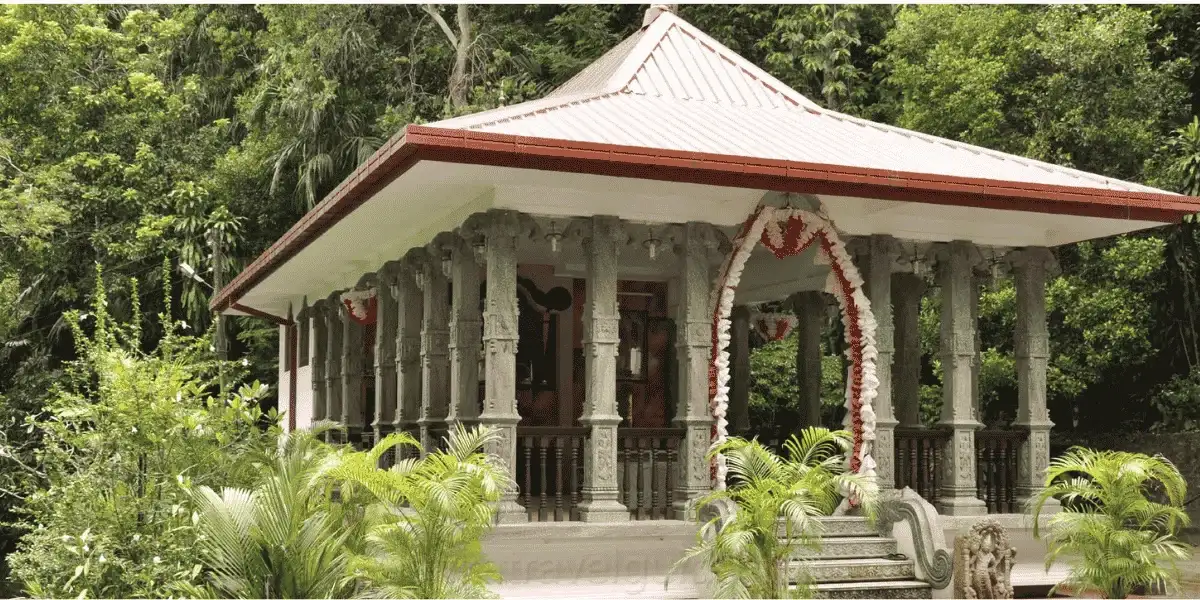
Hidden within the forests near Deniyaya, Gatabaruwa Raja Maha Viharaya remains one of the most historically important temples connected to Sri Lanka's southern highlands. The temple is believed to date back to the ancient Anuradhapura period and later became associated with King Rajasinghe I of Sitawaka during periods of Portuguese influence across Sri Lanka.
Surrounded by forest and mountain scenery, the temple feels isolated and deeply connected to Sri Lanka's older spiritual traditions. Ancient rock formations, cave areas, forest pathways, and older shrine structures create an atmosphere very different from the larger urban temples elsewhere on the island. The temple also preserves Kandyan-era murals, traditional stonework, wooden carvings, and historical architectural features reflecting centuries of Sri Lankan religious craftsmanship.
During colder mornings, mist often moves directly through the temple grounds while forest sounds echo through the surrounding hills.
Maduwanwela Walawwa — Colonial Power & Southern Aristocracy
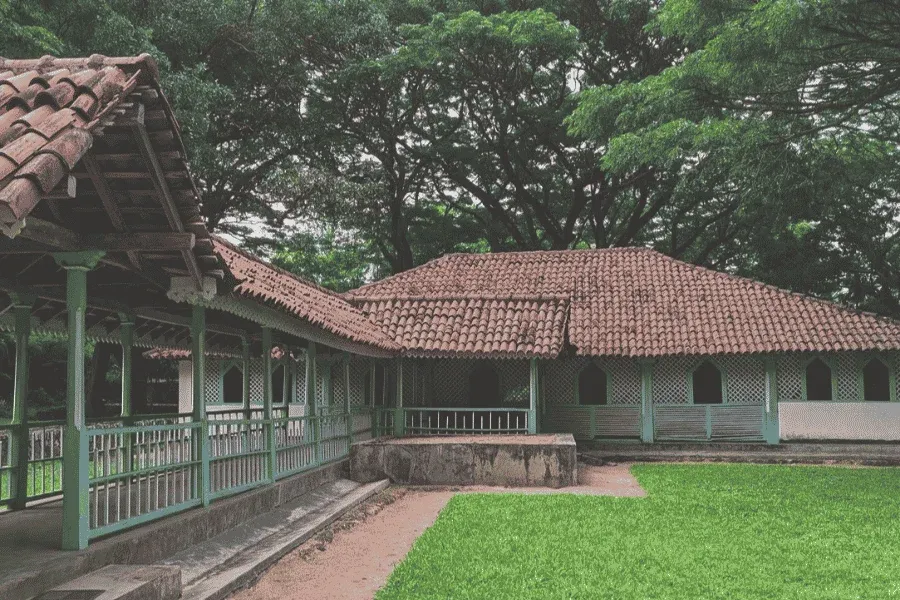
One of the most fascinating historical experiences near the Deniyaya region is Maduwanwela Walawwa, one of Sri Lanka's most famous aristocratic mansions from the colonial era. Originally built between the late 18th and early 19th centuries, the walawwa became famous under Maduwanwela Dissawe, one of southern Sri Lanka's most powerful regional leaders during British colonial rule.
At its height, the mansion reportedly contained more than one hundred rooms including guest halls, administrative sections, courtyards, underground security features, and ceremonial spaces. The architecture reflects a blend of traditional Kandyan design, colonial influence, and aristocratic southern Sri Lankan craftsmanship.
Wide courtyards, carved wooden pillars, tiled roofs, and long corridors still create a strong sense of Sri Lanka's colonial-era elite society. Stories surrounding the mansion also include hidden escape routes, defensive architecture, observation points, and political intrigue connected to unstable periods during colonial rule. Walking through the walawwa today feels less like visiting a museum and more like stepping into Sri Lanka's colonial past.
Outdoor Adventures & Rainforest Living
Deniyaya is one of Sri Lanka's best destinations for travelers who enjoy slower outdoor adventures deeply connected to nature itself. The region offers rainforest trekking, birdwatching, waterfall hiking, wildlife photography, scenic mountain driving, river bathing, jungle camping, and village walks — all surrounded by one of the island's richest ecosystems.
Unlike Sri Lanka's more commercial tourism regions, experiences here feel raw, quiet, and genuinely connected to the environment rather than tourism infrastructure. Many travelers stay inside rainforest eco lodges, jungle cabins, riverside guesthouses, mountain homestays, and tea-country cottages where evenings are filled with the sounds of flowing rivers, rain, insects, and rainforest wildlife rather than nightlife or traffic.
For many visitors, simply waking up beside mist-covered rainforest valleys becomes one of the most memorable parts of the journey itself.
Food & Local Atmosphere
Deniyaya feels deeply local compared to Sri Lanka's more tourism-focused destinations. Roadside rice-and-curry restaurants, village bakeries, fruit stalls, tea shops, and farming communities shape much of daily life throughout the region. Meals often feel simple, warm, and comforting after long rainforest walks or mountain drives. Travelers regularly encounter:
- Village rice and curry
- Jackfruit curry
- Coconut sambol
- Fresh bananas
- Tea-country snacks
- Hot milk tea
- Homemade rotis
- Seasonal tropical fruits
The atmosphere throughout the town remains hardworking, rural, and strongly connected to farming and mountain village life.
Exploring Deniyaya by Tuk Tuk
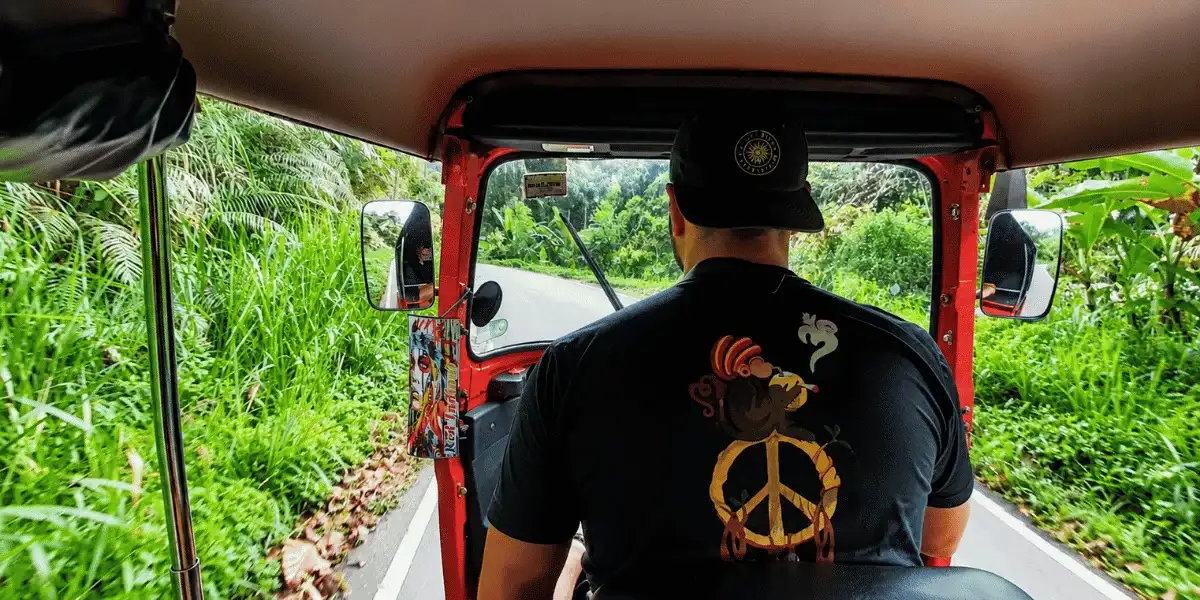
Driving through Deniyaya by tuk tuk feels adventurous from the very beginning. The roads become narrower, wetter, steeper, and more winding as travelers move deeper toward the rainforest. Heavy rain, fog, slippery roads, waterfalls beside the highways, and rivers flowing through the valleys all become part of the experience itself.
But these same conditions also create Deniyaya's unforgettable atmosphere. For many travelers, the freedom of stopping beside hidden waterfalls, rainforest viewpoints, village tea shops, and jungle rivers becomes one of the most rewarding parts of exploring southern Sri Lanka independently.
Important Driving Notes
- Tuk tuks are not permitted on Sri Lankan expressways
- Rainforest roads can become slippery during heavy rain
- Carry cash before entering remote villages
- Mobile signal becomes limited deeper inside rainforest regions
- Leeches are common during wetter months in Sinharaja
- Start rainforest treks early for better wildlife activity
Where To Head Next
From Deniyaya, many travelers continue south toward Matara, Mirissa, and Sri Lanka's southern beaches where rainforest mountains gradually transition into coconut-lined coastline and fishing towns. Others continue deeper into the highlands toward Rakwana, Balangoda, and the mountain landscapes surrounding Sri Lanka's central highlands.
For many travelers, however, Deniyaya and Sinharaja become one of the most unforgettable regions anywhere on the island — a place where rainforest roads, rare wildlife, hidden waterfalls, rivers, mountain villages, and untouched jungle landscapes still shape the rhythm of everyday life far away from Sri Lanka's busier tourist trails.
Frequently Asked Questions — Deniyaya & Sinharaja
What is Sinharaja Forest Reserve?
Sinharaja is Sri Lanka's last remaining lowland tropical rainforest and a UNESCO World Heritage Site. It covers approximately 11,000 hectares in the wet zone of southern Sri Lanka and is known for exceptionally high biodiversity, including endemic bird species, leopards, reptiles, and rare plant species.
Do you need a guide to enter Sinharaja?
Yes. Entry into Sinharaja requires a registered local guide — the forest is dense and trails are not clearly marked without one. Guides are available through the main entrance areas near Kudawa or Deniyaya.
What wildlife can you see in Sinharaja?
Sinharaja is especially rich in endemic bird species. Sri Lanka blue magpies, purple-faced langurs, and red-faced malkohas are regularly spotted. The forest is also home to leopards, wild boar, endemic lizards, frogs, and hundreds of butterfly and insect species.
Can you drive a tuk tuk to Deniyaya and Sinharaja?
Yes. The roads through the Deniyaya area are passable by tuk tuk. The drive from the Ella or Haputale area descends through tea hills and mountain villages before the landscape transitions into rainforest. Some roads near forest entrances are narrow and steep — drive carefully and allow extra time.
What else is there to do around Deniyaya besides Sinharaja?
The area includes hidden waterfalls, the forest temple Gatabaruwa Raja Maha Viharaya, the colonial-era Maduwanwela Walawwa estate, and scenic mountain roads through tea villages and jungle. The changing landscape from highland tea country into rainforest is a significant part of the experience.