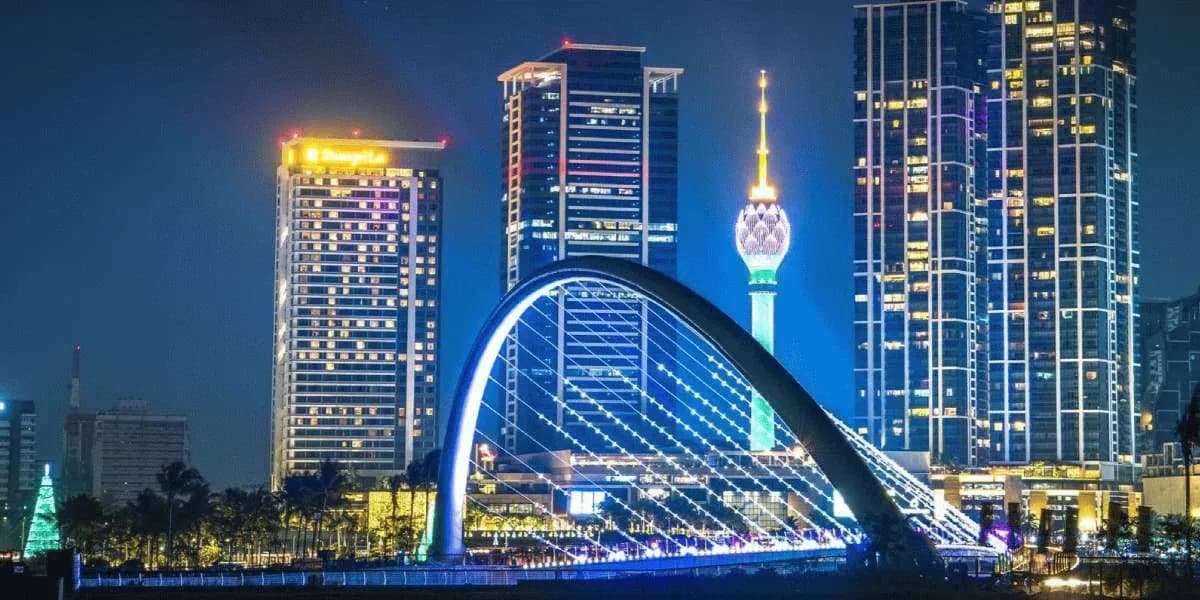
After weeks of driving through tea plantations, ancient kingdoms, jungle roads, fishing villages, surf towns, and tropical beaches, arriving in Colombo feels like stepping into a completely different side of Sri Lanka.
The slower rhythm of the island suddenly changes into traffic-filled streets, skyline views, rooftop bars, colonial architecture, crowded markets, modern cafés, luxury hotels, hidden temples, wetland parks, casinos, and oceanfront promenades stretching beside the Indian Ocean.
For many travelers, Colombo is far more than simply the city before the airport. It is where every different side of Sri Lanka finally comes together. Old Dutch churches stand beside glass office towers, Buddhist temples sit hidden behind busy commercial streets, rooftop lounges overlook colonial buildings, and street food vendors prepare local snacks beneath luxury hotels and shopping malls.
The city feels chaotic at times, but that chaos is part of what makes Colombo fascinating. Unlike the slower pace of the island's hill country or beach towns, Colombo feels constantly awake — especially after sunset when ocean winds cool the streets and the city begins filling with people again.
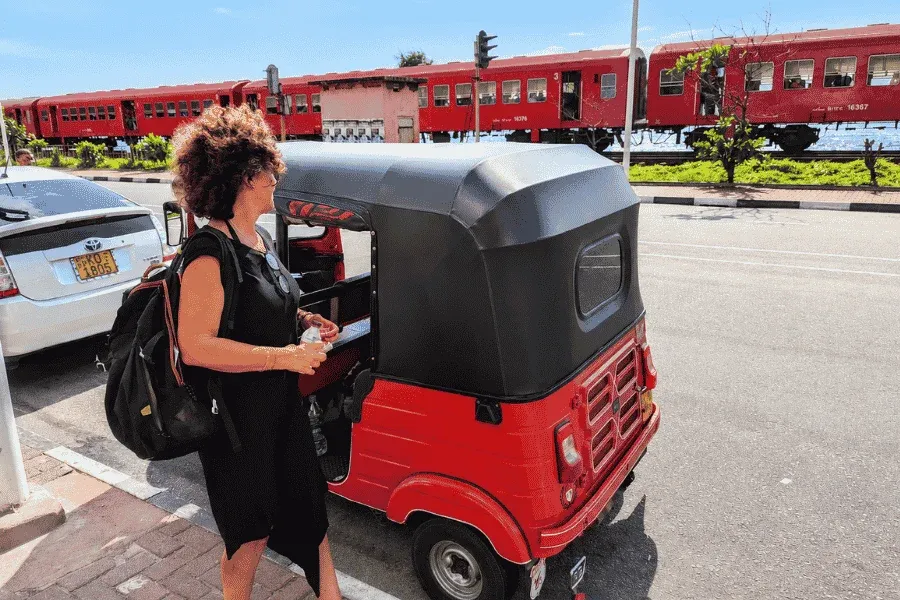
For tuk tuk travelers completing long journeys around Sri Lanka, Colombo often feels like the final chapter where the island's history, modern culture, nightlife, trade, religion, and urban energy all collide beside the sea.
Recommended Stay — Why Colombo Deserves More Time
Many travelers initially plan only one night in Colombo before flying home, but the city usually deserves far more time than expected. A stay of three to five nights allows travelers to properly experience:
- Colonial districts
- Rooftop nightlife
- Museums
- Cafés
- Oceanfront promenades
- Local food culture
- Wetland parks
- Shopping areas
- Religious landmarks
- Hidden neighborhoods
Unlike quieter parts of Sri Lanka where life slows after sunset, Colombo becomes more interesting during evenings and nights when temperatures cool and the city begins changing atmosphere. During daytime, Colombo can feel hot, humid, and heavily crowded. But after sunset, the city transforms. Ocean winds move through the streets while rooftop bars begin filling, music drifts out from restaurants and cocktail lounges, Galle Face Green becomes crowded with families and food vendors, and cafés remain active late into the night.
This contrast between hectic daytime energy and lively tropical evenings gives Colombo a rhythm completely different from anywhere else on the island.
Best Time To Visit Colombo
Colombo can be visited throughout the year because it functions as Sri Lanka's commercial capital regardless of season. However, December to April is usually considered the driest and most comfortable period for exploring the city.
Because Colombo sits directly beside the Indian Ocean, tropical humidity remains high throughout much of the year. Travelers often prefer exploring during:
- Early mornings
- Late afternoons
- Evenings
- Nighttime
rather than the hotter midday hours. Sunset especially becomes one of the best times to experience Colombo properly. The sky slowly turns orange above the ocean while waves crash against the seawall at Galle Face, rooftop lounges begin opening for the night, and the city's lights slowly reflect across the streets after tropical rain showers.
During monsoon months, heavy rain can suddenly flood roads before disappearing just as quickly, adding to the constantly changing atmosphere of the city.
Colombo — A City Built Through Trade, Empire & Migration
Long before modern skyscrapers appeared along the coastline, Colombo was already one of the most important trading ports in the Indian Ocean. Because of its natural harbor and strategic position along major maritime trade routes, merchants from Arabia, China, India, Persia, and Southeast Asia visited Colombo for centuries carrying spices, gemstones, textiles, elephants, and goods between Asia, Europe, and the Middle East.
Sri Lanka's cinnamon trade played a particularly important role in shaping the city's history. For hundreds of years, Ceylon cinnamon was considered one of the world's most valuable spices, attracting traders and eventually colonial powers to the island.
The Portuguese first arrived in Colombo during the early 16th century and quickly recognized the importance of controlling the port. They established early fortifications around the harbor and introduced Roman Catholic influences that still survive in parts of the city today.
Later, the Dutch captured Colombo during the 17th century and transformed it into a heavily fortified colonial trading city under the Dutch East India Company. Much of Colombo's organized street layout, canals, churches, trading districts, and administrative systems developed during this Dutch period.
The British later expanded Colombo even further after taking control of the island in the late 18th century, developing the city into the administrative and commercial capital of colonial Ceylon. Railways, luxury hotels, government buildings, clubs, and European-style architecture spread rapidly throughout the city during British rule.
Much of that layered history still survives throughout Colombo today. Walking through the city often feels like moving through entirely different historical periods within the same afternoon. One road may contain a Dutch church from the colonial era while the next leads toward luxury shopping malls, rooftop bars, crowded street markets, or Buddhist temples hidden between office towers.
This layering of history, religion, migration, trade, and modern urban growth is what gives Colombo its unique identity.
Galle Face Green — Colombo's Oceanfront Soul
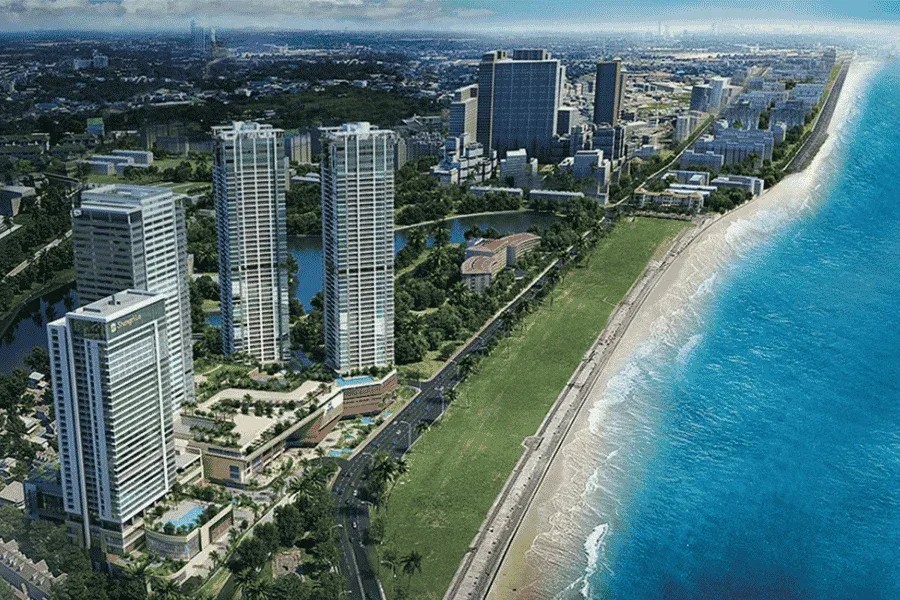
One of the first places many travelers experience in Colombo is Galle Face Green, the city's famous oceanfront promenade beside the Indian Ocean. Originally created by the British during colonial rule, the open green space once functioned as a recreational area for horse racing, golf, and elite colonial social gatherings. Today, it belongs entirely to the people of Colombo.
Every evening, thousands gather beside the sea. Families fly kites above the grass while couples walk along the promenade, office workers relax after work, children play cricket, and travelers watch waves crash against the seawall while the sky slowly changes color over the Indian Ocean.
Street food vendors line the promenade preparing isso wade, kottu roti, roast corn, spicy mango, seafood snacks, ice cream, and fresh pineapple with chili salt while the ocean breeze moves constantly through the crowds. For many travelers, this becomes the place where Colombo first begins feeling unforgettable.
Galle Face Hotel — Colonial Elegance Beside the Ocean
Standing directly beside Galle Face Green, the historic Galle Face Hotel remains one of the oldest luxury hotels in Asia. Built during the British colonial period in 1864, the hotel hosted royalty, politicians, writers, celebrities, and diplomats for generations.
Its long colonial corridors, oceanfront terraces, wooden interiors, old photographs, and sunset-facing verandas still preserve much of the atmosphere of old colonial Colombo. Even travelers not staying at the hotel often visit during sunset to sit beside the ocean while waves crash dramatically against the seawall below the terrace. As darkness arrives, the building slowly lights up beside the coastline, creating one of the city's most iconic nighttime scenes.
Pettah — Colombo's Historic Trading Maze
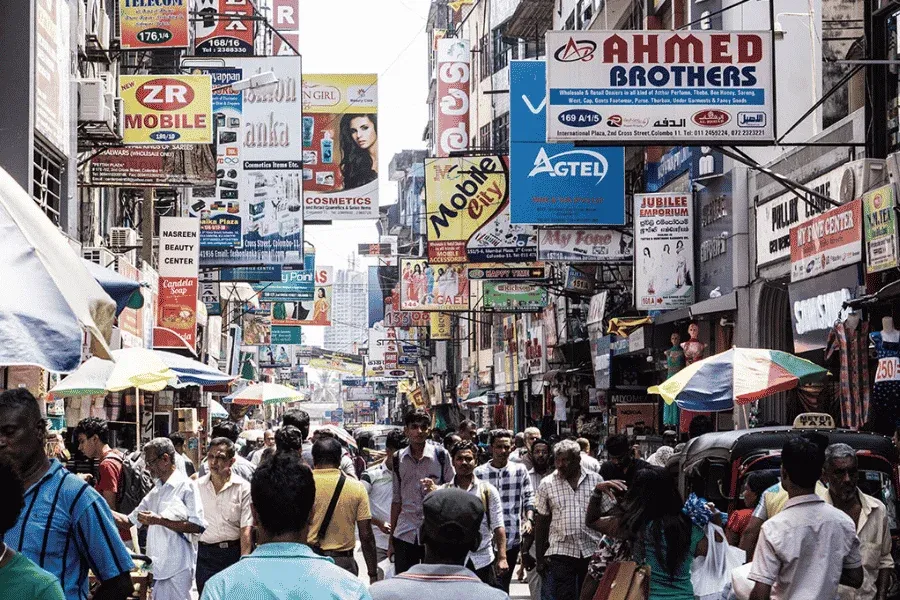
Behind the colonial buildings of Fort lies Pettah, one of the busiest and most chaotic districts in Sri Lanka. For centuries, Pettah has functioned as Colombo's commercial heart. The streets feel like a maze of endless movement where traders, tuk tuks, delivery workers, market vendors, fruit sellers, electronics dealers, textile merchants, and pedestrians all compete for space among narrow roads packed with shops and street stalls.
Every street seems to specialize in something different — gold shops, electronics, spices, fabrics, household goods, mobile phones, jewelry, and imported products. The atmosphere feels overwhelming at first, but that energy is exactly what makes Pettah so fascinating. Unlike Colombo's polished shopping malls and luxury districts, Pettah still feels deeply connected to the city's centuries-old trading identity.
The smell of spices, incense, street food, diesel smoke, tropical fruit, and hot metal constantly mixes through the streets while shopkeepers call customers inside from every direction.
Jami Ul-Alfar Mosque — Colombo's Red Mosque
Rising dramatically above the crowded streets of Pettah stands Jami Ul-Alfar Mosque, one of Colombo's most recognizable landmarks. Built during the early 1900s for Colombo's Muslim trading community, the mosque combines Indo-Islamic architecture, Gothic detailing, and colonial-era influences into one of the most visually distinctive religious buildings in Sri Lanka.
Its red-and-white striped exterior, spiral detailing, candy-shaped domes, and towering minarets dominate the skyline above the crowded streets below. Even within the chaos of Pettah, the building immediately draws attention from almost every direction.
Fort — Colonial Colombo & the Financial District
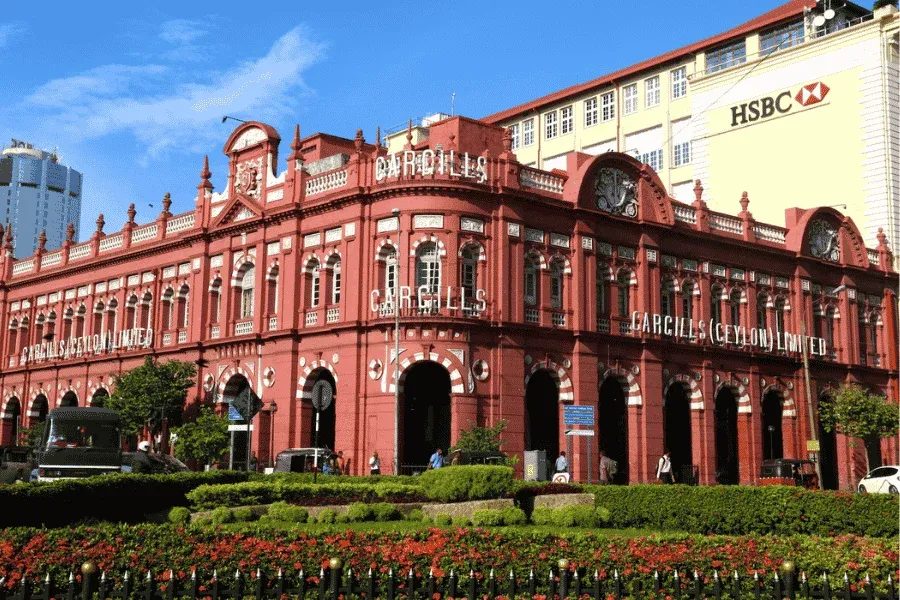
The neighboring Fort district once formed the fortified colonial center of Colombo under Portuguese, Dutch, and British rule. Although most of the original fortifications disappeared long ago, the district still contains some of the city's most important colonial-era architecture.
Walking through Fort reveals British-era administrative buildings, old banks, colonial offices, luxury hotels, historic clock towers, and modern financial towers all standing beside one another. The district feels noticeably more organized and spacious compared to the crowded streets of Pettah. Wide roads, older colonial facades, modern office workers, businessmen, cafés, and luxury developments create a very different atmosphere from the traditional market streets nearby.
Old Colombo Dutch Hospital
Originally built during the Dutch colonial period as a hospital for officers and sailors of the Dutch East India Company, the Old Colombo Dutch Hospital is considered one of the oldest surviving buildings in Colombo. Today, the restored complex functions as a dining and shopping precinct filled with restaurants, cafés, bars, and boutiques while still preserving much of its original colonial architecture.
At night, the old courtyards become especially atmospheric as warm lights illuminate the stone walkways and restaurants slowly fill with locals and travelers. The contrast between old Dutch architecture and Colombo's modern skyline surrounding the building perfectly reflects the city itself.
Frequently Asked Questions — Colombo
Can you drive a tuk tuk in Colombo?
Yes, though Colombo traffic is heavy and the roads are more complex than elsewhere in Sri Lanka. Tuk tuks are not permitted on expressways. First-time drivers should avoid Colombo on their very first day. Coastal roads near the city can become heavily congested during rush hour.
What are the must-visit places in Colombo?
Key places include Galle Face Green (the oceanfront promenade), the Pettah market district, Colombo Fort's colonial buildings, the Galle Face Hotel, and the rooftop bar and restaurant scene around Colombo 3 and Colombo 7. The National Museum and Gangaramaya Temple are also worth visiting.
How long should I spend in Colombo?
Three to five nights gives enough time to explore the colonial districts, rooftop bars, museums, cafés, and oceanfront promenades properly. Many travelers plan only one night before flying out, but Colombo usually deserves more time than that.
What is the best time to visit Colombo?
December to April is generally the driest and most comfortable period. However, Colombo functions year-round as the country's commercial capital. The best times of day to explore are early morning, late afternoon, and evening — midday heat and humidity can be intense.
What is Galle Face Green in Colombo?
Galle Face Green is a large oceanfront promenade beside the Indian Ocean in central Colombo. Every evening thousands of people gather to fly kites, walk the sea wall, and eat from street food stalls. The colonial-era Galle Face Hotel stands beside it. It is where many travelers first experience Colombo properly.